 Jerusalem Center for Security and Foreign Affairs https://jcfa.org https://jcpa.org/understanding-israeli-interests-in-the-e1-area/
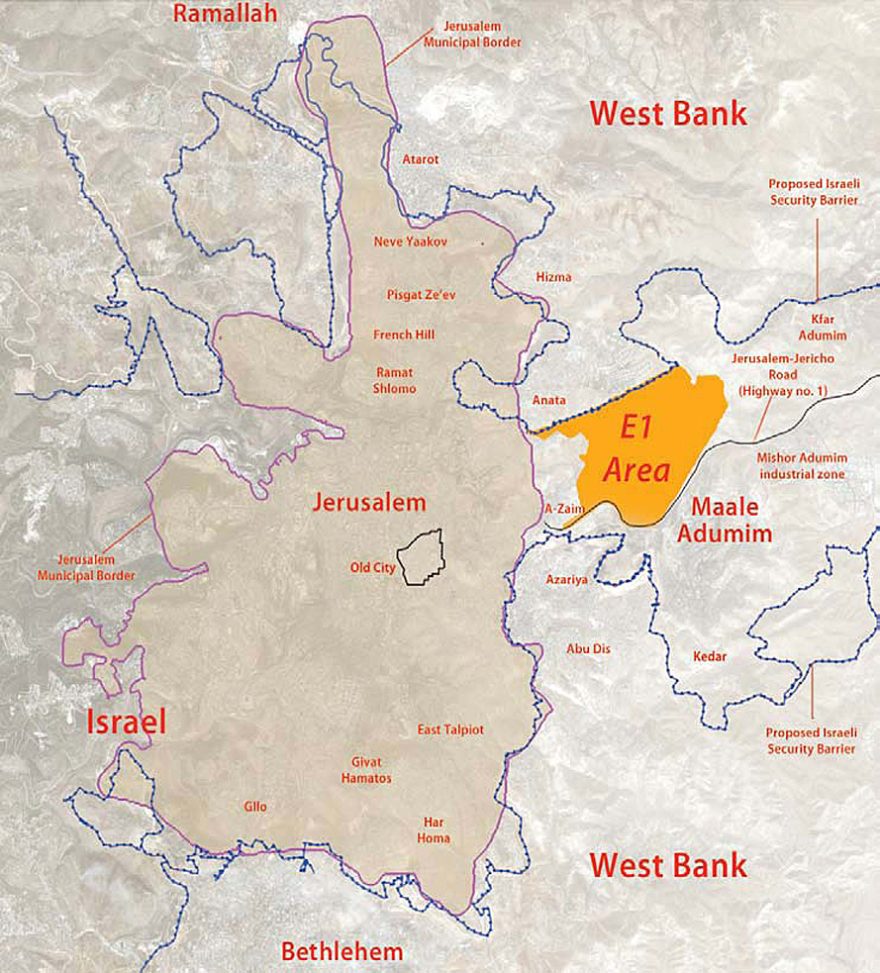 Jerusalem and EI area boundaries Why This Study Was Written
The Israeli building program known as E1 (East-1), situated between Jerusalem and Maale Adumim, has been on the Israeli and world agenda for twenty years. It is subject to a severe Israeli-Palestinian dispute and prompts strong international opposition. As a result, it has yet to be implemented.
On November 30, 2012, after long years in which Israel had almost completely frozen the program, a scaled-down forum of nine ministers of the Israeli government met and decided to renew the planning, approval, and construction processes in the E1 area. This decision was part of Israel’s reaction to the UN General Assembly resolution on recognizing the State of Palestine as an observer state that is not a full member of the United Nations.
Many countries displayed a total lack of understanding for Israel’s decision and condemned it, sometimes harshly. The White House spokesman, for example, said the program contravened U.S. policy and damaged the chances for a two-state solution. The Israeli ambassadors in Britain, France, Sweden, Spain, and Denmark were summoned for reprimands.1 In addition, fourteen of the fifteen members of the UN Security Council declared that the organization opposed Israel’s plans to build in E1. UN Secretary-General Ban Ki-moon said Israel had taken a “dangerous path.”2
At the beginning of January 2013, a group of Palestinians, with the backing of the Palestinian Authority, set up a protest encampment in E1. Israel waited a few days and then, with Supreme Court approval, evacuated it.
The Israeli government and Prime Minister Benjamin Netanyahu rejected the criticism over the decision to build in E1. The Prime Minister’s Office affirmed that Israel would “continue to act in accordance with the vital interests of the State of Israel even in the face of international pressures, and there will be no change in the decision that has been taken.” Israel’s decision was also taken in light of the fact that, according to every past Israeli government, Maale Adumim must be retained by Israel, and the Palestinians have agreed to this in past negotiations. Therefore, the connection of Maale Adumim to Jerusalem needs to be addressed when planning the future of the area.
At the beginning of December 2012, the Supreme Planning Council for Judea and Samaria, part of the Civil Administration, began to implement the government’s decision. It decided to deposit the construction plans for two of the E1 residential neighborhoods for public approval, a significant stage in the succession of approvals that still await the plan. At the last minute, however, an order by the Prime Minister’s Office put a halt to this procedure, and so far the plan has not been deposited for public approval.
This study discusses the E1 plan, its great importance for the State of Israel, and its vicissitudes over the years. It refutes the claim that the plan would hinder the two-state solution, or prevent linkage between the populations of the northern and southern West Bank. It describes the longstanding consensus in Israel about the future of Maale Adumim and the vital link between Jerusalem and Maale Adumim, of which the E1 plan is an integral aspect; the place of the Adumim bloc in the concept of metropolitan Jerusalem; and the place of that concept in Israel’s approach to security and settlement.
The study also explains why avoiding building in E1 is dangerous to Israel’s interests, and likely to result in Maale Adumim and Jerusalem being severed from each other. At the same time, the report strongly criticizes the Israeli authorities’ failure over the years to eradicate the phenomenon of illegal Palestinian building in the area between Maale Adumim and Jerusalem. While this stems from concern for the reaction of the international community, it is gradually constricting Israel’s options in an area so vital for its future integrity.
As the study shows, the E1 area is located in Area C, the portion of the West Bank in which Israel has the powers of zoning and planning according to the Oslo II Interim Agreement. In the last year, the Palestinian Authority has nonetheless undertaken development projects in Area C, some with EU financing. Thus the situation on the ground is not static, and Israel will have to find a way to protect its vital interests, especially in this sensitive area, to the east of its capital.
The Essential Points
- The site for the E1 building plan extends over an area of about 12,000 dunams,3 most of it state land, northward and westward of the Jerusalem-Maale Adumim road. Through this plan, Israel wants to link Maale Adumim – a city established east of Jerusalem about thirty years ago, in which about 40,000 people now live – with the ridge of Mount Scopus within Jerusalem’s municipal jurisdiction. So far, owing to the opposition of the Palestinians and the international community, the plan has not been implemented.
- Three residential neighborhoods, as well as an area for commerce, industry, and hotels, are envisaged for E1. So far only two residential neighborhoods totaling 3,500 housing units have been planned. An additional residential neighborhood, the northern one, and the commercial-industrial zone, which is supposed to link E1 to Jerusalem, are frozen for planning and legal reasons unconnected to the political controversy over the program. A police station and a network of roads and infrastructure have, however, already been built in E1.
- All Israeli governments since Yitzhak Rabin’s second tenure as prime minister in the 1990s have supported the program, appreciating the need to create an Israeli urban continuity from Jerusalem to Maale Adumim, leading out to the Dead Sea and the Jordanian border. That need is incorporated in the Israeli security and urban planning concept, which views Jerusalem and its nearby Jewish communities as a single metropolitan space – “metropolitan Jerusalem.”
- The plan is, of course, embroiled in an intense international dispute centering on the position of the Palestinians, who seek to prevent what they call the bisection of the West Bank – which, they claim, would torpedo the option of a Palestinian state and preclude a sovereign and urban continuity between the northern and the southern West Bank.
- The United States backs the Palestinian position and acts to prevent Israel from building at the site, so long as a permanent settlement has not materialized.
- The Palestinians oppose both the plan and the solution that Israel proposes for ensuring transportation continuity between the northern and southern West Bank. The solution Israel is offering the Palestinians is the use of what is effectively a bypass road (the literal Hebrew term is “fabric-of-life road”). This road would pass between Maale Adumim to the east and Jerusalem to the west, allowing the Palestinians free movement from the Ramallah area to the Bethlehem area.
- The opposition to building in E1 and to the bypass road is unacceptable to Israel for the following reasons:
- In the area between Maale Adumim and Jerusalem, along the Jerusalem-Jericho road and in the E1 area, a considerable amount of illegal Palestinian building is in progress. This illegal activity has already significantly narrowed the corridor along which the central arterial road between Jerusalem and Maale Adumim runs – from two kilometers to one kilometer. The illegal building already threatens to sever and, in the future, preclude Israeli continuity between the two cities.
- Under the Oslo Agreements, zoning and planning in these areas (Area C) is under the jurisdiction of Israel. Thus, Palestinian construction without any building permit along a main Israeli artery of this sort is a violation of the signed bilateral agreement and is thus illegal.
- Israeli avoidance of creating settlement continuity between the Jerusalem area and the Maale Adumim area will inevitably give rise to another, competing, Palestinian continuity running north to south.
- Even today Israel has great difficulty counteracting such continuity because of the international community’s stance, which opposes any measures against the extensive illegal building in the area.
- One practical manifestation of the Israeli weakness is the lack of resolve of the State Attorney’s Office and the Civil Administration in the face of this illegal building. This, among other things, is clearly evident in reports of the Civil Administration Central Supervisory Unit.
- The bypass road will have two lanes. First, there is a lane for vehicles that have come out of the Israeli security envelope and, therefore, there is no concern that they could pose a security risk. Second, there is a lane for traffic coming out of the Palestinian security envelope, which Israel cannot be certain about from the standpoint of security. This separation of traffic into two lanes is not based on religious, ethnic, or national distinctions since Palestinian Arab residents of Jerusalem and Israeli Arabs will be expected to use the lanes for Israeli traffic.
- Where the traffic from both security systems mixed together on one road, the Palestinian vehicles would have to undergo time-consuming security checks at roadblocks. The bypass road is thus designed to allow for rapid north-south movement in the West Bank with no interference from Israeli security authorities.
- The Palestinian opposition to the bypass road is based on the claim that having only a transportation link between the northern and southern West Bank is unsatisfactory.
- This is an unreasonable argument because it ignores the reality that emerged in the wake of the Oslo accords. As part of this reality, the roads in the West Bank became essential arteries for both the Palestinian and Jewish populations, with a dual use: for common transportation, and to create separation and prevent friction between the communities.
- The basic concept of a road as something not only intended for transportation purposes but also as a solution to political problems was, in fact, initially accepted by the Palestinian Authority:
- In the framework of the Oslo accords, representatives of the PA agreed to the creation of the “safe passage” between Gaza and the West Bank. This was to be a wide road serving as a land link from the West Bank to Gaza, and a substitute for territorial continuity.
- The Palestinians and the Israelis compromised on the “safe passage” issue, each conceding a principle: the Palestinians gave up contiguity between the West Bank and Gaza, while Israel agreed to the creation of a passage with some attributes of foreign land within its own territory.
- Despite what the Palestinians claim, the building in E1 that has been approved so far, and has not even begun, does not interrupt any existing Palestinian continuity of construction.
- The linking of Jerusalem to Maale Adumim is an overriding Israeli interest for several reasons:
- Israel cannot allow Maale Adumim to become like Mount Scopus in the 1948-1967 period, when the mount was an isolated Israeli enclave under UN custody with only a road connecting to it.
- Israel cannot allow a situation to emerge of security and urban discontinuity between Jerusalem and Maale Adumim, or the reversion of Jerusalem to a border-town status (as was the case before the Six-Day War) that would preclude the city’s eastward development.
- Israel cannot tolerate a threat to the Jerusalem-Jericho road, on which the Palestinian construction is encroaching. This artery is of supreme strategic importance to Israel. In time of war it would enable moving large quantities of troops to the Jordan Valley and northward, as Israel mobilized its forces to contend with a possible “eastern front.”
- The area of Maale Adumim, including E1, is part of the strategic depth that Israel requires in the context of defensible borders – again, in the face of an eastern front, and to make it possible to defend its capital, Jerusalem.
- The area of settlement around Jerusalem, including Maale Adumim, constitutes part of the metropolitan area of Jerusalem. This area incorporates both settlement and security as two vital, complementary components of the Israeli national interest.
- There is an almost complete Israeli consensus on the need to link Maale Adumim to Jerusalem via construction in E1, and on the need to retain this territory under Israeli sovereignty within the country’s permanent borders.
- Six prime ministers, from Rabin to Netanyahu, declared publicly that they would build in E1. Yet, except for the construction of the Judea-Samaria District police station, the process has not even begun because of the international community’s opposition.
- Time after time, Israeli leaders proclaim their commitment to Maale Adumim and the building of E1. These same leaders, however, show great deference to the position of the United States, which currently seeks to prevent construction in this area. This behavior entails a built-in contradiction: on the one hand, the message is conveyed that Israel will build in E1 because it is so vital to its interests; on the other, through nonpublic diplomatic channels, world leaders receive another message – that meanwhile Israel will bow to the international community’s opposition to this construction. This behavior makes it very difficult for those involved in Israeli public advocacy to address the world’s and the Palestinians’ objections to the E1 plan.
The Metropolitan Jerusalem Concept
During Israel’s initial 19 years (1948-1967), Jerusalem was divided by a wall and its “eastern” part was under Jordanian occupation. Over the past 45 years, under Israeli sovereignty, the city has been undivided, all residents have enjoyed free movement, and despite the national conflict and its associated problems, there are multiple elements of cooperation and understanding between the two populations.4
Immediately after 1967, aiming to reinforce the status of united Jerusalem as Israel’s capital, Israel built a series of neighborhoods and satellite towns in the environs of the city. The purpose was both security and settlement.
The State of Israel and the Zionist movement have always posited a link between settlement and security. From David Ben-Gurion to the present day, the country’s leaders have believed that settlements established in the area of Israel’s security borders would ensure those very borders. To maintain security borders that would enable the defense of Jerusalem and of the country as a whole, a line of fortifications, or weaponry, or strategic depth in themselves would not suffice; it was necessary to settle these areas, thereby anchoring Israel’s security presence in a permanent civilian presence.
That approach was taken in the Galilee and the Negev in the earliest years of the state. It was also taken by Israeli governments regarding the large settlement blocs that were created in the West Bank after 1967, and in the Jerusalem area as well. This security-settlement combination is to a large extent the DNA that has flowed through the veins of Zionism since its inception – before and after the establishment of the state. Settlement and security are seen in Israel as two elements that mutually legitimize each other. The combined approach affirms that there is no security without settlement and no settlement without security.5
In the context of this approach, two concomitant processes emerged in the aftermath of the Six-Day War:
- Jerusalem was united and expanded. Israeli sovereignty was applied to areas north, south, and east of the old jurisdictional borders (comprising about 70,000 dunams). In these areas (which the world has been calling “east Jerusalem” for years), a string of Jewish neighborhoods were set up that currently number about 200,000 residents.
- Along the new borders of Jerusalem, or in what is called metropolitan Jerusalem, Israel built an additional series of towns and settlements. Decisions by the government and by governmental committees, along with various experts’ committees, referred to this outer circle as “metropolitan Jerusalem.”6 That term drew its formal validity from the many interactions, in various areas of life, between Jerusalem and the surrounding area (the “Jerusalem environs”).
With the change in political conditions, the escalating waves of Palestinian terror at the start of the 2000s (in what came to be called the Second Intifada), the worsening of security, and the building of the security fence around many parts of Jerusalem (aimed at obstructing suicide bombers and weapons smuggling), tight security restrictions were imposed on the Palestinian population’s freedom of movement within the metropolis. As a result, the links and interactions between the city and the surrounding area were weakened in the Arab sector. For the Jewish sector, whose freedom of movement was not restricted, the strong links and interactions between Jerusalem and the surrounding settlements were maintained in various domains such as transportation, employment, society, and family.
Those linkages, and the perception of Jerusalem as the heart of a metropolis, were a new development. Up to 1967, Jewish Jerusalem had functioned as a border town, hampered and constricted in the economic, commercial, and social areas of life. In almost every regard, functionally speaking, the city in those years was confined to a narrow corridor extending to the west, hemmed in by political borders on its three other sides. Added to all this was the security distress of a divided city threatened by terrorism and the Jordanian army.
After the war, of course, the situation changed completely. Israel acted out of intense fear that if it did not quickly settle the area surrounding the city, Jerusalem would once again revert to border-town status in the future. Hence, the country embarked on extensive settlement activity.
Today, about a million people live in the Jerusalem metropolis. About 800,000 reside within the Jerusalem municipality, including about 500,000 Jews and about 300,000 Arabs.7 In addition, in the greater metropolis, another approximately 200,000 Jews live in four settlement blocs:
- The western settlement bloc (almost all within the Green Line), which includes Mevasseret Zion, Har Adar, Beit Zayit, Motza Illit, Even Sapir, Ora, and Aminadav, totaling about 40,000 people.
- The southern settlement bloc (mostly over the Green Line), which includes the settlements of the Gush Etzion Regional Council, Efrat, Betar Illit, Mevo Betar, and Tzur Hadassah, totaling about 80,000 people.
- The northern settlement bloc (over the Green Line), which includes Givat Zeev, Givon HaHadasha, and Beit Horon, totaling over 16,000 people.
- The eastern settlement bloc (over the Green Line) – relevant to our concerns here – which includes the city of Maale Adumim and the area of the E1 plan. This bloc comprises about ten communities and totals about 65,000 people.
About three-fourths of the 200,000 residents of metropolitan Jerusalem live within the area of the West Bank (Judea and Samaria) and about one-fourth within the Green Line.8 In addition, some 50,000 Arabs live in communities within metropolitan Jerusalem, in the part of the Wet Bank designated as Area C. At the end of the 1990s, the Israeli government sought to institutionalize the natural link between Jerusalem and the surrounding Jewish communities. The first Netanyahu government sought to create a common, overarching municipality for the city of Jerusalem and its metropolitan communities. Professional reports provided an outline for their joint administration. However, for political reasons – primarily U.S. opposition – the decision was not implemented. Washington disapproved any Israeli application of powers for such a municipality over communities beyond the Green Line.9
Oslo Agreement Map of Jerusalem Area Showing E1 Located in Area C (Israeli) and Not in Area B (Palestinian)
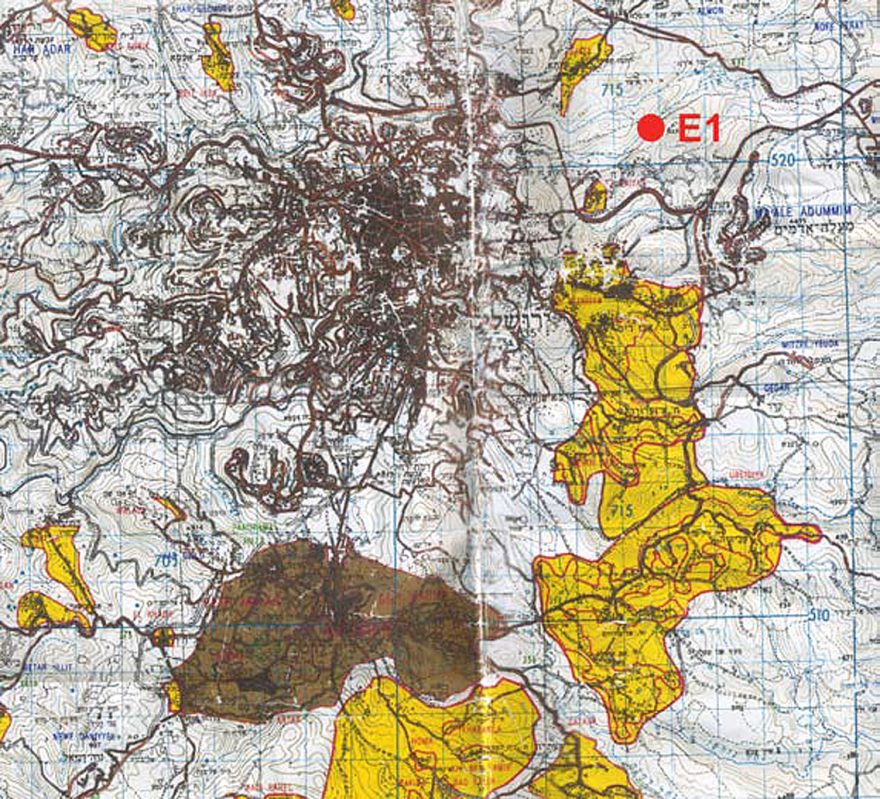 Map of 1995 Oslo II Interim Agreement showing eastern approaches to Jerusalem. Areas marked in yellow are “Area B” where the Palestinian Authority has full civilian jurisdiction including zoning and planning authority. White areas in the West Bank are “Area C” where Israel has full security responsibility and civilian authority over zoning and planning. The main connection between Jerusalem and Maale Adumim must clearly run north of Abu Dis and Azariya, which is precisely where E1 is located. Unfortunately, the Palestinians have been building illegally in Area C close to the main road connecting Jerusalem and Maale Adumim, thereby narrowing the corridor between them. If Israel fails to build in E1, the area will be taken over by Palestinian construction.
The Security Component of the Metropolitan Jerusalem Concept
Former prime minister Yitzhak Rabin said that forgoing the construction of E1 would mean severing Maale Adumim from Jerusalem and probably changing Maale Adumim into what Mount Scopus was from 1948 to 1967. In those years Mount Scopus was an Israeli enclave in the heart of an Arab area. Only a narrow road provided access to it, and Israel was dependent on the mercies of the Jordanian regime and the United Nations to preserve even such a minimal connection. Rabin expressed apprehension that if Israel were to fail to link Jerusalem to Maale Adumim with a continuity of Jewish settlement, the latter city would indeed experience the same fate as Mount Scopus.10 Rabin was the first Israeli prime minister to promote the E1 plan, aimed at creating that very continuity.
In 1996, Shimon Peres, Rabin’s successor as prime minister, discussed with the head of the IDF Central Command, Gen. Ilan Biran, and chief of staff Gen. Amnon Lipkin-Shahak, the security-settlement concept regarding Jerusalem. Biran explained, “Without territorial continuity in the areas surrounding Jerusalem, it will be hard to ensure Israeli rule. Everything must be done to create a continuity of Jewish settlement between Maale Adumim to the east, Givat Zeev to the north, and Har Gilo to the south.”The Biran plan spoke, among other things, of paving roads and arteries between all the points of Jewish settlement, thereby creating continuity to the east between Maale Adumim and Mount Scopus (the E1 area), to the north between Givat Zeev and Neve Yaakov, and to the south between Har Gilo and Jerusalem. During the presentation, Biran emphasized that if such Jewish territorial continuity was not created, then the Arab settlement blocs surrounding the capital would create their own continuity and “strangle” Jerusalem.11
In essence, Biran outlined a minimal version of the “defensible borders” doctrine, which is a necessary condition for Israel’s security. A slightly more developed version was presented later by Gen. Yaakov Amidror, formerly head of the Research and Assessment Division of IDF Military Intelligence and currently Israel’s national security adviser.12 He, too, specified the area between Jerusalem and Maale Adumim as vital to defending the country.
In the early 2000s, an extra-governmental team of experts, composed mainly of professionals in the urban-planning and military fields, also recommended to the government that it design the borderline of Jerusalem in a way that would ensure the urban continuity of the Jewish neighborhoods. A secret document that the team submitted to the Sharon government, which at that time became a sort of political master plan for the Israeli leadership, stated:
Between the border that is outlined in the agreement and the border that is not outlined in the agreement, Israeli Jerusalem and most of the Jewish satellite settlements that surround the city (Maale Adumim, Givat Zeev, and smaller community settlements) will be situated. The course of the borderline must ensure quantities of land for the continued growth of the Jewish population in the areas of metropolitan Jerusalem….The borderline must be capable of withstanding changing situations of security tensions, and must enable, to the extent that is required, control, impenetrability, and/ or separation between the populations….The borderline of Jerusalem will include within it, as much as possible, areas that topographically control Jewish neighborhoods….The borderline of Jerusalem will ensure the physical continuity of Jewish neighborhoods.
The recommendations adopted by the political echelon also stated: “One must enable the Palestinian population to maintain a continuous transportation connection between Bethlehem and Ramallah outside the borders of Jerusalem. According to need, use should be made of bridges or tunnels without transferring ownership of the land above the tunnels or under the bridges.”This recommendation is of great importance; it touches directly on the claim that the E1 plan interrupts Palestinian continuity between the northern and southern West Bank, a subjected addressed at length below.
Israel’s Need for Strategic Depth
Israel’s need for strategic depth as a component of defensible borders is endorsed today by most Israeli military and security professionals. This strategic depth must include sufficient combat space to deploy defensive forces that will be able to maneuver within it, a reserve force capable of mounting a counterattack if needed, and sufficient distance from the strategic home front.
The area between Maale Adumim and Jerusalem, along with the area to the east in the direction of the Dead Sea, is essential to providing Israel with strategic depth in case of the reemergence of threats to the east. In a time of regional instability marked by regime changes, but also in quieter periods, it is forbidden to dismiss the possibility of an eastern front that threatens Israel again taking shape. Hence, the strategic depth provided by the area from Jerusalem through Maale Adumim to the Dead Sea must be regarded as vital for defending the borders of the State of Israel.
In the 1980s, security officials noted that “the spatial dimension in the security context of defending Jerusalem must be such that it can make a contribution to military victory in time of need.”They further asserted:
It therefore must include territorial features that will help the IDF cope with the maximum possible war scenarios, from a surprise on the part of the enemy to an offensive initiative by the IDF. Those features must give the IDF a containment capacity on the ground and in the air at the outskirts of Jerusalem, without the city itself being harmed.13
Gen. Amidror has noted that, in case of a future war, Israel must ensure Jerusalem’s security in two regards:
- Control of the access roads to the city must remain in Israel’s hands.
- Any war over the city must be waged on the way to it and not within it.14
The City of Maale Adumim
Maale Adumim was established by a decision of the Israeli government in 1977. The cornerstone-laying ceremony for the first residential quarters was held two years later, and three years after that, in 1982, the first residents entered the new neighborhoods. In 1991, the state recognized Maale Adumim as a city, the first Israeli settlement in the West Bank to attain such status since Jewish construction there was renewed in the wake of the Six-Day War. Today Maale Adumim numbers about 40,000 residents. A revision of the city’s master plan carried out in recent years updated its aims. The new population target for the city is 103,000 residents, compared to the previous target of 70,000.
At the same time, because of political constraints and the resulting decrease in construction, the city’s rate of growth in recent years has been very modest. Instead of about 500 housing units per year, in recent years no more than a few dozen new units have been built annually.
Location and Nature
Maale Adumim is located on about seven square kilometers east of Jerusalem on the Jerusalem-Jericho road, close to the northern Jerusalem neighborhoods of Pisgat Zeev, French Hill, and Ramat Eshkol. The city’s buildings extend to the Judean Desert, 450 meters above sea level. Despite being situated at the edge of the desert, the city and its buildings do not have a desert-like nature. Instead, there are broad boulevards, squares, and numerous wide open public areas. Buildings are constructed in the stone-faced Jerusalem style. Maale Adumim’s dependence on Jerusalem for employment, commerce, culture, and education, and the lack of a significant urban center in the city, make Maale Adumim in many regards a suburb of Jerusalem.
The Link between Jerusalem and Maale Adumim15
Between Maale Adumim and Jerusalem lie a number of Arab villages: Abu Dis, Azariya, A-Zaim, and Isawiya. The road that connects Jerusalem and Maale Adumim is Highway 1, which ends at the entrance to Maale Adumim. Access to Highway 1 from Jerusalem is in the French Hill area and also via the newer Mount Scopus road. Using that road, one can get from Jerusalem to Maale Adumim in about five minutes. Despite their physical separation, the two cities’ geographic proximity makes them mutually visible. Maale Adumim can be seen clearly from Mount Scopus and the Mount of Olives. From Maale Adumim one can see Jerusalem with the three towers that adorn its skyline: the Hebrew University tower, the Augusta Victoria tower, and the tower of the church in A-Tur.
As noted, Maale Adumim does not provide all the public services that its residents need. There is no hospital in the city. Cultural amenities are relatively limited, and most of the public transportation from Maale Adumim goes to Jerusalem. Hence, Maale Adumim’s residents are to a large extent reliant on Jerusalem, which also contains many of the government offices that residents sometimes need.
In addition, 80 percent of the city’s manpower is employed in Jerusalem. There are, however, also a number of ways in which Maale Adumim serves or will serve the residents of Jerusalem. Among these are the Mishor Adumim industrial zone, where thousands are employed. The garbage dump for metropolitan Jerusalem is also located within Maale Adumim’s jurisdiction and is under its responsibility. This dump is now being shut down. The long-term plan for the area is to establish a center for service, employment, and business in the E1 area that will serve both Jerusalem and Maale Adumim residents.
Other Attributes of Maale Adumim
Maale Adumim’s jurisdiction extends over about 65,000 dunams. These include residential areas, afforestation areas, an industrial zone, leisure areas, and other locations. Much of the territory within the Maale Adumim master plan cannot be used for residential building. Some of this territory is used for IDF firing ranges; other parts are intended for roads and other public services.
Eighty-three percent of the residents are native Israelis; 81 percent are secular and traditional and 18 percent are religious. Some 8,300 children attend the city’s schools, and 2,000 are in its nursery schools and kindergartens. There are 9,000 residential units in the city.
E1 Area Connecting Jerusalem and Maale Adumim
Jerusalem and EI area boundaries The E1 Area
The site known as E1 encompasses an area of about 12,100 dunams (4.6 sq. miles), most of it state land, to the north and west of the Jerusalem-Maale Adumim road. In 1991 during the Shamir government, then-defense minister Moshe Arens signed a document transferring part of this area to the Maale Adumim Local Council.16
In January 1994, the Settlement Subcommittee of the Supreme Planning Council for Judea and Samaria issued a new plan that widened the previous Maale Adumim master plan. This plan constituted the basis for the future E1 plan, and then-prime minister Rabin ordered his housing minister, Benjamin Ben-Eliezer, to begin planning a neighborhood to be situated in E1. Since then the planning procedures for the E1 neighborhood have advanced very slowly due to international and Palestinian opposition.
The E1 area extends over the hills between Maale Adumim and Jerusalem, which dominate the main roads in the area.17 E1 includes areas north of Highway 1 (the Jerusalem-Jericho road) and a small piece of land south of it. The boundaries of E1 (in the area designated for industry and commerce) verge on those of municipal Jerusalem. To the southeast, E1 is bordered by Highway 1, Azariya, Abu Dis, and lands of the Jahalin Bedouin tribe. To the west it is bordered by Issawiya, the eastern slopes of Mount Scopus, A-Zaim, and Anata. The northern boundary is Road 437 in the area of the Hizme checkpoint.
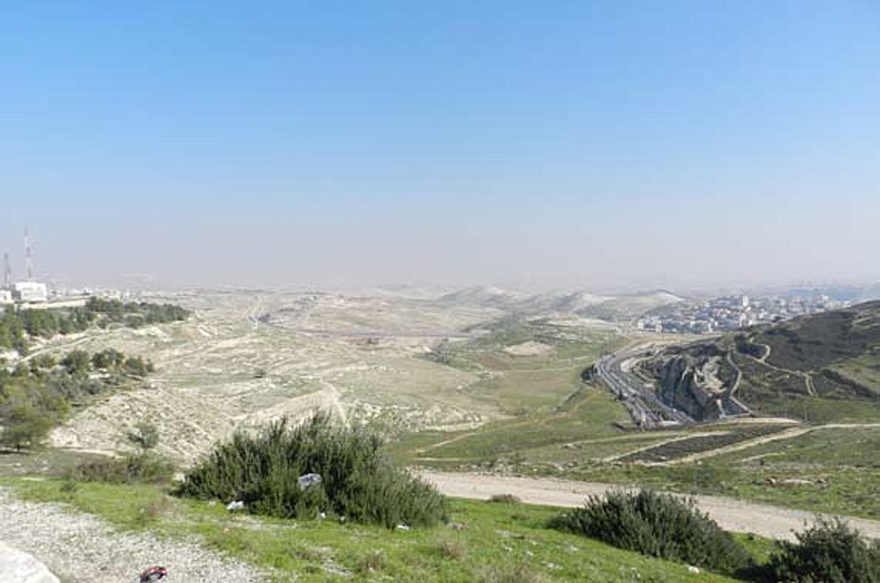 View of the E1 area and Maale Adumim (on right) as seen from Jerusalem (Mount Scopus).
Google Earth Map – View from Jerusalem to the Dead Sea
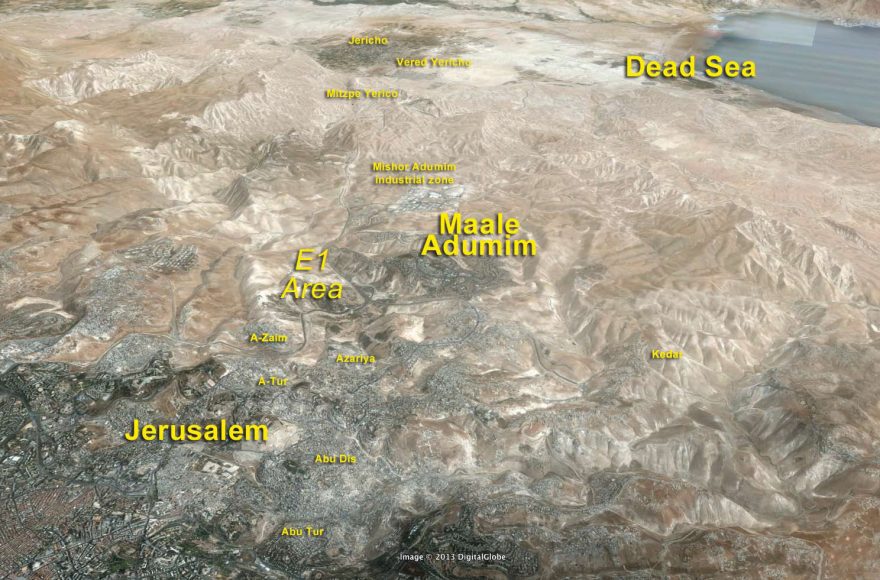 Google Earth Map – View from Jerusalem to the Dead Sea
The E1 plan has several parts, not all of which have been approved:
- The E1 residential quarter (east), which was approved, designates an area of 1,271 dunams for a residential neighborhood with 2,182 apartments. Also planned in this framework are a commercial center, gardens and parks, a school, a community center, synagogues, a mikveh (ritual bath), and a public institution. The intention is to implement this plan in two stages of 967 apartments and 1,215 apartments.
- The E1 residential quarter (south), which was approved, designates an area of 829 dunams for a residential neighborhood with 1,250 apartments. Also planned in this framework are an elementary school, kindergartens, day care centers, synagogues, a mikveh, parks, and public gardens.
- The E1 residential quarter (north), comprising an area designated for the construction of about 1,500 homes of the “build your own home” type. This plan has not advanced because the topography in the area is extremely difficult, and connecting the area to the existing and planned road networks is also difficult.These three residential neighborhoods would extend to the north of Maale Adumim and north of Highway 1. They would not interrupt any existing continuity of Palestinian construction, despite reports to the contrary.
- A Metropolitan Center for Work and Business will encompass 1,345 dunams for joint activity between Jerusalem and Maale Adumim in the economic realm. The plan for this center, which was submitted by the Ministry of Industry and Trade, was approved in 2002 and all its building permits are in force. The center is intended to provide employment to both Palestinians and Israelis. This project has, in effect, been suspended after a reassessment of the cost of the land. It turned out that many of its sections are privately owned by Palestinians. Hence the project is viewed, at least at this stage, as impractical. If, in the future, a way is found to implement it, this part of the plan will make it possible to link the jurisdictional areas of Jerusalem and Maale Adumim. That linkage, if and when it is created, also will in no way interrupt any existing continuity of Palestinian building.Indeed, the opposite is closer to the truth: southwest of the area of the proposed Metropolitan Center – which for now is frozen – the Palestinians have been trying for years to create a continuity of building and to link Anata to the north with A-Zaim to the south. Such a continuity, if created, will leave Maale Adumim as an enclave behind an unbroken string of Palestinian settlements, and Maale Adumim will remain connected to Jerusalem only by a road.Recently, the area on the eastern slopes of Mount Scopus, which the two Arab settlements seek to reach and link up with, was declared a national park where all building is prohibited, whether by Jews or Arabs. The area of the national park, which in earlier plans was marked as a green area, comprises about 700 dunams. The area, which is of high scenic value, constitutes the eastern entrance to Jerusalem. It contains about 80 antiquities sites, caves, cisterns, churches, and burial sites from the Second Temple and Byzantine periods, along with an attractive landscape that features habitats for desert and Mediterranean flora, as well as about 40 different species of birds.18 Apart from all that, the planners do not conceal the fact that its designation as a construction-free national park will prevent a linkup between Anata and A-Zaim, which would entail severing Maale Adumim from Jerusalem.
- The Headquarters of the Judea and Samaria District Police was relocated to the E1 area in 2006 on a tract of 179 dunams designated for this purpose. Around the headquarters an extensive network of roads and water and electricity infrastructure was prepared, which are to serve the residential neighborhoods along with other future uses in the context of the E1 plan. However, the sewage infrastructure has not yet been built. Every few weeks a large truck arrives to empty the large septic tank that serves the E1 police station.
- Over 50 percent of the E1 lands are defined and planned as green areas.
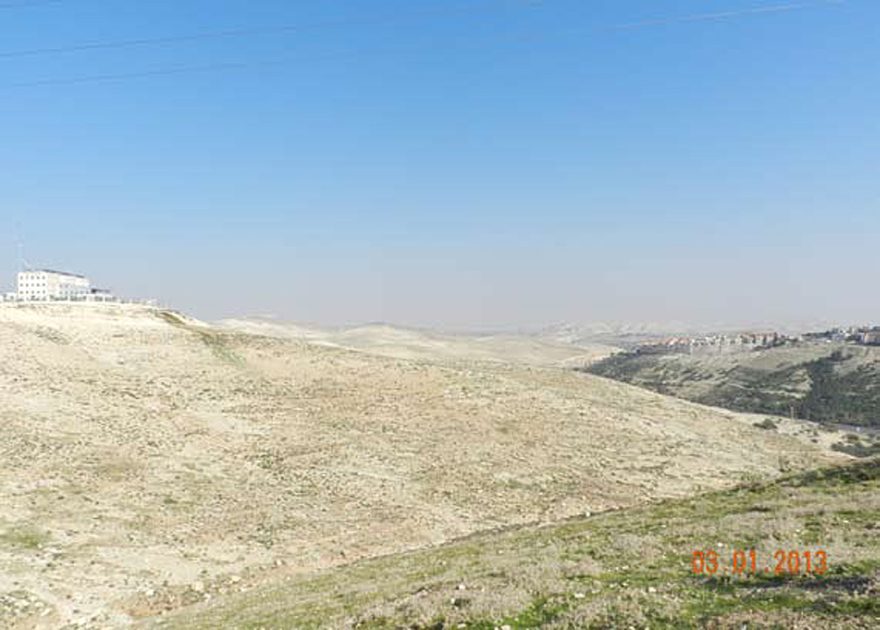 Maale Adumim (right) and the Israel Police station (left) in the E1 area. E1 is meant to connect Maale Adumim to Jerusalem. The Palestinian Bypass Road
The main charge of the Palestinians and the international community against Israeli building in E1 is that it will prevent the state of Palestinian from having territorial continuity and a link between the northern and the southern West Bank, thereby thwarting any attempt to arrive at a permanent settlement.
Israel is offering a feasible solution to the problem in the form of a bypass road, which is already partially paved. The route of the completed road will run from north to south, between Jerusalem and the Adumim Bloc, linking the northern West Bank to the southern part as an alternative to other existing roads. The Palestinians reject this solution.
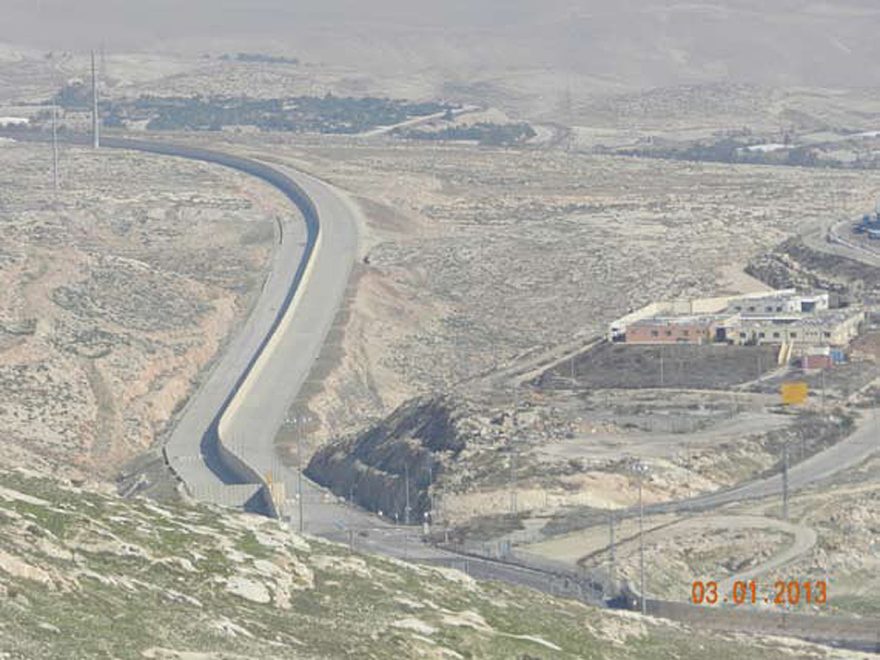 A completed section of the Palestinian bypass road. Its final completion will enable transportation continuity between the northern and southern West Bank, similar to other existing “fabric of life” roads built for the Palestinians.
In September 2007, Israel expropriated 1,408 dunams of the lands of Abu Dis, A-Sawahra a-Sarkia, Nebi Musa, and Khan al-Ahmar for the purpose of paving the bypass road to connect Ramallah to Bethlehem.19 The section of the road from Hizme to the A-Zaim checkpoint has already been paved, at a cost to Israel of close to NIS 300 million, passing through a tunnel under the Jerusalem-Maale Adumim road. Thus the Palestinians can have transportation continuity without breaking Israel’s link between Maale Adumim and Jerusalem.
The road has yet to be completed due to budgetary constraints and opposition by the United States and the Palestinians. The Palestinians fear that paving the road will vitiate their claim about the severance of the northern and southern West Bank, which is at the heart of their campaign against Israeli building in E1. Part of the already-existing bypass road is divided by a wall in the middle, separating Israeli and Palestinian traffic.
The bypass road, when completed, stands to provide a good and fair solution to the problem that the Palestinians raise. Israel cannot accept the opposition to the building of E1 and the bypass road for two main reasons:
- In the area between Maale Adumim and Jerusalem, along the Jerusalem-Jericho road and in E1, Palestinians are engaged in illegal building on a large scale that threatens to diminish and even interrupt and preclude Israeli continuity between Jerusalem and Maale Adumim. (See the section below on “Illegal Palestinian Building in the Maale Adumim Area.”) If Israel refrains from creating continuous settlement between Jerusalem and Maale Adumim, the inevitable outcome will be
a different, competing, Palestinian continuity running north to south.
- The Palestinian opposition to the bypass road, based on the contention that they cannot settle only for a transportation link between the northern and southern West Bank, ignores the reality that has emerged since the Oslo accords. In this reality, the roads in the West Bank became important arteries for both the Palestinians and the Israelis, with a dual use. In addition to ordinary transportation use, the roads create separation between the communities and prevent friction between them.
In recent years, this has led to the creation of a number of roads that are either for Israeli or Palestinian traffic only. Palestinian communities that supposedly are severed from each other by the presence of Israeli communities are in fact linked by such roads, even if traffic is sometimes restricted for security reasons. Likewise, Jewish communities that seemingly are cut off from each other by existing Palestinian communities are, in fact, connected by roads. Even if this reality is not always convenient for the two sides, they accept it as an existing fact of life.
Linkages of this kind exist, for example, between Jewish communities such as Avnei Hefetz, Einav, and Kedumim; between Kedumim and Yitzhar; from Maale Ephraim and the Jordan Valley to the Tapuach Junction and Ariel; between Ateret, Ofra and Shiloh; between Tekoa and Efrat; between Telem and Adora; and between Gush Etzion and Kiryat Arba. The connection from Jerusalem south to Gush Etzion also passes through the “tunnel road,” part of which has become a transportation corridor through Palestinian communities. After the Oslo accords, numerous bypass roads were paved for the Jewish population. These circumvent Palestinian population concentrations and enable safer movement for Jews, even if, not infrequently, travel time has been lengthened.
Traffic between Palestinian communities and hubs of life and work are subject to security restrictions because of past acts of terror. It will be possible to ameliorate this situation in the future when the security situation permits doing so.
In any case, there is separate Palestinian traffic, for example, on the underpass road between Bidu and el-Jib in the Givat Zeev area. Road 443 between Jerusalem and Modiin, which mostly serves the Jewish population, is crossed by passageways that serve Palestinians only. The old Road 60, running north-south along the central mountain ridge from the Wadi Harima area southward to the Beit El and Ramallah areas, currently serves Palestinians only. The section of old Road 60 from Karmei Tzur in the direction of Halhoul also serves Palestinians only, as does the road eastward from Ofra through Taibe in the direction of Kochav Hashachar and Rimonim, and the passage through Beitin (between Ofra and Beit El). Nor, today, are Jews allowed to travel on the old Jerusalem-Hebron road that passes Solomon’s Pools and Deheishe; only Palestinians may use it.
It is important to emphasize that these separate roads are currently operating and are not “apartheid” roads. Rather, they provide direct and convenient transportation links that enable both Israelis and Palestinians to reach their desired destinations without having to unnecessarily pass through areas that would complicate and lengthen their travel time.
In recent years the IDF has formulated a plan for paving new roads for exclusive Palestinian use. The plan includes parallel roads and roads to replace those now blocked by the separation fence.20
These roads are considered bypass (“fabric of life”) roads. The website of the Military Advocate General’s Office, which frequently has to defend the roads in the Supreme Court, explains that the bypass roads are
an inseparable part of the security-fence project and are intended mainly to replace roads whose access has been severed or disrupted by the building of the fence. These roads are paved by the defense establishment for the Palestinian population and their purpose is to allow the Palestinian residents, whose flow of movement and “fabric of life” linkages have been compromised, movement that is as continuous as possible, and convenient linkage between their communities and the main towns in the area. A ruling by the Supreme Court recognized the great importance of the “fabric of life” roads as an important and inseparable component of the building of the security fence.
A similar concept is embodied by the planned bypass road linking the northern and southern West Bank – the road whose completion the Palestinians now oppose.
It is important to recall that the basic principle of the road as a tool not only for transportation, but also for solving political problems, was initially accepted by the Palestinian Authority. In the framework of the Oslo accords, its representatives agreed to the creation of a “safe passage” between Gaza and the West Bank. That arrangement was not implemented, since Israeli-Palestinian negotiations ran aground. In principle, however, the sides agreed, and have not abjured this agreement, to a land passage from the West Bank to Gaza that would constitute a substitute for territorial continuity. (Although Israel and the Palestinians remain divided on the course and nature of the Israeli presence in the passage, agreement prevails regarding its creation as part of the permanent settlement.)
The bypass road that is planned to enable Palestinian traffic from north to south is not fundamentally different from the safe passage route between the West Bank and Gaza. These two areas of Palestinian settlement, which are relatively distant from each other, would be linked only by a road rather than have territorial continuity. On the safe passage between Gaza and the West Bank, the Palestinians and the Israelis compromised. The Palestinians gave up land continuity and settlement continuity between Gaza and the West Bank; the Israelis agreed to the creation of a passage that in some ways turned some of its territory into an ex-territory. A similar understanding could be reached regarding the link between the northern and the southern West Bank. The nature of the road, and the traffic arrangements on it, could be decided through negotiations.
Illegal Palestinian Building in the Maale Adumim Area
By delaying its implementation of the decision to build E1, Israel incurs a double cost. First, the linking of Jerusalem and Maale Adumim, to ensure that this strategic area will remain part of Israel, is yet to be achieved. After years in which a consensus prevailed on keeping this an Israeli territory in the context of the permanent settlement, the delay erodes this national consensus. Second, Palestinian and Bedouin settlement is encroaching on this space all the time, the great majority of it illegal: that is, this Palestinian construction is executed without any building permit. According to the Oslo II Interim Agreement, the territory between Jerusalem and Maale Adumim has been designated as Area C, meaning that the powers of zoning and planning were retained here by Israel. Illegal Palestinian construction enables the takeover of vitally important land, some of it within the E1 area.
Palestinian Construction Encroaching on the Jerusalem-Maale Adumim Highway (1989 vs. 2012)
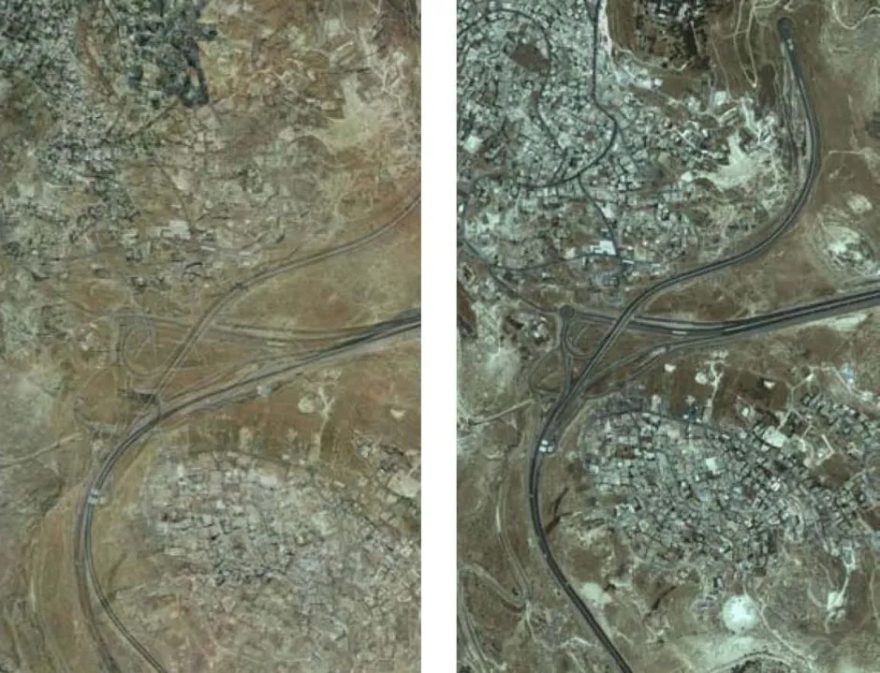 The West Bank town of A-Zaim (at bottom) and the Jerusalem neighborhood of A-Tur (at top) taken in 1989 (left) and in 2012 (right). The photos illustrate how the expansion of Palestinian construction over the years has constricted the area around the Jerusalem-Maale Adumim highway, effectively constricting the corridor connecting these two Israeli cities. This is precisely the challenge Israel faces all along this route including in the area of E-1. Israel has refrained from tackling this phenomenon, particularly because of international pressure and activity by leftist movements that provide support to this illegal settlement activity. Even Israel’s attempt to fulfill the letter of the law and settle the illegal interlopers, after evacuations, within permanent and legal settlement sites – such as the one set up at the end of the 1990s on the outskirts of Abu Dis – has not gone well. More recently, the Bedouins of the Jahalin tribe – who are under the sway of the Palestinian Authority and European organizations – rejected two further Israeli offers to create two additional permanent sites for their settlement, one south of Jericho and the other north of it (most of the Jahalin live in Jericho).
Moreover, some of the interlopers who in the past vacated lands in the area of Maale Adumim-Jerusalem and settled, in an arrangement with the state, at the permanent site in Abu Dis, sold their houses to others and went back to illegal building in their previous area of residence.21
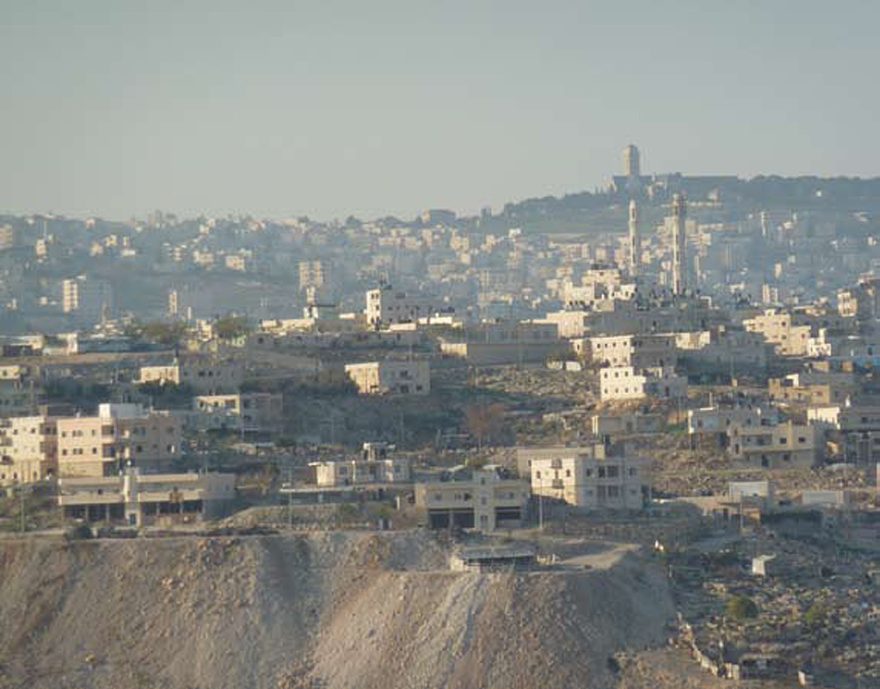 Israel built this permanent community for Bedouin on the outskirts of Abu Dis. Some sold their apartments and returned to illegal construction sites in the Adumim area.
A tour of the area to observe the illegal Palestinian settlement activity reveals the following picture:
The Palestinians’ invasion and illegal construction begins within municipal Jerusalem north of Highway 1 at a site called Sha’ar Mizrach. This is mostly Jewish-owned territory occupying about 180 dunams in the Anata area. Although this tract of land has potential for linking Jerusalem to E1, currently the state is not allowing the land’s owners to exercise their ownership and also is not taking action against the illegal Palestinian building there.
A visit to the police station in the heart of E1, looking westward, reveals a further concentration of illegal Palestinian building, widely dispersed on rocky land. There are a hundred buildings made of iron, wood, blocks, and cement, with laundry lines hung between them. Some are covered with cloth, apparently for purposes of camouflage. Also visible are horses, goats, a water tank, and a mobile restroom. Not far away is a smaller cluster of more improvised and temporary structures made of tin, wood, and iron.
Such a “landscape” is typical of many of the dozens of illegal Bedouin-Palestinian outposts in the area. Such concentrations, each having individual structures sometimes numbering in the dozens, can also be found near the sewage purification plant south of Road 437 in E1, and also north of this road, as well as northwest of the Mahane Yishai junction, north of Highway 1.
Not all of these concentrations may be characterized as “spontaneous” building. Sometimes the building is supported by European organizations or by elements associated with the Palestinian Authority – and also, according to military sources, by the PA itself. Not infrequently in these clusters of illegal housing, new, cloth-covered structures appear. One also sees large water containers, and restroom structures of a kind not typical of Bedouin communities.
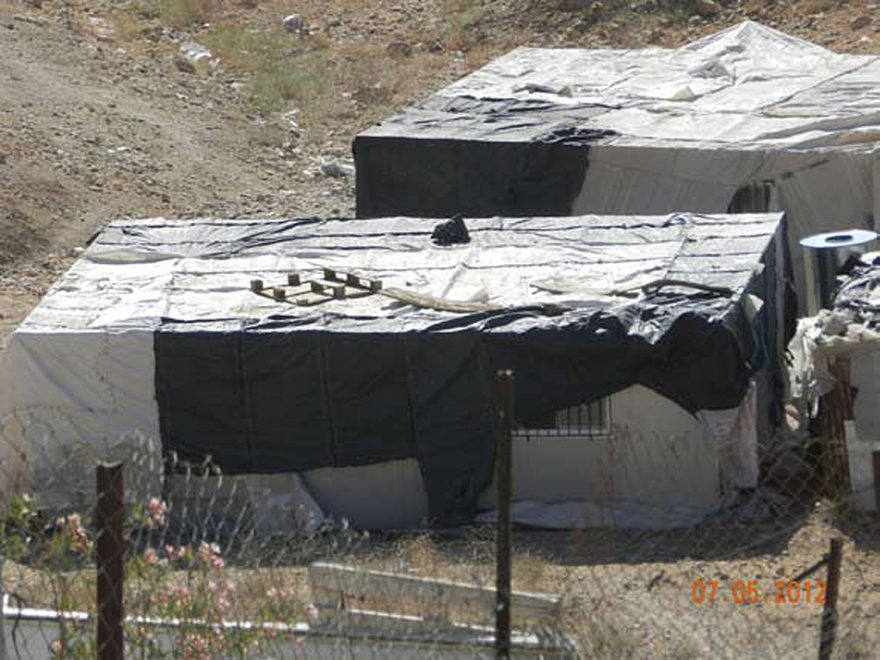 Prefab buildings br ought in without permits by Bedouin in the Mishor Adumim area, next to Route 1.
 A water meter installed by Mekorot, Israel’s national water company, next to an illegal Bedouin construction site near Nahal Og.
The areas that are attractive for illegal Palestinian settlement are those along Highway 1. Palestinians from Areas A and B can easily enter and build along this artery. The “magnet” is a spring that never runs dry: the pipeline of Mekorot, the Israeli water corporation. Many hundreds of pirate hookups have already been seen along this pipeline. Whoever travels on the road immediately grasps the situation: there are pick-up points for students and residents at every intersection, tractors that move at slow speed along a major highway, herds of goats crossing the road. The state and the Public Works Authority have invested many millions to build a road of the highest safety standards, a wide highway that connects Jerusalem to the Dead Sea area. Mountains were moved for this purpose; yet if the present process continues, soon this splendid road will wend its way through a large Bedouin village. The state is not dealing with the plague of pirate hookups and theft of water from the Mekorot pipeline; on the contrary, it is passively acquiescing. Recently, Mekorot installed a faucet with a meter, and the PA has been paying for the water that the Bedouins consume.
Another notable phenomenon is the Palestinians’ illegally accessing electricity by linking up to the street-lighting poles along the road, which has become widespread.
Also helping to entrench the illegal permanent presence of the Bedouin in the area is UNRWA (the United Nations Relief and Works Agency), which provides them with food and winter equipment while tending to their medical needs as if they are refugees. European organizations support the schools the Bedouin have set up and, with help from the PA, supply them with buildings and water containers.
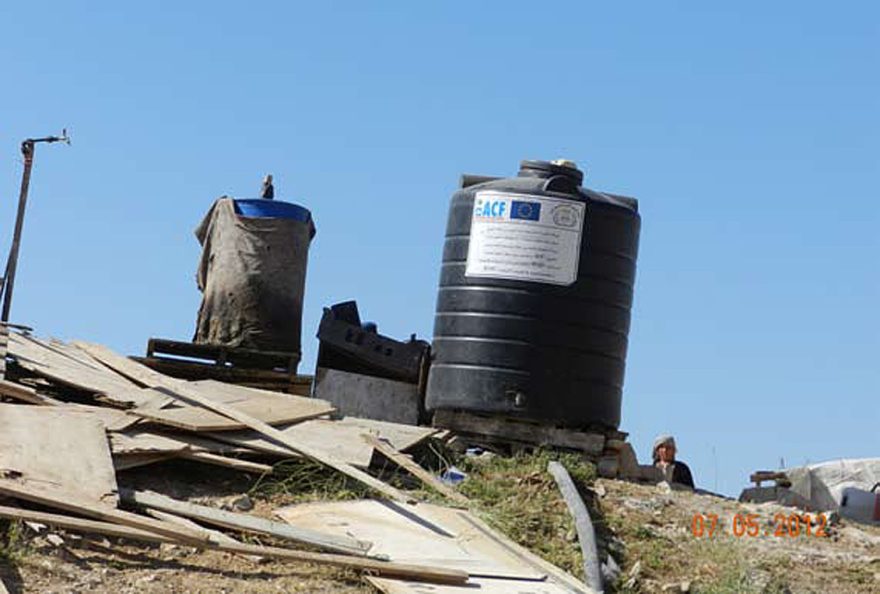 Water tanks at an illegal construction site in the Maale Adumim area, supplied by the humanitarian organization ACF and the European Union.
The Neglect of Illegal Palestinian Building
The state does not automatically open files on illegal building in the area. Occasionally it does so, and even issues demolition orders for buildings created without permits. The main problem is reluctance to implement these orders. In almost all cases the transgressors, with the help of various organizations, petition the Supreme Court against the Civil Administration, which issues the demolition and work-stoppage orders. The petitions present supposedly factual claims and various legal claims. The petitioners request that the demolition order be canceled, and succeed in delaying its implementation until the court rules on the petition. Because the demolition of a building is an extreme and irreversible step, the court usually accedes to the request. The judges issue an interim order until making a further ruling, and request the state’s response to the petition.
This is where the problem begins: the state submits repeated requests to defer the date and thereby drags out the case for years, until the patience of the court registrars runs out. The file is then canceled on grounds of inaction, and the interim order blocking demolition remains in force. Hence, in effect, the demolition orders that the Civil Administration issues are nullified, without serious discussion of the petitioners’ claims.
The Civil Administration’s Central Supervisory Unit became aware of this problem and reported in 2006:
The petitions to the Supreme Court have unfortunately become “part of the statutory process.”The phenomenon emerged and became increasingly common because of the slow, very slow, treatment, to the point of total suspension of activity, by the Supreme Court Division of the Justice Ministry….
The illegally-building Palestinian population was well aware that when submitting a petition to the Supreme Court, the illegal-building file usually goes to the archive and the chances of reviving it are close to zero. The Palestinian population, of course, makes use of this time to complete the construction and to populate it so as to hinder or thwart the demolition.
The report of the Civil Administration Central Supervisory Unit for 2008 (published in 2009) made similar observations:
There are hundreds of illegal-building files from recent years that in fact do not receive appropriate treatment, owing to manpower limitations of the Attorney General’s Office and the State Attorney’s Office. The result is that we are forced to remove from the agenda dozens of illegal-building files that prompted a petition to the Supreme Court, despite the fact that a considerable part of them are apparently in areas of importance, which also are defined as such in the priorities (p. 4).
The report also states:
The year 2008 was characterized by an almost total freeze of enforcement with regard to the illegal Palestinian building. Freezing the demolitions and other enforcement actions pertaining to infrastructure transmits a negative message to the population and enables the creation of facts that we will have difficulty coping with in the future (p. 1).
The State Attorney’s Office, in addressing these claims in the reports of the Civil Administration Central Supervisory Unit, stated that the policy of the Supreme Court Division reflected the general priorities for enforcement in this sphere.22 In other words, there apparently is no reason to pursue the case in court and have the petition rejected when, in any case, the enforcement authorities (that is, the Civil Administration) have no intention to demolish the buildings because of priorities related to a shortage of resources.
On May 1, 2011, the Supreme Court held a hearing on a petition (Supreme Court 9815/09) submitted by the Regavim movement, calling for the renewal of procedures on all the petitions of this kind that had been canceled or delayed because of inaction, while leaving the interim orders in force. (Regavim is a public movement that works for the preservation of state lands and assets and the prevention of their illegal takeover by various actors.) In the framework of this petition, the positions of the Civil Administration and the State Attorney’s Office were clarified. The discussion allowed the justices to hear the state’s defense against the charges, including an affidavit on the issue by the head of the infrastructures unit of the Civil Administration. The judges ruled that the phenomenon the petition called into question – the suspension of the cases – was no longer occurring and the petition was out of date.23
Yet a further inquiry, based on information obtained through the Freedom of Information Law, revealed that no significant change had occurred in the treatment of the demolition-order cases for illegal structures in the West Bank, in general, and the Maale Adumim area, in particular. According to an inquiry conducted in 2011,24 at that time, in the Supreme Court there were 162 petitions pending that had been submitted by Palestinians beginning in 2008, and on which interim orders had been issued forbidding the Civil Administration to demolish structures built in the West Bank without authorization.
In many cases, it turned out, more than ten consecutive requests had been submitted – in some of the cases, sixteen consecutive requests – to defer the date of the state’s response to the petition. In many instances the Supreme Court registrars had issued four or five warnings before cancellation on grounds of inaction, and in some cases seven such warnings had been issued. In these cases no discussion was held on the petition, the state having refrained from submitting its response to the petition and to the interim order. In such cases the interim order remains in force and, in effect, prevents the demolition. The upshot of these cases, like hundreds of others, is the effective cancellation of hundreds of demolition orders against illegal Palestinian building that have been issued in the West Bank, in general, and in the Maale Adumim area, in particular.
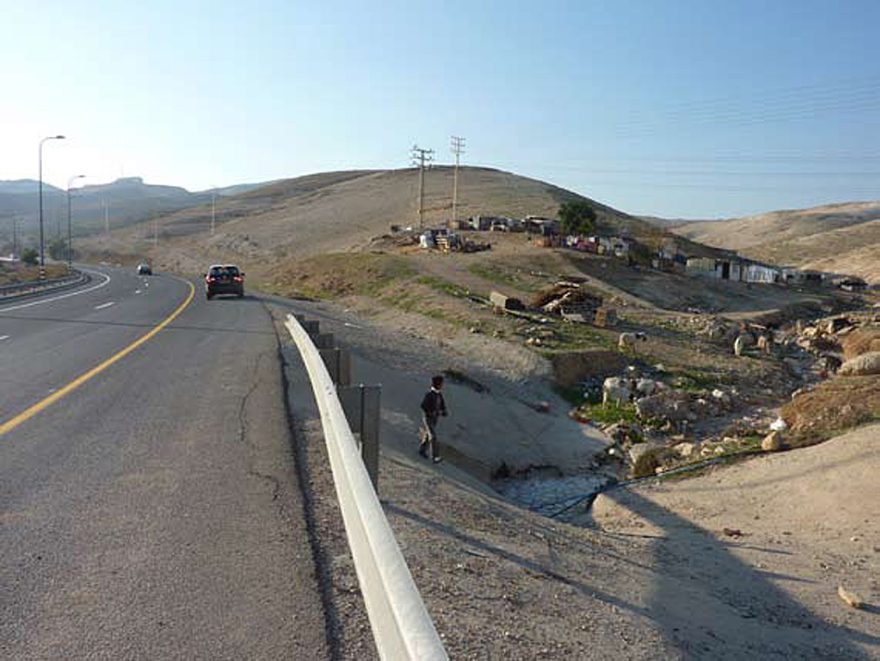 Illegal building by Bedouin next to Route 1
The Role of the State Attorney’s Office
The State Attorney’s Office is deliberately delaying action on these demolition orders. This behavior may be explained in statements by former Deputy Attorney General Malkiel Blass, written in the name of the attorney general, on April 11, 2009, in response to an earlier petition by the Regavim movement.
In his letter, the deputy attorney general writes that he has not found any problem in the state attorney’s conduct when declining to renew the procedures in the demolition cases for illegal Palestinian building. Blass explains that “in the area of planning and construction in Israel and the West Bank, there is a gap between the quantity of the demolition orders for structures that were not built according to the law, and the actual implementation of the demolitions,” and that “under these circumstances there is a need to determine orders of priority for carrying out the demolitions.” In the West Bank, he notes, “the considerations are quite complex….The attorneys are not the ones who set the priorities in carrying out
the demolition and many state authorities are involved in setting the order of priorities.” In sum, he states that “the issue requires the consideration of many other officials in the Israeli public administration and it is more complex than the consideration accorded by the attorneys in their handling of a certain case.”
A possible explanation is that political considerations are preventing the demolition of the illegal structures. Presumably, the root cause is pressure from the international community. In other words, Israel does not have the political latitude to demolish hundreds of illegal structures in the Adumim area and thousands more elsewhere in the West Bank. The Palestinian population is, of course, well aware of this reality, leading to still more illegal construction.
Because of pressure by groups like Regavim and various publications in the media, the state’s longstanding policy of avoiding demolition of illegal buildings has moderated somewhat in recent years. Yet the state is still far from dealing effectively with even half of these violations. On November 15, 2011, a meeting was held by the director of the Supreme Court Division of the State Attorney’s Office, attended by the head of the Civil Administration, the director of the Civil Administration Central Supervisory Unit, and representatives of the attorney general, to discuss the state’s position on cases (which were submitted to the Supreme Court) where work-stoppage and demolition orders were not implemented. It was decided that in such cases court injunctions should be issued “in accordance with the orders of priority of the responsible parties.”25
Nevertheless, in an event covered extensively in the media,26 when in January 2013 members of the Palestinian “Popular Committees” set up a protest encampment in E1, after the government’s decision to advance the planning processes for construction there, the state acted quickly, with the approval of the Supreme Court, to evacuate the encampment.
Over the years this situation, in which Israel has had difficulty coping with extensive illegal building, has reduced the width of the corridor between Jerusalem and Maale Adumim from about two kilometers approximately fifteen years ago to one kilometer and even less at present. This also constricts the possibilities for building in E1 and the adjacent areas.
Security officials, who concur with this assessment, warn that if Israel does not take significant steps to stop the Palestinian takeover of these areas, in the future it may be impossible to carry out the E1 plan as envisaged, particularly in the northwestern area that abuts Anata. Security officials believe that some of the Bedouin migration into the E1 area stems from fear of being left outside the route of the separation fence, which is intended to incorporate the Adumim bloc (including E1) into Israeli territory.
From an Israeli standpoint, then, the E1 building plan is virtually the only obstacle to the endeavor described in Nahal’s plan, since the international community does not allow Israel to act extensively and effectively against the illegal-building phenomenon. Over the years the Palestinians, for their part, have not concealed their goal of preventing Israeli building in E1. Faisal Husseini, the Jerusalem-based Palestinian leader who died in 2001, stated forthrightly that unauthorized building in the Jerusalem area was one of the Palestinians’ weapons in the struggle against Israel.27 As far back as 1993, Muhammad Nahal, an expert in urban planning at the Institute for Arab Studies that was part of Orient House, prepared a plan for the construction of three cities in the Jerusalem area that would surround the Jewish neighborhoods built in the Jerusalem area after 1967. One of the cities that Nahal planned was supposed to occupy lands of the villages of Azariya and Abu Dis, and its purpose was the encirclement of Jerusalem from the east.28
While Ehud Barak was prime minister, the Palestinians indeed formally requested that the E1 area be transferred to their control as part of Area B (where they have full civilian rule while security control remains in Israel’s hands). Their request was refused.29 At present, the Palestinian Authority provides support to illegal building, in general, and in the Maale Adumim area, in particular. In an event held at the illegal building site known as Khan al-Ahmar, Palestinian Prime Minister Salam Fayyad called the residents “the Bedouin land guardians.”30
After Israel evacuated the protest encampment at E1 in January 2013, the Fatah movement called this dismantlement a “crime” and averred that “this is not the end of the campaign to assert the Palestinian right to all of the Palestinian lands.”31
Maale Adumim and E1: The Heart of the Israeli Consensus
During a Knesset session on October 5, 1994, Prime Minister Yitzhak Rabin declared: “United Jerusalem would also encompass Maale Adumim as well as Givat Zeev as the capital of Israel under Israeli sovereignty.” Six months earlier, in April, it was Rabin who submitted the documents for the annexation of E1 to Maale Adumim Mayor Benny Kashriel.32 After Rabin’s assassination, Prime Minister Shimon Peres reaffirmed the government’s position that Israel would claim the application of Israeli sovereignty to Maale Adumim in the framework of a permanent settlement.33
At the beginning of April 2005, Prime Minister Ariel Sharon stated: “E1 is a plan ten years old, and the aim is to continue it.”34 Likewise, the defense minister in the Sharon government, Shaul Mofaz, said during a tour of E1 that he supported the plan to create Jewish continuity between Jerusalem and Maale Adumim.35 A public information video by the City of Maale Adumim36 shows major figures, over the past decade, affirming their belief in Maale Adumim and E1 and explaining their significance:
Ariel Sharon (former prime minister): “Maale Adumim will continue to be built as a permanent part of the State of Israel. I foresee a great future for Maale Adumim.”
Ehud Barak (former prime minister and defense minister): “Our possession of the E1 corridor must be translated into action. Unless we are prepared to build a continuity that will link Mount Scopus to Maale Adumim, Maale Adumim is in danger. If we do not embark immediately on political action, by establishing facts on the ground, we are at risk of losing Maale Adumim.”
Ehud Olmert (former prime minister): “I see in my vision, not as something distant but as a reality of life, all the way from Maale Adumim to Jerusalem and all the way from Jerusalem to Maale Adumim as a single urban continuity, which does not stop. There are things that are beyond all debate, beyond all controversy, and all the area surrounding Jerusalem will forever remain part of Jerusalem and the State of Israel, and Maale Adumim is part of this area.”
Benjamin Netanyahu (prime minister): “We want to create the continuity of metropolitan Jerusalem from west to east and the Palestinians want to create a continuity of construction from north to south, and someone will prevail over someone. They will not give in. They seek to strangle Jerusalem from one side and to separate it from Maale Adumim from the other. We have to prevail over them and build E1.”
Silvan Shalom (former foreign minister): “The linking of Maale Adumim to Jerusalem in the long term is inevitable.”
Knesset Member Tzahi Hanegbi (former chair of the Knesset Foreign Affairs and Defense Committee): “No prime minister or government will dare raise a hand against Maale Adumim, a city that protects Jerusalem. A city in which many people live. Maale Adumim has passed the point of no return. Don’t worry.”
Knesset Member Reuven Rivlin (former speaker of the Knesset): “The E1 plan is a mission we will never abandon….If Yitzhak Rabin were alive he would give an unequivocal order to implement E1.”
Meir Porush (former deputy housing minister): “If you want to strangle Jerusalem, don’t build E1.”
In past Israeli-Palestinian negotiations, the Israeli team insisted on Israel retaining E1 and the connection between Jerusalem and Maale Adumim. This was also part of the peace proposal made by former Prime Minister Ehud Olmert to Mahmoud Abbas.
Israeli Diplomatic Behavior on the E1 Issue: A Dual Message?
Along with the frequent declarations of commitment to Maale Adumim and the E1 building plan, all recent prime ministers have acceded to requests by U.S. administrations and agreed to freeze, or to coordinate with the United States, the actual building in E1. Israeli leaders, too, after announcing that the planning processes for E1 would go forward, made clear that the plan had not yet reached the implementation stage.
This dual behavior pattern is marked by a built-in contradiction. On the one hand, domestic audiences hear the message that Israel is going to build E1, a location extremely vital to the country’s interests. On the other hand, world leaders receive another message through private diplomatic channels – that Israel will meanwhile heed the position of the international community. This behavior inevitably makes it very difficult for Israel to respond to international and Palestinian protests against the E1 plan.
The result on the ground is that the plan is not implemented, and despite the talk of “advancing” it, it has not even approached the implementation stage. Even after the December 2012 decision of the Supreme Planning Council for Judea and Samaria to deposit the plan for public approval (a decision not yet carried out), a long path still lies ahead. Many months must pass until the public-approval process is completed. The council then has to decide whether to accept all of the objections that are raised, reject all of them, or accept some of them. Assuming that the plan passes, the council then has to authorize it. Only then can the Housing Ministry prepare tenders for marketing the land for construction. Publication of the tenders also requires approval by the political echelon.
The Palestinian Decision to Fight over E1
It was immediately after the Taba talks in January 2001 that the Palestinians decided to fight the E1 plan and recruit the world to the struggle. During the talks, Israel showed the Palestinian delegation a map of Maale Adumim that included the E1 area. Up to that time, the Palestinians had tended to agree to Israeli annexation of most of the settlement blocs, including Maale Adumim, in the context of territorial swaps. The Israeli assertion that the Maale Adumim bloc included E1, as well as land further east toward the Dead Sea, prompted a shift in the Palestinian position, and they retracted their prior agreement regarding Maale Adumim.37
The 2001 Taba talks, then, were the point at which E1 became a red flag for the Palestinians, even though previously they had not opposed it. And they indeed were able to harness the international community to their cause. Nevertheless, the dual message of the Israeli leadership – on the one hand, strong declarations on E1; on the other, delays and deference to the international community – has made it very hard to realize the supreme Israeli interest in building E1.
Already in Rabin’s day, Israel had refrained from carrying out the construction plans for the area because of an understanding with the Clinton administration that its fate would be determined in negotiations.38 Netanyahu, in his first term, tried to promote the plan and even initiated a decision to create a joint municipality for Jerusalem and the settlements surrounding it, but this too was stymied by U.S. opposition. Prime Minister Barak also spoke in favor of continuity and linking Jerusalem and Maale Adumim, but he allowed Israel’s negotiating team to discuss the future of this area in the framework of the permanent-settlement negotiations with the Palestinians.
The prime minister who succeeded Barak, Ariel Sharon, also supported continuity between Jerusalem and Maale Adumim and building in E1, but he, too, came up against U.S. opposition and in fact promised not to build there without coordinating with Washington. As his close adviser Dov Weisglass described it, there was never an Israeli commitment not to build, but it was agreed that such building would be announced in advance and carried out in coordination with the Americans.39
It was Sharon’s successor, Ehud Olmert, who gave the United States an explicit undertaking on this matter. In an interview to the Jerusalem Post in September 2005, Olmert publicly confirmed that Israel had promised the U.S. administration it would not build between Maale Adumim and Jerusalem. “The State of Israel made a commitment to freeze construction…therefore, we would be acting irresponsibly if we were to build there.” At the same time, Olmert, too, emphasized that this did not mean the plan had come to an end. He made similar statements to Mayor Kashriel of Maale Adumim in meetings held in recent years.
Conclusions
- It is necessary to speed up the approval process of the E1 plan immediately with the aim of implementing it, or at least reaching a situation of immediate preparedness to do so.
- In parallel, a public information campaign must be launched in Israel and abroad that, among other things, will use material from this study, with the aim of countering and mitigating the predictable international onslaught against the promotion and implementation of the plan.
- Even if the plan is not implemented at this stage, Israel must act immediately against the illegal building in the Maale Adumim-Jerusalem area, while overcoming the obstacles in the Civil Administration, the State Attorney’s Office, and on the political level that so far have prevented effective measures against this phenomenon.
- The paving of the bypass road should be renewed immediately, so that it can be fully built and made available to the Palestinians. The laying of the road should be accompanied by explanations of why this road constitutes a solution to the “continuity problem” as the Palestinians portray it, citing similar precedents that already exist.
- The linking of the E1 area to metropolitan Jerusalem can already begin. The building authorizations for the Metropolitan Center for Work and Business have been valid for some time. A joint legal team should be created for the Jerusalem and Maale Adumim municipalities, to be tasked with solving the legal problems that are delaying the work on constructing the Metropolitan Center. In the joint employment area on the seam line between Jerusalem and Maale Adumim, similar to the Barkan industrial zone in Samaria, both Jews and Arabs are to be employed, and this is a point to be emphasized.
- The international community has been acting with a lack of good faith when it complains that Israel is violating international law just over its announced intention to build in E1, while maintaining silence regarding Palestinian conduct in the area. The international community should be expected to honor signed agreements, and if the Oslo Agreements are still considered to be in force, then the Palestinians are forbidden to build in Area C. The Palestinians, as well, must honor the agreements under whose framework the Palestinian Authority was established, which controls more than 95 percent of the Palestinian population.
- The dual message that Israel conveys on the E1 issue – we will build the neighborhood vs. we will acquiesce to the world’s position and not build – makes it very difficult to explain the Israeli interest in developing E1. If the plan is so vital, why is it not being implemented despite the international community’s opposition? If the plan can be delayed, then perhaps it is not so vital? If there is indeed an intention to build, the time to act is now; but if the real aim is to keep deferring to international sensitivities, one should state this plainly and at least reap the dividends of doing so.
* * *
Notes
1. Barak Ravid and Natasha Mozgobia, “The United States Harshly Condemns the Intention to Build in E1,” Ha’aretz website, December 3, 2012 (in Hebrew).
2. “Catherine Ashton: ‘The Building around Jerusalem Is Unprecedented,’” Maariv-nrg website, December 20, 2012.
3. A dunam is equal to one thousand square meters, or roughly one-fourth of an acre.
4. See the video by the Jerusalem Center for Public Affairs, “Indivisible Jerusalem,” https://www.youtube.com/watch?feature=player_embedded&v=98DMPOC-dUQ.
5. Conference on settlement and security with the participation of members of the Settlement Division of the Jewish Agency, security officials, and those involved in the planning of settlements, held at the Jewish Agency at the end of the 1990s.
6. For elaboration on this concept, see the report “Metropolitan Jerusalem: Master Plan and Development,” prepared for the Ministry of Interior, the Ministry of Housing, the Israel Land Administration, and the City of Jerusalem, 1994 (in Hebrew). Research team headed by Shmarya Cohen and Adam Mazor in cooperation with the Jerusalem Institute for Israel Studies. Nadav Shragai, “Jerusalem: The Dangers of Division,” Jerusalem Center for Public Affairs, 2008, pp. 24-25.
7. Maia Hushan et al., “About Your Data,” Jerusalem Institute for Israel Studies, 2012, p. 7 (in Hebrew).
8. The data are based on the book by Aryeh Hess, Jerusalem and Her Daughters, self-published, 2009, pp. 28-30 (in Hebrew). However, the numbers were updated with the help of the database of the Interior Ministry and the relevant local and regional councils, and they are accurate as of the end of 2011.
9. Shragai, “Jerusalem,” pp. 24-25.
10. See, e.g., statement by former Knesset Speaker Reuven Rivlin on words in this spirit by Rabin and past leaders of the Labor Party, on the Megaphone site, article by Zvi Singer, “The Government Unanimously Rejected the UN General Assembly Resolution,” December 2, 2012 (in Hebrew).
11. Yossi Levy, “Gen. Biran: Only Territorial Continuity Surrounding Jerusalem Will Ensure Israeli Control,” Maariv, February 25, 1996, p. 15 (in Hebrew).
12. For elaboration on the issue of defensible borders in general and in the area east of Jerusalem in particular, see “Defensible Borders: A Necessary Condition for Israel’s Security,” Jerusalem Center for Public Affairs, 2005, article by Yaakov Amidror, “Israel’s Requirements for Defensible Borders,” and the appendix: “Military-Strategic Aspects of the Topography of Judea and Samaria for Israel’s Security” (in Hebrew; versions in English also available).
13. Appendix 7 of “Jerusalem: Links and Borders,” prepared by a professional team for the Ministerial Committee for Jerusalem Affairs during the 1980s (in Hebrew).
14. A lecture by Gen. Yaakov Amidror at the Lander Institute in 2007, at a conference on the unity of Jerusalem.
15. The facts presented at the beginning of this section are based on a survey prepared by the engineer of the Maale Adumim municipality, Gadi Brandeis.
16. Regulations Concerning Local Councils (Exchange of Maps) (Maale Adumim), 1991. Cited in Shmuel Berkovitz, The Wars over the Holy Places (Jerusalem: Jerusalem Institute and Hed Arzi, 2000), p. 171 (in Hebrew).
17. Map of the E1 plan.
18. From Protocol of the District Committee of Jerusalem No. 2011005, April 5, 2011 (in Hebrew).
19. Akiva Eldar, “Israel Expropriated Lands of Four Villages in the West Bank,” Ha’aretz, October 9, 2007 (in Hebrew); Aluf Benn, “The United States Demanded Clarifications on Israel’s Intention to Expropriate Palestinian Lands in E1,” Ha’aretz, October 14, 2007 (in Hebrew).
20. See “Paving Alternative Roads for Palestinians,” website of the B’Tselem organization, January 1, 2011 (in Hebrew).
21. Sources in the Civil Administration.
22. Response of the State Attorney’s Office, February 25, 2009, to the director of the Supreme Court Division (in Hebrew).
23. Ruling of Justices Beinisch, Grunis, and Hayut, Supreme Court 9815/09, January 5, 2011 (in Hebrew).
24. Letter by Amir Fisher, attorney for Regavim, to the director of the Supreme Court Division of the Justice Ministry, Attorney Osnat Mandel, December 25, 2011 (in Hebrew).
25. From the response of the State Attorney’s Office, December 18, 2011, to the request of the Regavim movement to participate in Supreme Court Case 9715/07 (in Hebrew).
26. See, e.g., Chaim Levinson, “The Police and the IDF Evacuated within Hours the Palestinian Encampment Set Up in E1,” Ha’aretz, January 14, 2013 (in Hebrew).
27. Husseini said at the time: “The most important Palestinian activity at this time is construction and even without a license.” See Nadav Shragai, “Jerusalem Is Not the Problem but the Solution,” in Moshe Amirav, ed., Mr. Prime Minister: Jerusalem (Carmel and the Floersheimer Institute, 2005) (in Hebrew).
28. A report in the local paper Jerusalem during that period. See also in Hagai Huberman, “The Battle forMevasseret Jerusalem,” Makor Rishon, December 14, 2007 (in Hebrew).
29. Huberman, ibid.
30. Yariv Mohar, “Palestinian-Bedouin Gesture in Appreciation of Human Rights Activists,” Mahlaka Rishona, May 16, 2011, https://www.news1.co.il/Archive/003-D-59703-00.html (in Hebrew).
31. “Fatah: Evacuation of the Outpost at E1 – A Crime,” website of Reshet Bet, Israel Radio, January 13, 2013 (in Hebrew).
32. Huberman, “Battle for Mevaserret Jerusalem.”
33. Protocol, meeting between Peres and Benny Kashriel, January 24, 1996 (in Hebrew).
34. Natan Guttman, “Sharon: We Will Continue the Project to Link Jerusalem to Maale Adumim,” Ha’aretz, April 5, 2005 (in Hebrew).
35. Nadav Shragai, “Mofaz: A Continuity of Settlement between Jerusalem and Maale Adumim,” Ha’aretz, March 3, 2003 (in Hebrew).
36. The video’s title translates to “Caution: They Want to Strangle Her.”
37. Ir Amim, position paper, December 2012, p. 4 (in Hebrew).
38. According to a minister in Rabin’s government.
39. Shomo Tzena, “Misunderstanding,” Israel Hayom, December 7, 2012 (in Hebrew)
TOP |

by Guy Millière
23August2026 at 5:00 am
https://www.gatestoneinstitute.org/22801/europe-in-free-fall
- [T]he terrifying fact [is] that Europe’s erasure as a civilization is underway.
- Economically, Europe is in ghastly shape.
- For nearly five decades, the European Union’s economic growth and productivity rates have lagged behind those of the United States.
- European Union countries have established welfare states that have steadily expanded since 1980 and stifle economic growth.
- The European Union has also proliferated stifling regulations that place a heavy encumbrance on businesses. Restrictions on gas and electricity production, combined with a drive for a rapid and extremely costly transition to “renewable energy”, have resulted in natural gas prices in Europe that are now three to five times higher than in the US, and electricity prices that are 2 to 4 times higher than in the US. To survive, many European companies have relocated production outside Europe.
- International investment is turning away from Europe. Nine of the world’s top ten tech companies are American; the tenth is Taiwanese.
- Although heatwaves have been affecting Europe for more than two decades, the continent remains resistant to air conditioning, viewing it as an expensive luxury (AC consumes costly electricity)…. In 2003, a heatwave in Europe killed more than 20,000 people. Almost nothing was done to prevent a recurrence, so in 2026, another heatwave has already claimed 25,000 lives.
- Pessimism about the future — fueled by the questionable narrative berating “man-made global warming” and the hyped-up fear that the planet may become uninhabitable — is on the rise in Europe.
- Most new immigrants in Europe come from the Muslim world and appear to have no interest whatever in assimilating or becoming more westernized. Many are emphatically discouraged from doing either by the leaders of their communities, for instance, by “honor killings….” There appears to be a growing demand among immigrants, in fact, to make Europe more like the Third World countries they abandoned.
- The proportion of Muslims in the United Kingdom, France, Belgium, the Netherlands, and Sweden has been increasing decade after decade – with consequences that anyone even slightly versed in history could have expected. Warnings have gone unheeded.
- Political parties defending Western civilization and values — while asserting their opposition to the Islamization of Europe and “civilizational erasure” — are gaining electoral momentum. Meanwhile, political leaders across major European nations and at the helm of the EU appear determined to prevent those parties from governing.
- The “offense” of those political parties disfavored by Europe’s “elites” consists of defending the values of the West, fighting the Islamization of Europe, and opposing the erasure of European civilization. These political parties are consequently subjected to exclusionary maneuvers and are relentlessly harassed by rival political leaders who not only seem to disagree but are also dragging the continent into a free fall and a possible cultural death.
 Europe’s erasure as a civilization is underway. Europe is on a path toward rapid, widespread decline — potentially irreversible. It is already extremely late in the day. Unless drastic actions are taken to reverse firmly entrenched trends, European civilization, simply demographically, will soon be part of the past. (Image source: iStock)
On February 14, 2026, US Secretary of State Marco Rubio delivered a laudatory speech about Europe and its legacy at the Munich Security Conference. He noted, however, that Europe is weakening. “We don’t want our allies to be weak,” he said.
His remarks initially were well received by the European political leaders and journalists in the room; not for long. Several journalists soon mentioned that, while Rubio appeared friendlier toward Europe than US Vice President J.D. Vance’s had been a year earlier, he was still “arrogant” in presuming that Europe needed advice on how to be stronger.
Some recalled that the Trump administration’s November 2025 National Security Strategy had warned that Europe faces the “prospect of civilizational erasure” — a claim they described as an “insult” to Europe.
Political leaders were also quick to express their rejection of what Rubio had said. The European Union’s foreign affairs and security policy chief, Kaja Kallas, in her own speech in Munich, declared: “Contrary to what some may say… Europe is not facing civilizational erasure.”
German Chancellor Friedrich Merz made a point of emphasizing that “European values” were not those championed by the Trump administration.
These reactions unfortunately have not changed the terrifying fact that Europe’s erasure as a civilization is underway. Europe is on a path toward rapid, widespread decline — potentially irreversible. It is already extremely late in the day. Unless drastic actions are taken to reverse firmly entrenched trends, European civilization, simply demographically, will soon be part of the past.
Economically, Europe is in ghastly shape. In 1980, the nine member states of the European Economic Community (today’s 27-member European Union) accounted for approximately 27% of global GDP, according to the IMF. By the end of 2025, the figure for the same nine countries (plus the former East Germany) had fallen significantly to just 15.5% of global GDP. Some European economists explain this disparity by citing the rapid development of China and the East Asian nations. A look at the US economy, however, shatters that explanation: in 1980, the United States accounted for 25.3% of global GDP — less than the EU’s share. By the end of 2025, the United States accounts for approximately 26% of global GDP — slightly more than in 1980.
For nearly five decades, the European Union’s economic growth and productivity rates have lagged behind those of the United States. Statistics also show that the total general government tax revenue as a percentage of GDP has increased in almost all member countries of the European Union — a trend not seen in the United States. Today, general government tax revenue accounts, on average, for more than 40% of the European Union’s total GDP. The figure for some countries is lower (22.4% for Ireland), but higher for several others: Denmark (45.8%), France (45.3%), Belgium (45.1%), and Italy (42.6%). The total general government tax revenue (federal, state, and local taxes plus social security) in the United States in 1980 was 25.6% of GDP. Today, it is still 25.6%. On average, populations in European Union countries pay far higher total taxes than Americans do, despite significant US investment in defense. The gap between the European Union and the United States has become immense.
European Union countries have established welfare states that have steadily expanded since 1980 and stifle economic growth. Today, social spending accounts for nearly 40% of total government budgets across the European Union — a figure far higher than that of the United States. Social insurance mandatory contributions in Europe are 2 to 2.5 times higher than in the United States for the same gross salary. This burden significantly increases labor costs for European companies and explains why employee take-home pay is lower in Europe than in the US. On average, in Europe, paying a monthly salary of €2,000 ($2,300) costs a company €3,800 ($4,375). In the US, paying a monthly salary of $2,000 costs a company only $2,200 to $2,800, depending on the state where it operates. The difference is considerable, and helps explain why unemployment in Europe is higher than in the United States.
The European Union has also proliferated stifling regulations that place a heavy encumbrance on businesses. Restrictions on gas and electricity production, combined with a drive for a rapid and extremely costly transition to “renewable energy”, have resulted in natural gas prices in Europe that are now three to five times higher than in the US, and electricity prices that are 2 to 4 times higher than in the US. To survive, many European companies have relocated production outside Europe.
International investment is turning away from Europe. Nine of the world’s top ten tech companies are American; the tenth is Taiwanese. There are no major European players in this crucial sector, and Europe is almost entirely absent from the field of artificial intelligence.
Although heatwaves have been affecting Europe for more than two decades, the continent remains resistant to air conditioning, viewing it as an expensive luxury (AC consumes costly electricity). On average, only 20% of households in EU countries have air conditioning. In 2003, a heatwave in Europe killed more than 20,000 people. Almost nothing was done to prevent a recurrence, so in 2026, another heatwave has already claimed 25,000 lives.
Other factors are also contributing to Europe’s decline.
Pessimism about the future — fueled by the questionable narrative berating “man-made global warming” and the hyped-up fear that the planet may become uninhabitable — is on the rise in Europe. Polls show that 63% of Europeans now believe their best years are behind them, and 77% believe that life in their country will be harder for the next generation. This pessimism is accompanied by a sharp drop in birth rates, with figures indicating that the population is rapidly aging. The average birthrate in the European Union now stands at 1.34 live births per woman, well below the generational replacement level of 2.1. This reflects an accelerating aging process that places an increasingly heavy obligation on pension and healthcare systems. In Spain, the figure is 1.10 live births per woman; in Italy, it is 1.14, and in Poland, it is also 1.10. Without major changes, Spain, Italy, and Poland will experience rapid population decline. Figures show that there were 3.46 million births and 4.81 million deaths in the European Union in 2025.
A trend toward downplaying traditional family roles is gaining ground in Europe, further exacerbating the problem of demographic replacement. In several European countries — Spain, Sweden, France, and the UK — sex education goes hand in hand with school textbooks explaining “gender identity,” “the possibility of sex reassignment” and “diverse family structures,” including having two mothers or two fathers. Across Europe, the number of same-sex and single-parent families is rising, and statistics show that such families generally have fewer children than families with both a father and a mother.
Europe’s population is decreasing, but mass migration, at this stage anyway, might be more of a burden on Europe’s finances than a contribution to its workforce or economic growth. Bureaucratic reports rosily predict “long term” gains. Even if mass migration were an economic benefit, it nevertheless is leading the European continent to cultural death.
Most new immigrants in Europe come from the Muslim world and appear to have no interest whatever in assimilating or becoming more westernized. Many are emphatically discouraged from doing either by the leaders of their communities, for instance, by “honor killings.” In addition, Muslim women have more children than non-Muslim women. In the UK, Muslim men may have up to four wives if married abroad, each of whom receives extra social welfare benefits. Muslims are doctrinally directed to despise Europe’s tolerance of the gay way of life; reject what is taught to their children regarding both history and sex education; see Europe as decadent and contemptible, and to openly reject the new societies in which they chose to live. There appears to be a growing demand among immigrants, in fact, to make Europe more like the Third World countries they abandoned.
The proportion of Muslims in the United Kingdom, France, Belgium, the Netherlands, and Sweden has been increasing decade after decade – with consequences that anyone even slightly versed in history could have expected. Warnings have gone unheeded.
Most Muslims arriving in Europe come from countries where antisemitism and hatred of Israel are widespread. Once settled in Europe, they remain antisemitic and hateful toward Israel, and contribute aggressively to the sharp rise of Jew-hate and anti-Israel bias in the countries where they now live. Many native Europeans ally themselves politically with them, declare themselves “anti-Zionist” (hostile to the existence of Israel), and show immense tolerance for Muslim antisemitism.
In the UK, the Equality and Human Rights Commission established in an October 29, 2020 report that the Labour Party was guilty of “inappropriate political interference” by Jeremy Corbyn’s office in several antisemitism cases. Corbyn was suspended from party membership and, in 2024, expelled from the party. He created a separate party with another former Labour member, Zarah Sultana, an “anti-Zionist” Muslim. Both were reelected in 2024 and are still MPs.
In France, the main left-wing party, La France Insoumise (France Unbowed) is “anti-Zionist,” openly supports Palestinian organizations, and refuses to define Hamas as a terrorist organization. Some of its leaders who have made antisemitic remarks have been prosecuted but not convicted.
Starting immediately with the terrorist group Hamas’s invasion of Israel and massacre of October 7, 2023, and throughout Israel’s war against Hamas in Gaza, anti-Israel demonstrations chanting slogans in support of Hamas were on the march in all major Western European cities. Appallingly, since the massacre, antisemitic attacks have seen a sharp increase across Western Europe, while Jews continue to leave Europe.
A poll conducted for the European Jewish Congress (EJC) shows that a majority of Jews still in Europe would like to leave. Ariel Muzicant, the president of EJC said in 2024, “We’re losing the battle. 57% of European Jews are considering leaving. In a few years, 50% of the communities may no longer exist.”
Political parties defending Western civilization and values — while asserting their opposition to the Islamization of Europe and “civilizational erasure” — are gaining electoral momentum. Meanwhile, political leaders across major European nations and at the helm of the EU appear determined to prevent those parties from governing (such as here, here and here).
In Germany, Alternative für Deutschland (AfD) leads in polls of voter intentions but faces a boycott by other parties known as the Brandmauer (“firewall”), with all other national and state parties forming alliances that exclude the AfD to prevent it from forming or even participating in governments.
In the United Kingdom — no longer part of the EU — Reform UK won many recent local elections and might be positioned to eclipse the Conservative Party. Meanwhile, a national poll conducted on July 26-27, 2026, revealed that the Labour Party had reached a record low among potential voters: 22%, the worst results for a British governing party since the 1940s. With no general election due until 2029, Keir Starmer resigned as prime minister, and his successor, Andy Burnham, was appointed by the Labour Party, apparently trying to avoid a new general election as long as it can.
In France, the National Rally (NR) has been the country’s most popular party for years. During the 2024 legislative elections, the NR appeared poised to win an absolute majority. Just before the election’s second round, President Emmanuel Macron urged all other parties to form a “Republican Front.” Their leaders called for votes to go to whichever candidate stood the best chance of defeating the NR contender: leading moderate right-wing voters to vote for far-left candidates, and left-wing and far-left voters to vote for moderate right-wing parties. The result was a fragmented National Assembly, unable to form a government cohesive enough to make policy decisions.
France’s economic situation was already concerning; it has since worsened. Unemployment is at 8% and is rising. Bankruptcies among small and medium-sized enterprises are increasing (in 2025, 69,957 businesses went bankrupt). National Rally’s Marine Le Pen has been leading the polls for the 2027 presidential election. She had been sentenced to three years in prison and 45 months (with 30 months suspended) of a public office ban, for actions that had previously led to dropped charges for Jean-Luc Mélenchon, the leader of France Unbowed. The alleged crime was that Le Pen and Mélenchon allowed parliamentary assistants to Members of the European Parliament to work in Paris for the MEPs they served. Le Pen appealed the case to the Court of Cassation, France’s supreme court of appeal, which suspended the sentence.
Le Pen’s conviction has not diminished her popularity. The Court of Cassation has stated it will issue its ruling before the 2027 presidential election, and the court’s president has hinted that the conviction will be upheld — meaning that if elected, Le Pen would become the first French president to win office while under a prison sentence. Mathilde Panot, president of the France Unbowed group in the National Assembly, declared that her party would not recognize the legitimacy of Le Pen’s election should she win, and would call for an uprising.
The “offense” of those political parties disfavored by Europe’s “elites” consists of defending the values of the West, fighting the Islamization of Europe, and opposing the erasure of European civilization. These political parties are consequently subjected to exclusionary maneuvers and are relentlessly harassed by rival political leaders who not only seem to disagree but are also dragging the continent into a free fall and a possible cultural death.
Dr. Guy Millière, a professor at the University of Paris, is the author of 27 books on France and Europe.
TOP |






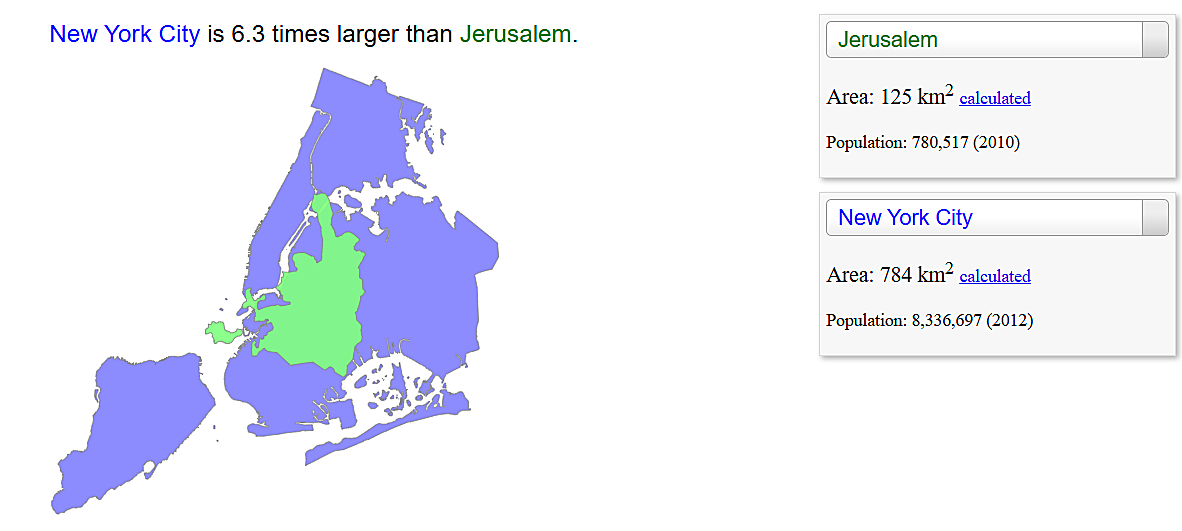

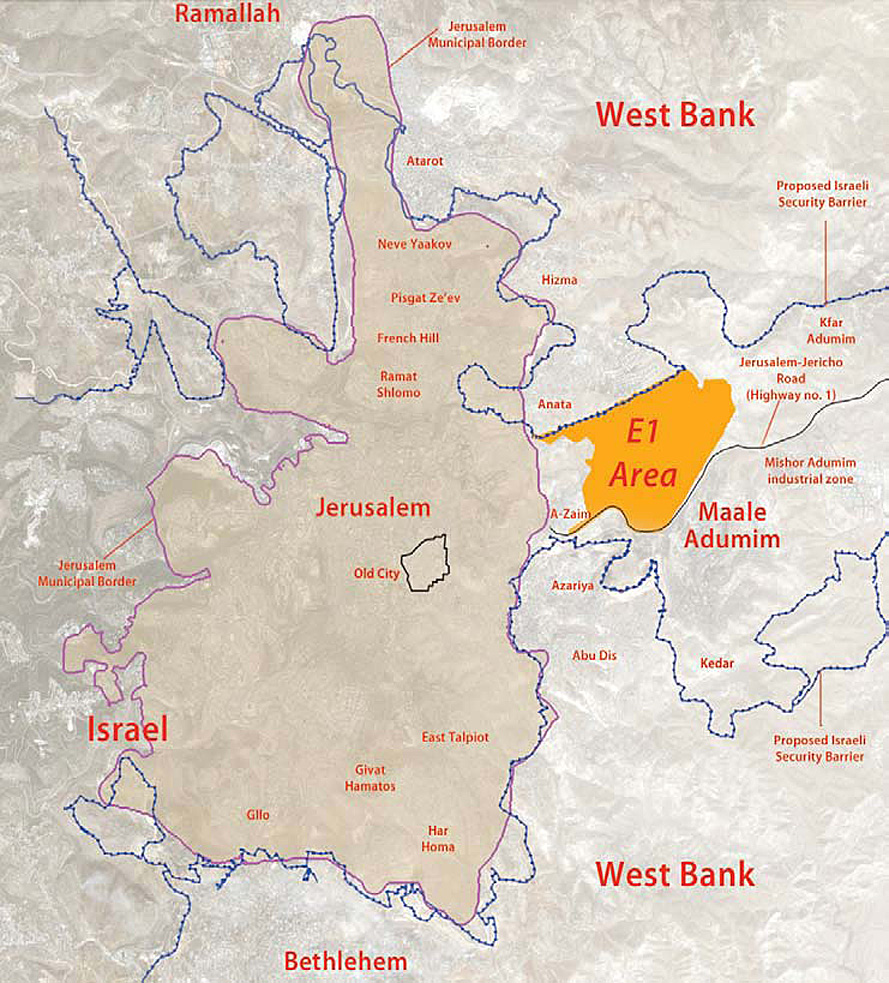
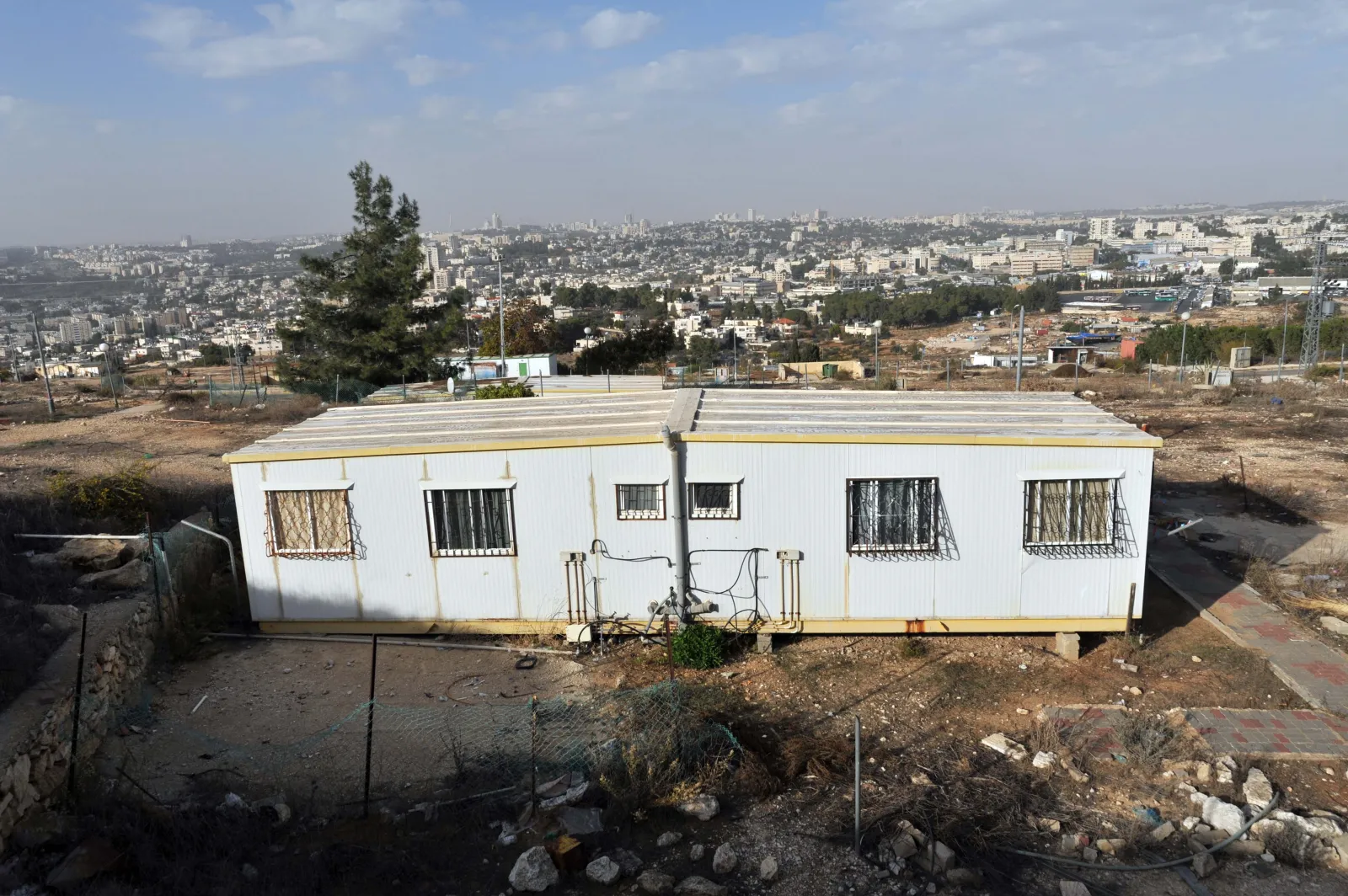
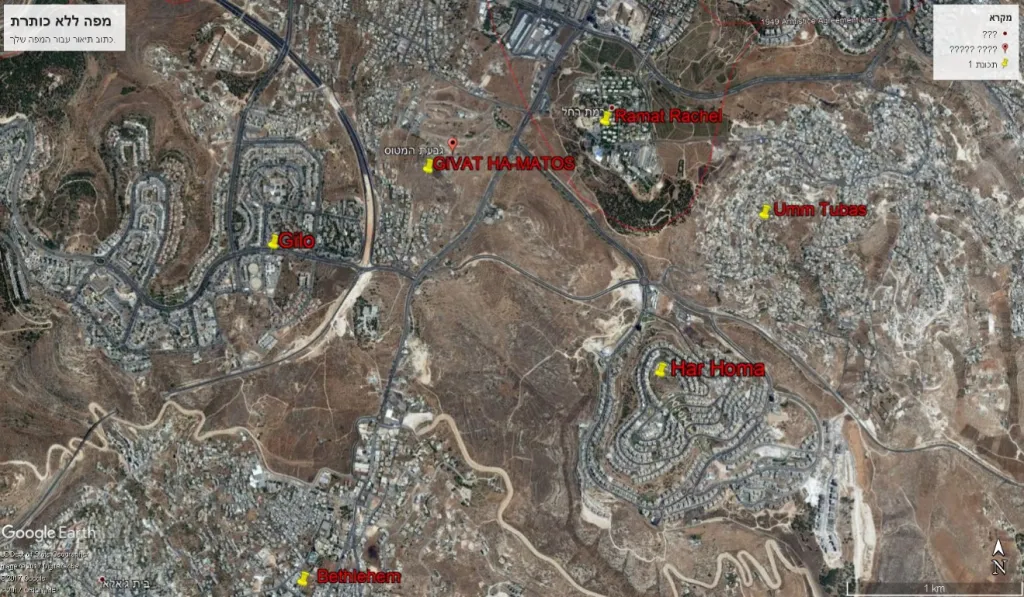
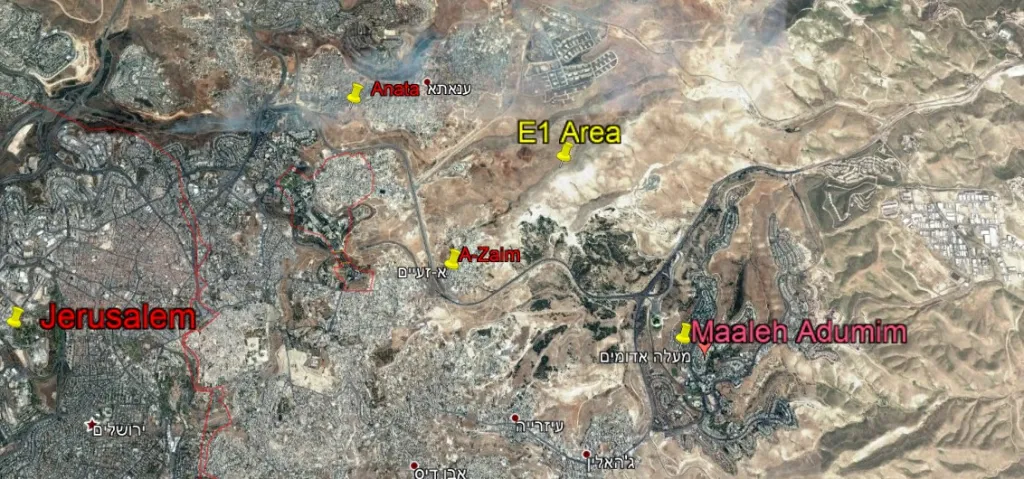
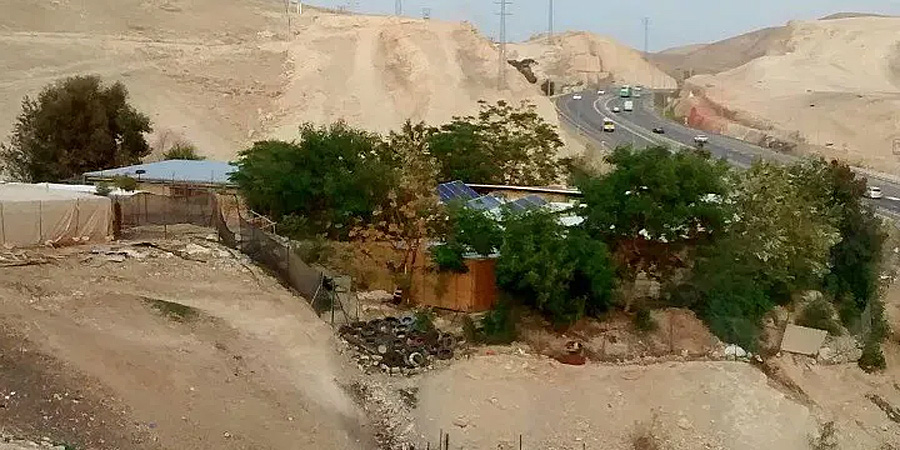









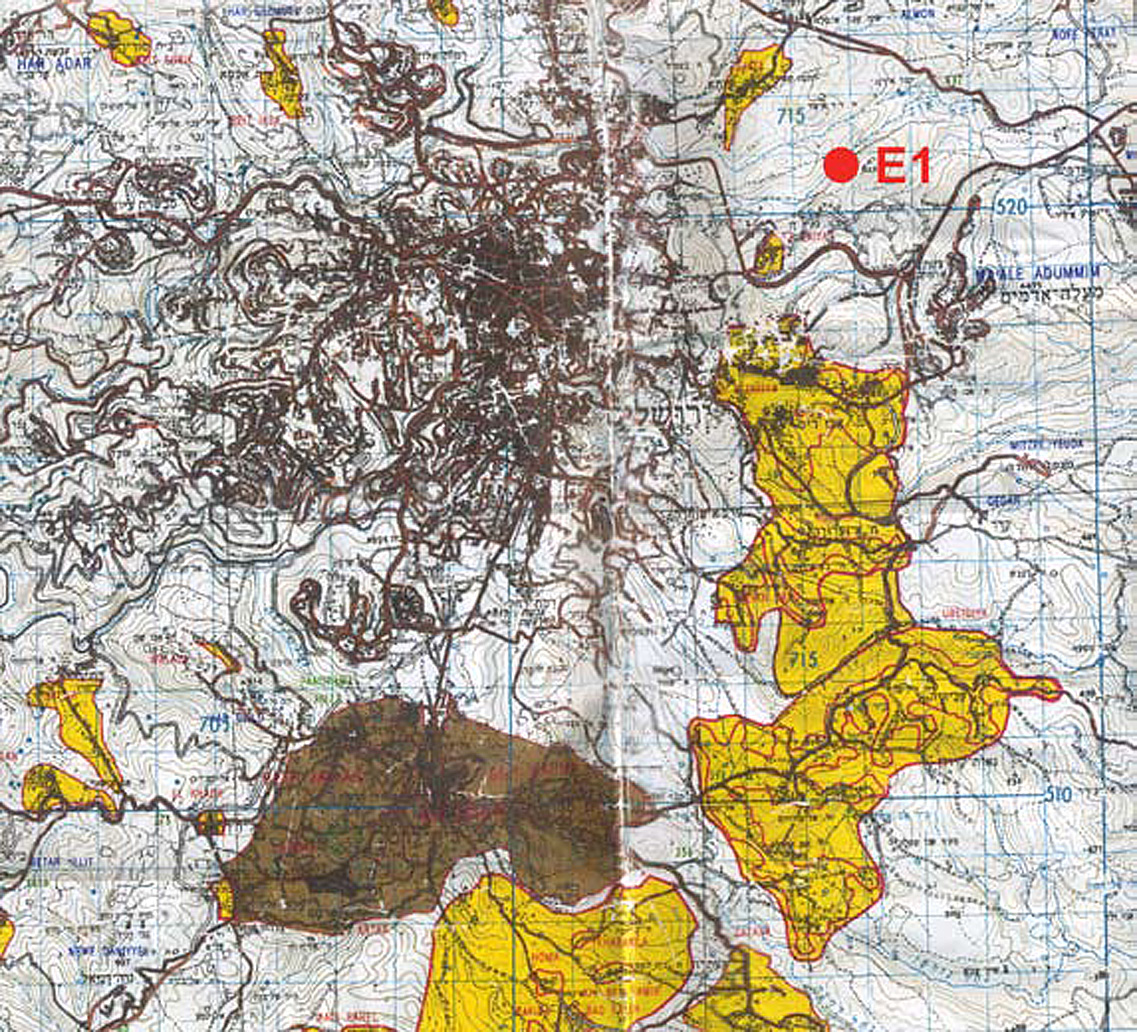
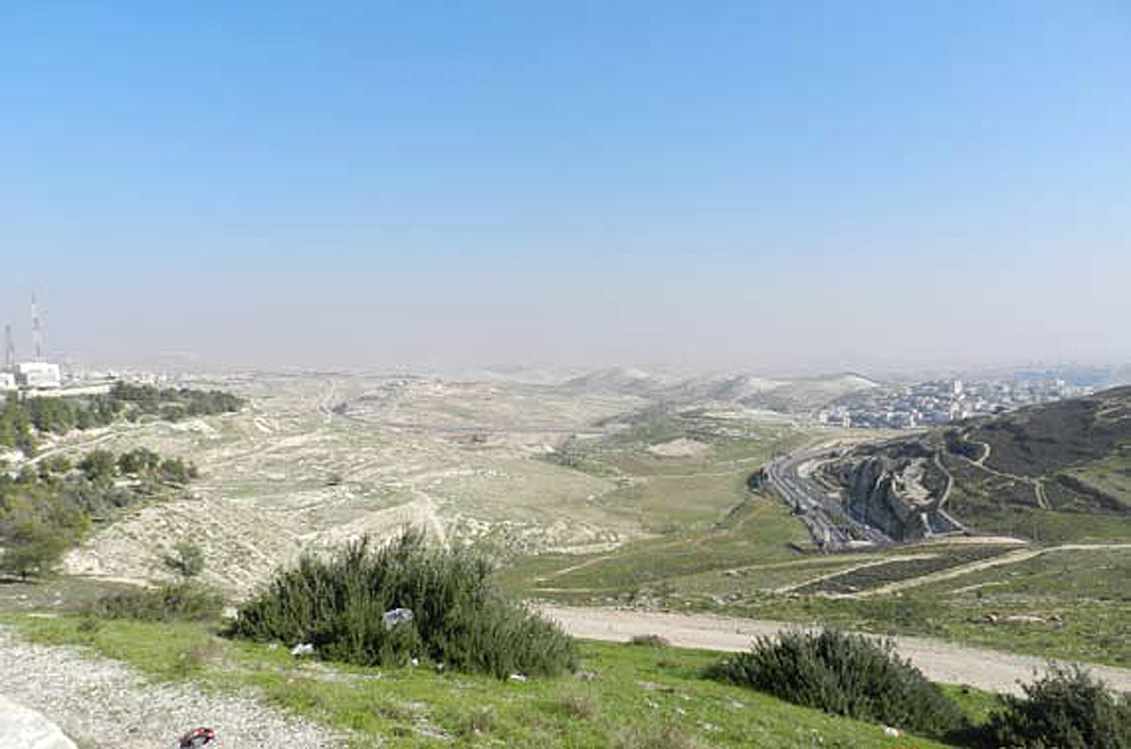
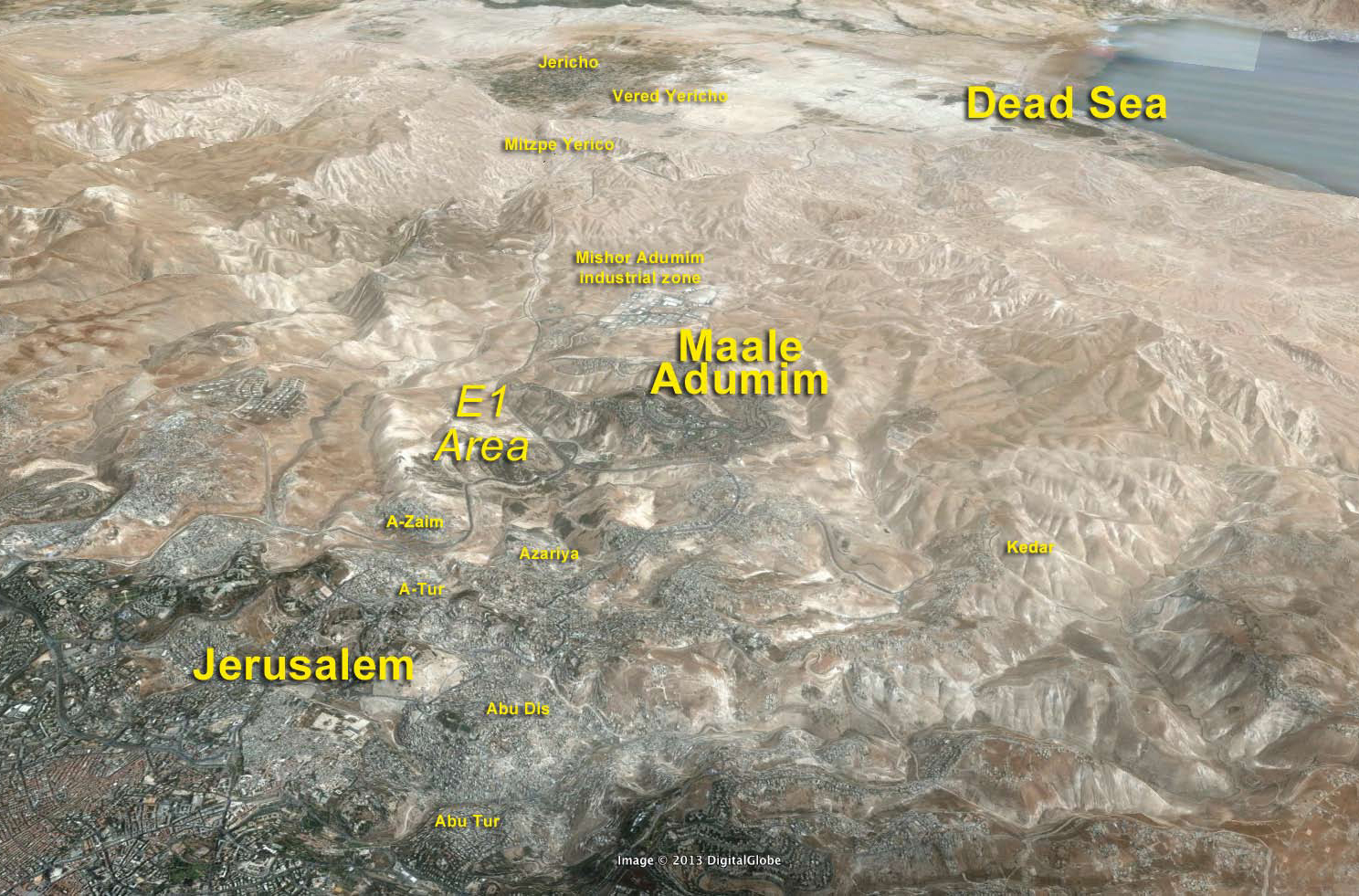
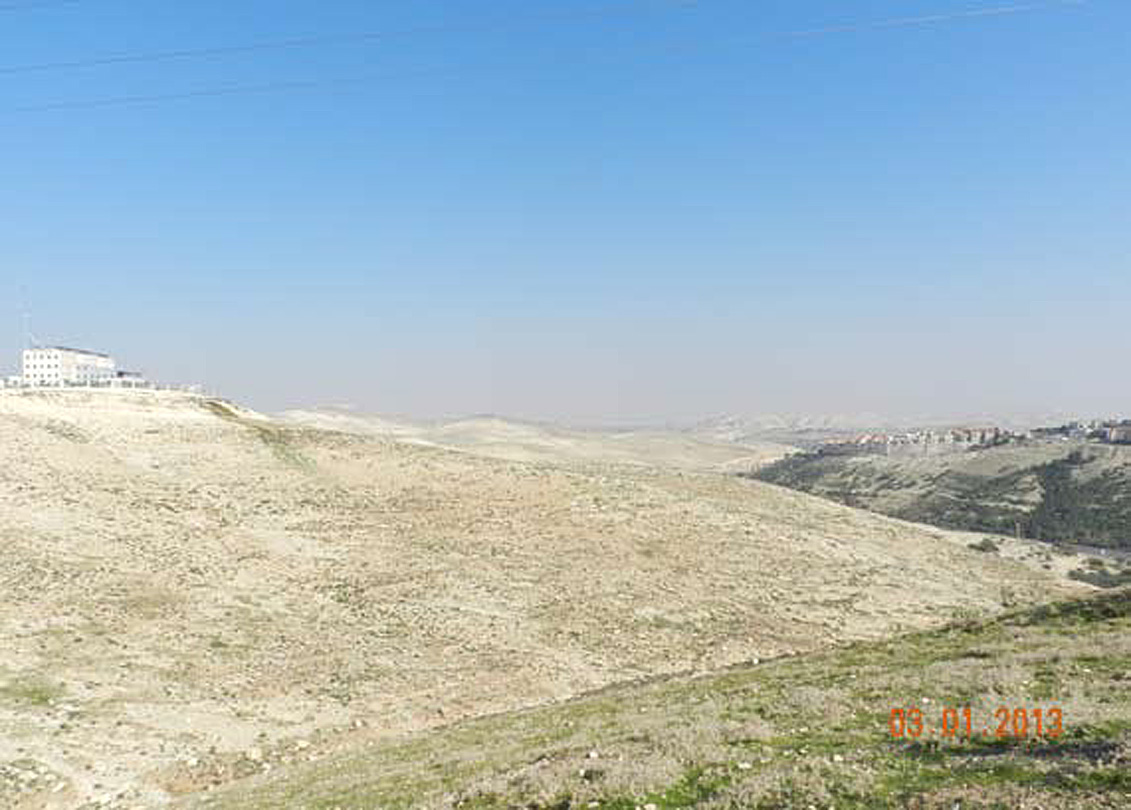
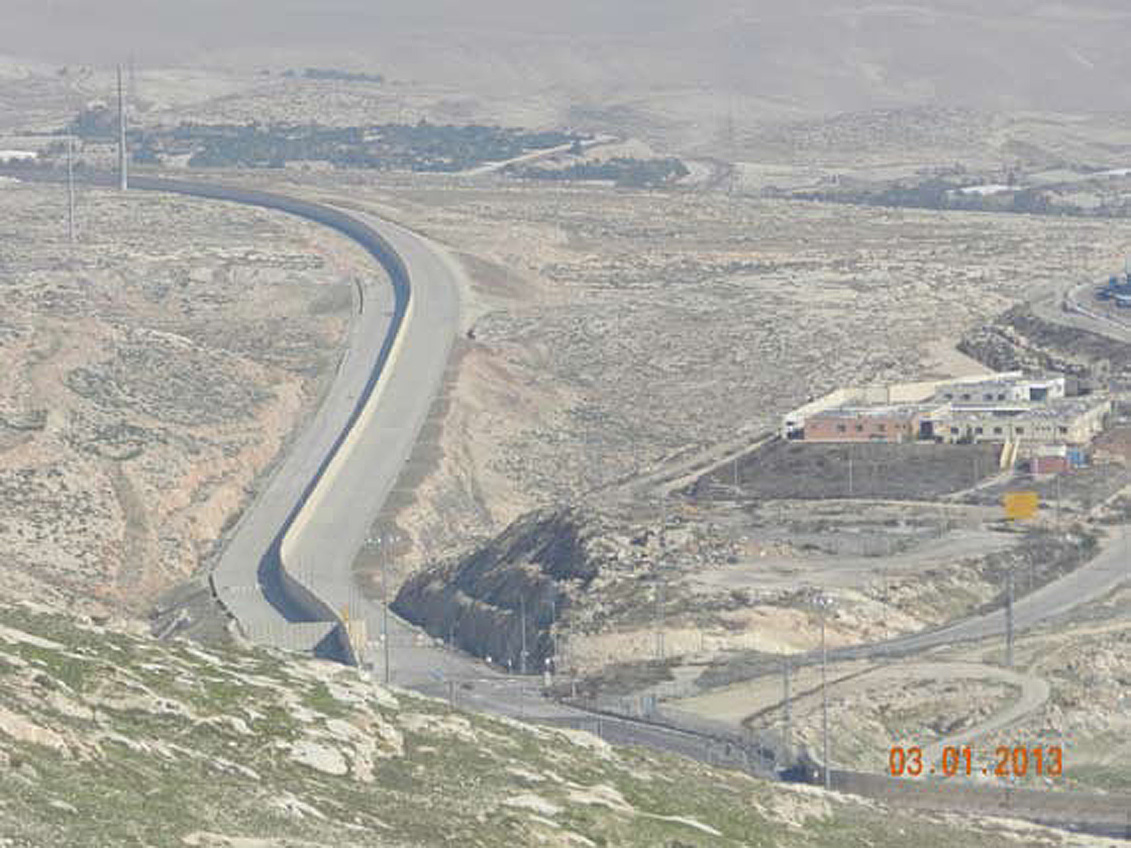
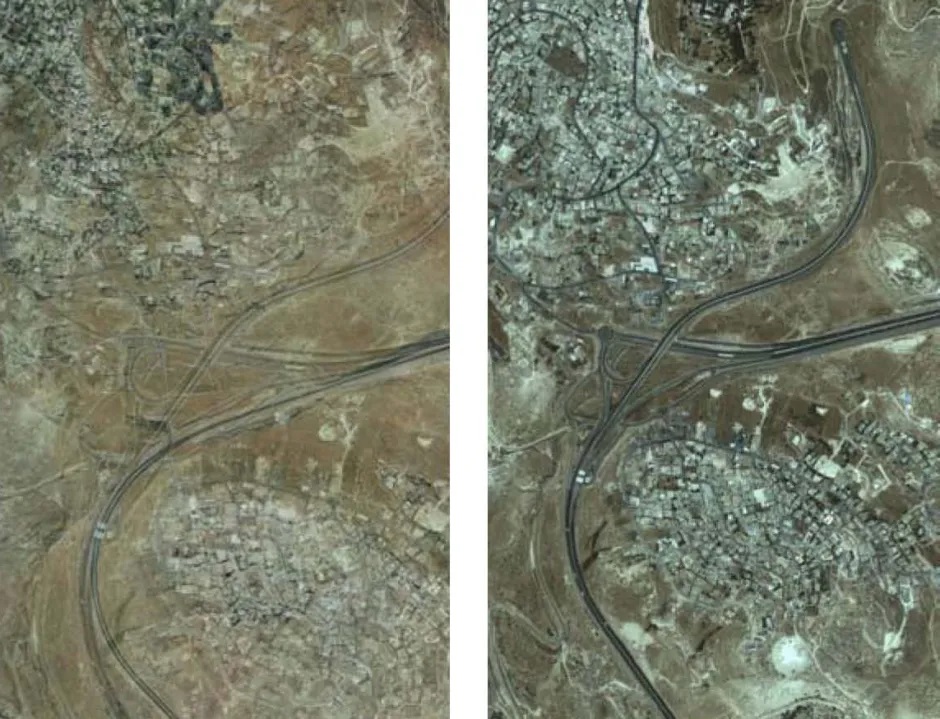
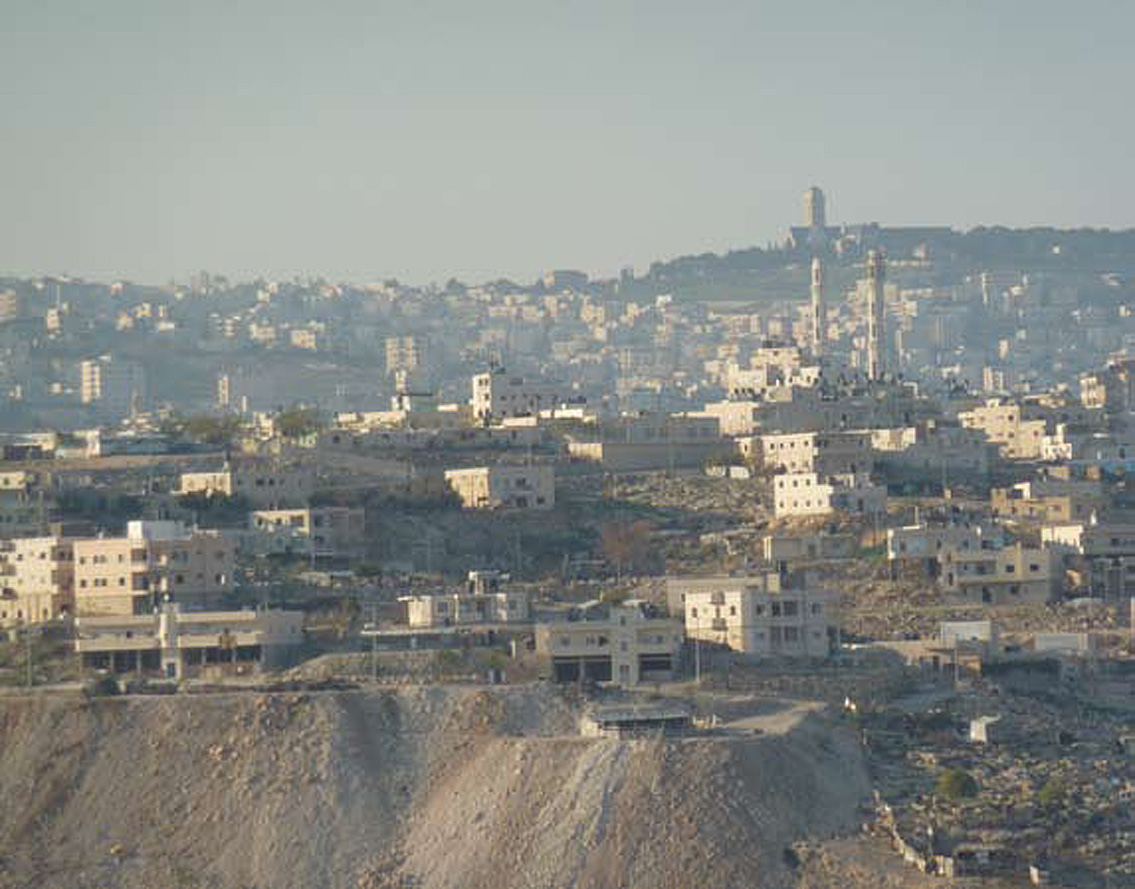
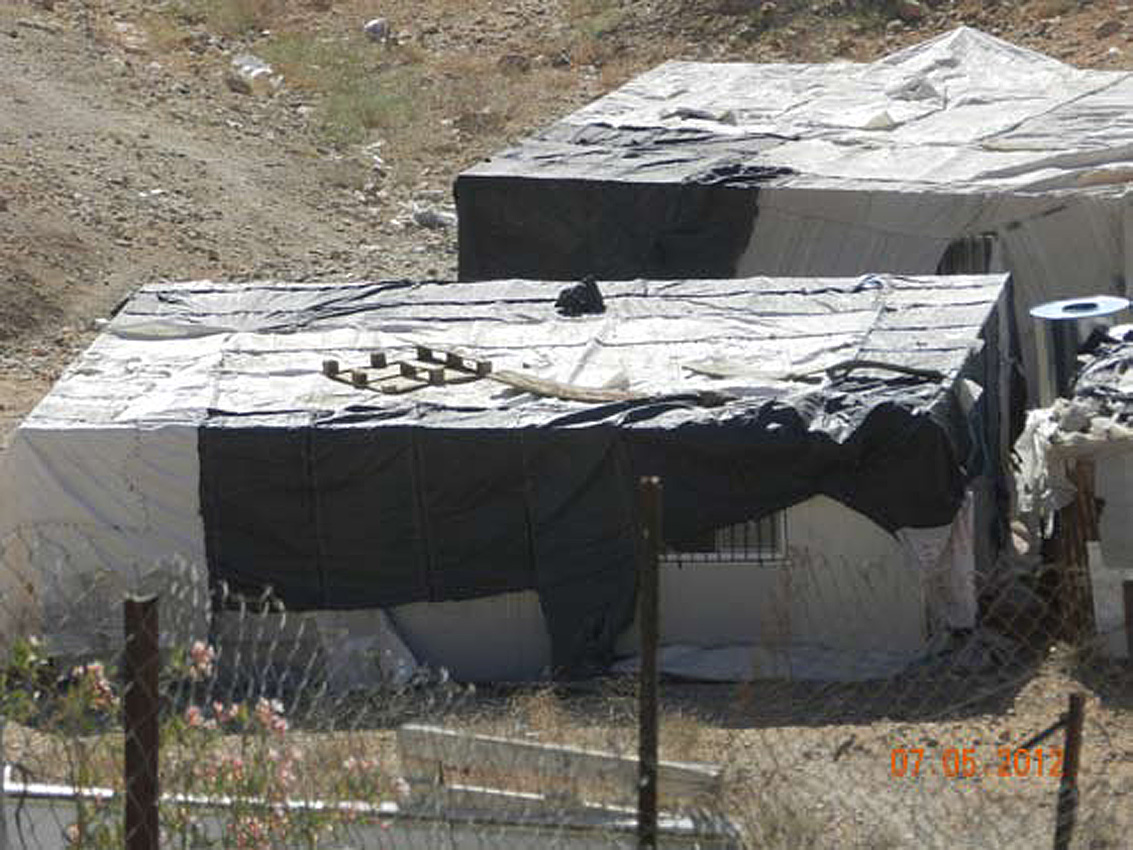

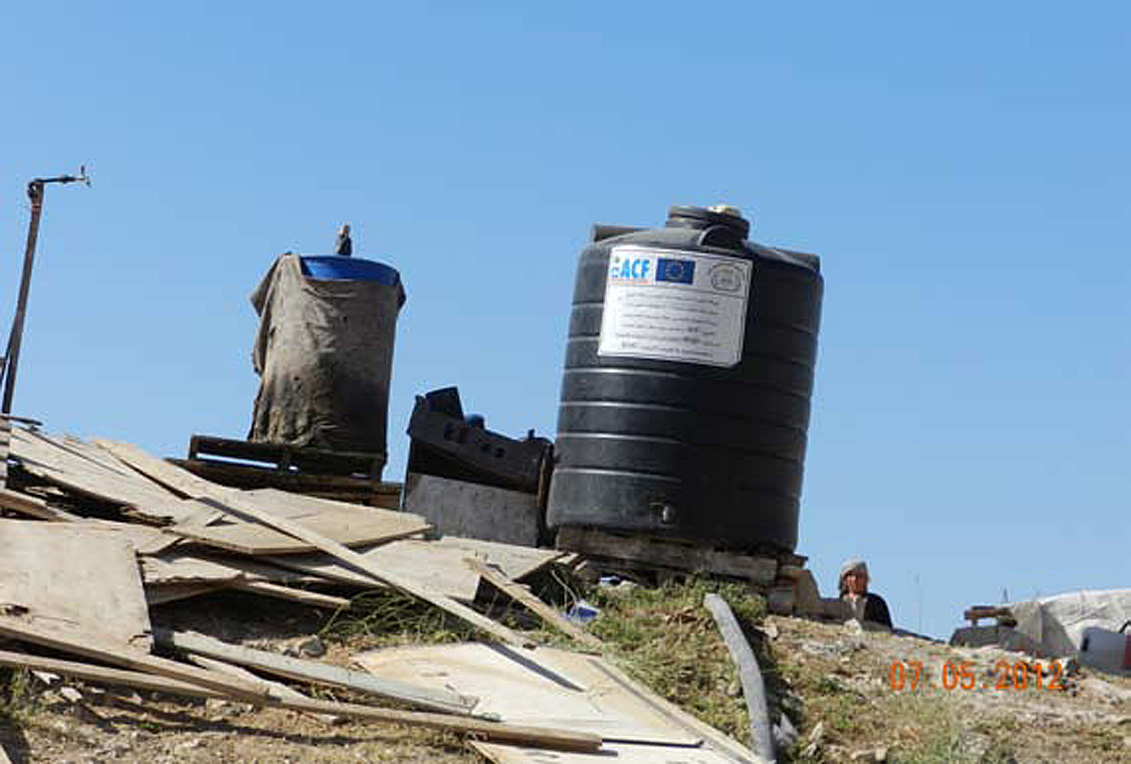
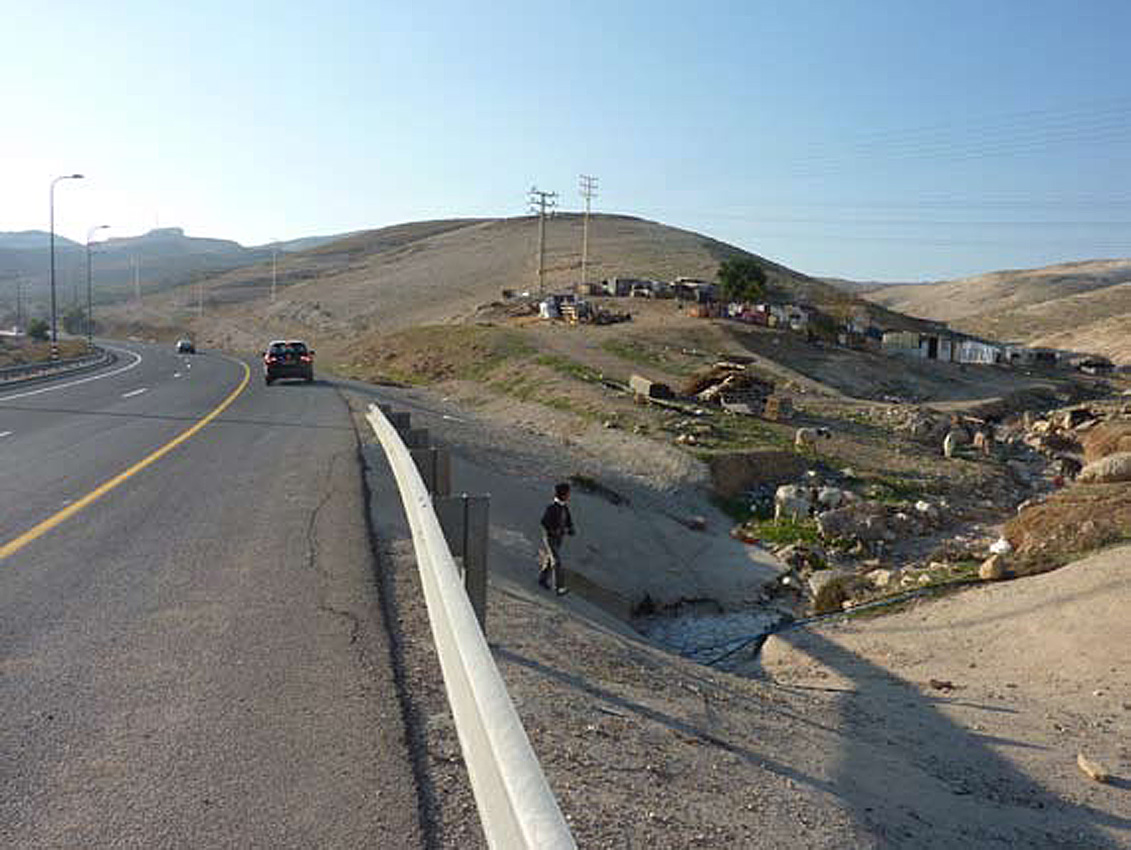













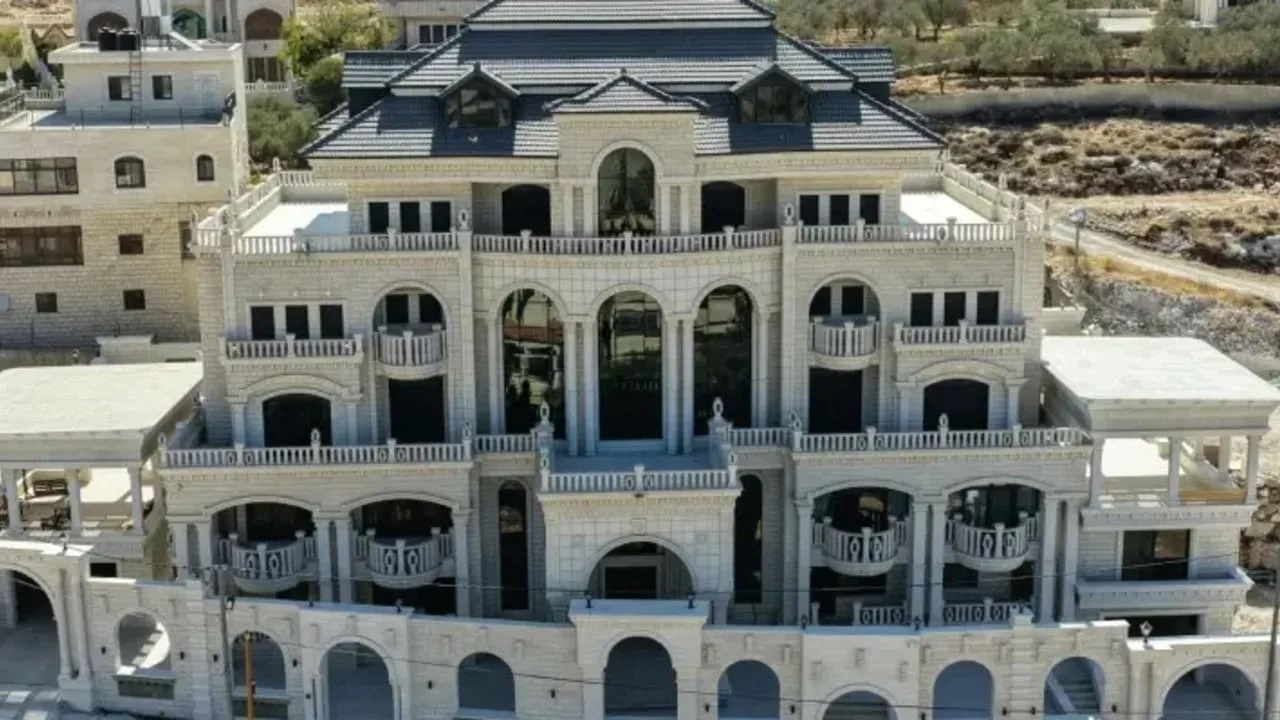



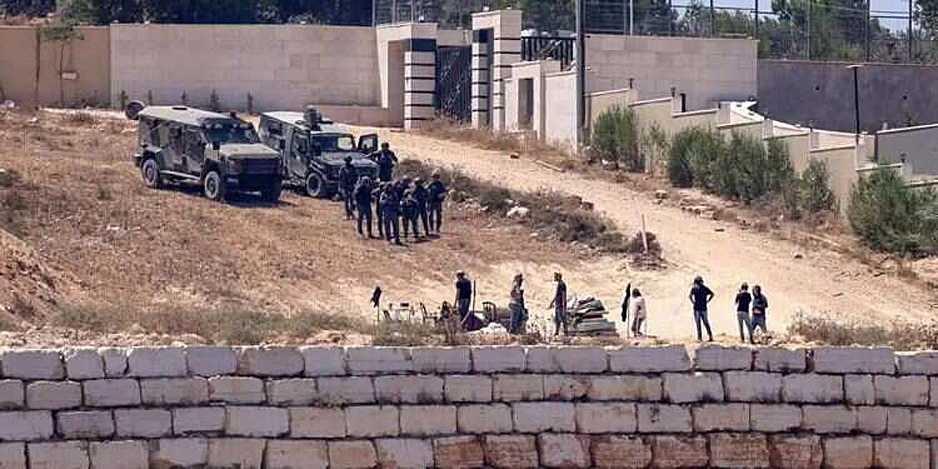

























ISRAEL AT WAR 5787: Time and Again
Doron Almog, chairman of the Jewish Agency (far right), and Ofir Sofer, Israeli Minister of Aliyah and Integration (to his left), with a family from France arriving to make their new home in Israel, Aug. 3, 2026. Credit: Courtesy of the Jewish Agency.
IDF LAUNCHES OPERATION “ROAR OF JUDAH” IN HEBRON
Come Home
Rabbi Shalom Arush-Breslev English-tweet-25October2026-DO NOT BE AFRAID
This is an incredible chiddush!
Hashem is making it more and more dangerous outside the Land in order to help you understand that you are supposed to come to the Land of Israel!
It doesn’t matter whether you agree with the government in Israel. It only matters that you come home to God’s land – YOUR land – where God wants you to be!
And if you say that there are so many threats on Israel: “What, do you want me to come to the Land of Israel to die?”
Well what does that remind you of?
Correct. The Sin of the Spies. Don’t make the same mistake!
And remember – the Gemara prepared us for this.
It says that in the End of Days – NOW – Israel will look like the most dangerous place to be, and will really be the safest.
There is a tradition that when Mashiach is revealed very soon – the borders to Israel will be locked and everyone outside the land will have to watch all the miracles from afar.
HASHEM WANTS YOU HERE!
DO NOT BE AFRAID, BE STRONG, AND COME AS FAST AS YOU CAN!
It’s a much bigger miracle for Hashem to support you outside the land – trust me!
Hillel Fuld-tweet-25October2026-Come home
On Shabbat, as we were reading the Torah portion, I had an epiphany.
God tells Abraham to leave his home and head to an undisclosed location, which, as we know, ends up being Canaan, aka the land of Israel.
But if you go deeper and look at the actual words of God’s commandment to Abraham, something jumps out at you.
Before I explain, let me ask you a question.
Jews around the world who decided that Aliyah is not for them, that Israel is not for them, what is their reasoning?
I’ve heard four explanations.
1- “I built a whole life here. I can’t just pick up and leave and abandon everything. This is my home where I’ve lived my whole life.”
2- “I am American. If I leave, who will stand up for the Jews? I am loyal to America. I’m not running away.”
3- “My family is here. I can’t just leave them here.”
4- “My kids are very sheltered here and as a result, very religious. If I bring them to Israel, they’ll be exposed to secular Jews and it’ll undermine everything I’ve raised them to believe.”
Four “excuses”.
Now let’s look at Abraham and you’ll see how God wasn’t only commanding him to go to Israel but rather, it was a commandment for all Jews throughout the generations.
The verse says: “GOD said to Abram, “Go forth from your home, from your native land, and from your father’s house to the land that I will show you.”
Why all the repetition?
Why not just say “Leave home and go to Canaan”?
Why “… home, from your native land, and from your father’s house to the land that I will show you.”?
Well, now let’s examine the four excuses.
“I built a whole life here. I can’t just pick up and leave and abandon everything. This is my home where I’ve lived my whole life.”
So God says “Go forth from your home…”
“I am American. If I leave, who will stand up for the Jews? I am loyal to America. I’m not running away.”
So God says “… from your native land.”
“My family is here. I can’t just leave them here.”
So God says “… And from your father’s house.”
And finally, the claim that Israel will somehow make people less religious?
God says “… to the land that I will show you.” (I will tell you how to be religious. Don’t you tell me!”
So the four descriptions used here in that first verse, they are not random. They address all the arguments made by Jews when trying to justify to themselves not coming home.
God might have been talking to Abraham when telling him to leave his home and go to Israel, but He was also talking to all of us, and by “Us”, I mean all Jews for all times.
Come home. It’s time. 🇮🇱🇮🇱
Rabbi Shalom Arush-Breslev English-tweet-25October2026-DO NOT BE AFRAID
Hillel Fuld-tweet-25October2026-Come home
GENESIS 12:! Come Home
TOP
Terror on flight from Dubai to Tel Aviv-
flydubai Flight FZ1073 miracles! THANK YOU HASHEM!
flydubai Flight FZ1073 miracles! THANK YOU HASHEM!
Rabbi Shalom Arush-Breslev English-tweet-1October2026-flydubai Flight FZ1073 THANK YOU HASHEM
Many experts have come forward, all with the same message:flydubai
The fact that the tail, or wings, of the airplane didn’t rip off trying to pull out of that nose-dive is unheard of. Every other plane in history when faced with anything even close ripped apart mid-air and crashed
Even more, the one who started pulling that plane up was no less than Yaniv – an Israeli hero with no experience flying! The entire initial sequence to attempt to come out such a dive wasn’t started until the backup pilot took over
It’s nice for President Trump to congratulate Boeing on a “job well done” for building that plane – but the one who really deserves the praise is Hashem!
This is in addition to the miracle of the dying, severely injured pilot managing to open the door, and that the Israeli heroes were able to subdue the terrorist and get him out of the way in just one minute, with only 90 seconds to go before hitting the ground
Telling this story without God is like saying that the Red Sea split due to “a strong east wind.”
The fact that the plane landed and all passengers are alive is literally open miracles and wonders! And while immense credit is due to the people who stepped forward without hesitation, first and foremost, credit must be given to God Almighty!
THANK YOU HASHEM!
Everyone should say lots and lots of Psalm 100 – A Psalm of Thanksgiving – today and through the rest of Sukkot!
Israel MyChannel-tweet-30September2026-flydubai miracles
Truly Incredible…
Retired Navy pilot Matthew ‘Whiz’ Buckley revealed today that the hijacked flydubai flight exceeded its maximum operating speed by a staggering 100 knots while plunging 20,000 feet in just 30 seconds.
But just how extreme is that?
What is 100 knots? It’s exactly 185 km/h (115 mph). This means the Boeing 737 MAX 8 was flying 115 mph OVER its absolute structural red-line limit!
𝐓𝐡𝐞 𝐃𝐚𝐧𝐠𝐞𝐫: Commercial jets are built tough, but they aren’t fighter jets. Exceeding max speed by this much causes “flutter”—violent aerodynamic vibrations that can literally rip the wings or tail right off the fuselage mid-air.
𝐓𝐡𝐞 𝐌𝐢𝐫𝐚𝐜𝐥𝐞: Surviving a dive this steep and fast without the airframe snapping apart under the extreme G-forces is virtually unheard of.
The fact that the passengers and crew managed to subdue the attacker and pull the plane out of this violent dive before it disintegrated in the sky is an absolute miracle.
“For He shall give His angels charge over you, to keep you in all your ways. In their hands they shall bear you up, lest you dash your foot against a stone.” — Psalm 91:11-12
Thank God for His protection today! 🙏💙
Rabbi Shalom Arush-Breslev English-tweet-1October2026-flydubai Flight FZ1073 THANK YOU HASHEM
Israel MyChannel-tweet-30September2026-flydubai miracles
He was attempting a 9/11 style attack inside of Israel.
Mossad Commentary-tweet-4October2026-9-11 COPYCAT ATTACK
🚨 9/11 COPYCAT ATTACK?
The flydubai co-pilot accused of trying to seize the aircraft allegedly planned to crash it into Tel Aviv’s Azrieli Towers in a 9/11-style attack.
According to senior Emirati official, Israeli Mossad personnel and aviation experts have joined the UAE-led investigation alongside Saudi, Omani and U.S. officials.
The 29-year-old co-pilot reportedly had previously been fired by Oman Air over extremist views and barred from flying there.
UAE authorities are reportedly expected to seek the death penalty.
Mossad Commentary-tweet-4October2026-9/11 COPYCAT ATTACK?
David M Friedman-tweet-4October2026-9/11 attack inside of Israel
What everyone suspected has now been established: the Omani pilot for FlyDubai was attempting a 9/11 style attack inside of Israel.
I shudder to think of the suffering, grief and geopolitical consequences had he succeeded. The world would be a very different place today.
This is a wake up call to all the nations harboring radical Islamists — and there are many, especially in the West: get your act together! Do a better job of vetting everyone getting near a commercial airplane — from pilots to crew to caterers to maintenance staff. The world may not be this lucky and blessed if there is a next time.
David M Friedman-tweet-4October2026-9/11 attack inside of Israel
TOP
Psalm 100 ‘Psalm of Thanksgiving’
Rabbi Shalom Arush-English-tweet-13June2025-Hope to God strengthen your heart
Hope to God, strengthen your heart, and Hope to God!
Do not be afraid for God goes before you, to smite your enemies
Repeat Psalm 121 “A Song of Ascents” over and over until you’re not afraid
Repeat Psalm 100 A Psalm of Thanks for how He has protected us with miracles until now!
Rabbi Shalom Arush-English-tweet-14June2025-Also Psalm 100
HERE IS ANOTHER ONE!
KEEP IT GOING!!!
Singing and dancing and thanking Hashem!
Also Psalm 100 “Psalm of Thanksgiving” for Hashem protecting us until now!
BETTER AND BETTER!
“and we’ll be safer and safer, safer and safer!”
Rabbi Shalom Arush-English-tweet-13June2025-Hope to God strengthen your heart
Rabbi Shalom Arush-English-tweet-14June2025-Also Psalm 100
Psalms 100 Thanksgiving
תהילים פרק ק
א מִזְמ֥וֹר לְתוֹדָ֑ה הָרִ֥יעוּ לַֽ֝יהוָ֗ה כָּל־הָאָֽרֶץ׃
ב עִבְד֣וּ אֶת־יְהוָ֣ה בְּשִׂמְחָ֑ה בֹּ֥אוּ לְ֝פָנָ֗יו בִּרְנָנָֽה׃
ג דְּע֗וּ כִּֽי־יְהוָה֮ ה֤וּא אֱלֹ֫הִ֥ים הֽוּא־עָ֭שָׂנוּ וְל֣וֹ אֲנַ֑חְנוּ עַ֝מּ֗וֹ וְצֹ֣אן מַרְעִיתֽוֹ׃
ד בֹּ֤אוּ שְׁעָרָ֨יו ׀ בְּתוֹדָ֗ה חֲצֵֽרֹתָ֥יו בִּתְהִלָּ֑ה הֽוֹדוּ־ל֗֝וֹ בָּֽרְכ֥וּ שְׁמֽוֹ׃
ה כִּי־ט֣וֹב יְ֭הוָה לְעוֹלָ֣ם חַסְדּ֑וֹ וְעַד־דֹּ֥ר וָ֝דֹ֗ר אֱמֽוּנָתֽו
TOP
Psalm of Thanksgiving at the Kotel for flydubai Flight FZ1073 miracles
Israel National News-Arutz Sheva-tweet-1October2026-Psalm of Thanksgiving-Kotel-flydubai miracles
Following the miracle on the #Flydubai flight that was nearly hijacked, the Rabbi of the Western Wall led the Psalm of Thanksgiving during today’s mass holiday prayer at the site.
Israel National News-Arutz Sheva-tweet-1October2026-Psalm of Thanksgiving-Kotel-flydubai miracles
TOP
Stabbed Flydubai hero stable after transfer From Saudi Arabia
Captain Smit Machchhar is stable after being transferred from Saudi Arabia to Abu Dhabi for further care, India’s ambassador to the UAE said.
Israel National News / 1October2026, 8:03 PM (GMT+3) / https://www.israelnationalnews.com/news/433961
Captain Smit Machchhar
Captain Smit Machchhar, the pilot of Flydubai flight FZ1073 who was stabbed while fighting off his co-pilot who attempted to crash the aircraft, has been transferred from Tabuk, Saudi Arabia, to Abu Dhabi for continued medical attention and recovery.
The Indian Ministry of External Affairs stated that Captain Machchhar received initial treatment in Tabuk, where the plane had landed.
Speaking to Indian outlet Prasar Bharati, Ambassador Dr Deepak Mittal said he met Captain Machchhar and his family and found him to be stable and in good spirits, albeit in discomfort.
The Indian Ambassador to the UAE met Captain Machchhar in hospital and enquired about his well-being.
The Indian Embassy remains in continuous contact with UAE authorities and will ensure all possible assistance for his recovery.
The External Affairs Ministry concluded its statement: “We once again salute Captain Smit Machchhar’s valour and courage. We also convey our deep appreciation for the admiration and support he has received from across the world for his act of gallantry.”
Machchhar was injured in the serious incident aboard the Flydubai flight from Dubai to Israel after his co-pilot stabbed him. Passengers and crew members overpowered the attacker, while Machchhar received initial medical treatment until the plane landed in Saudi Arabia.
Dr. Shota Musayev, a dentist who was among the passengers on the flight and helped subdue the attacker, later recounted how he treated the injured pilot and stopped the severe bleeding he was suffering from until the plane landed in Saudi Arabia.
Prime Minister Benjamin Netanyahu said following the incident that the pilot who carried out the stabbing had apparently attempted to crash the plane with everyone on board.
TOP
Heroic Israelis avert a new 9/11
Passengers aboard a flydubai flight fought back before another pilot took control of the plunging aircraft and flew it to safety.
Fiamma Nirenstein https://www.jns.org/opinion/column/fiamma-nirenstein/a-new-9-11-in-the-skies-was-narrowly-averted
(Sept. 30, 2026 / JNS) If there had not been ordinary Israelis on vacation aboard that plane, with their determined and well-organized will to survive, the world today might have been facing a new 9/11 in Tel Aviv: an aircraft turned into a jihadist weapon and smashed into the ground with its 174 passengers—men, women and children, most of them Israelis.
The plane plunged 17,000 feet and continued losing altitude when it was only about 350 kilometers from Tel Aviv. The distance is crucial: The aircraft was already approaching what may have been the intended target when the Omani co-pilot allegedly attacked the captain and apparently sought to seize control of the plane.
According to some accounts, he shouted “Allahu Akbar” and recited the shahada, the Islamic declaration of faith often recited at the approach of death, before stabbing the captain and allegedly setting in motion what Israeli authorities suspect was a plan for a mass-casualty terrorist attack.
What happened next may be almost unprecedented in the history of attempted aircraft hijackings: The passengers themselves fought back, with the courageous help of the Emirati cabin crew.
A handful of Israeli passengers confronted and overpowered the alleged attacker. Photographs and videos show some of them covered in blood as they tended to the seriously wounded captain.
Crucially, another flight crew happened to be aboard as part of a routine crew arrangement. After the captain was wounded, two pilots from that crew entered the cockpit, took control of the aircraft and flew it to safety.
The aircraft was damaged during the violent jolts, and sheer luck—or perhaps a miracle—prevented an unimaginable catastrophe.
But it was a miracle made possible by people who acted.
Every Israeli knows to watch his back and to react when necessary, whether on the battlefield or amid the difficult circumstances of everyday life. On this flight, ordinary Israelis suddenly found themselves facing an extraordinary threat and became the heroes who may have prevented another Sept. 11.
The jungle of baggage and document checks, the labyrinth travelers have faced at airports around the world for decades, has its own long history of terrorism. The 1972 Lod Airport massacre, in which 26 people were killed, was one of the attacks that demonstrated how vulnerable civilian aviation had become.
It is extraordinarily difficult to prevent mass-suicide terrorism conceived in the mind of a fanatic or a disturbed individual. In 1999, EgyptAir Flight 990 plunged into the Atlantic with 217 people aboard. U.S. investigators concluded that relief first officer Gameel Al-Batouti deliberately caused the crash, repeatedly uttering words translated as “I rely on God,” although Egyptian authorities rejected that conclusion.
There have been other cases of madness, fanaticism or unexplained catastrophe. Germanwings co-pilot Andreas Lubitz deliberately crashed an Airbus into the French Alps in 2015, killing all 150 people aboard. In 2014, Malaysia Airlines Flight 370 disappeared with 239 people aboard, its fate still the subject of investigation and debate.
Israeli Prime Minister Benjamin Netanyahu had warned—while being criticized, as usual, by the opposition—of the possibility of unusual acts of aggression during these days.
Unfortunately, the backdrop is now twofold.
On the one hand, there are warnings of possible attacks against Jews and Israelis traveling abroad during the Sukkot holiday. Iran continually threatens Israelis and Jews around the world, and the Islamic Revolutionary Guard Corps has reinforced that message in recent days.
And now, amid rampant antisemitism, there is also the unpredictability of radicalized individuals who have come to believe that attacking Jews is an act of political or religious purity, or even of justice.
Israel is on alert. Saudi Arabia, where the Israeli survivors waited after their emergency landing, did not permit Israeli aircraft to enter to collect them and is holding those responsible for the incident.
There is another striking symbolism here.
The alleged attacker was Omani. Oman has close relations with Iran, which maintains a strategic interest in the country because of its position overlooking the Strait of Hormuz and the entrance to the Persian Gulf.
The captain he allegedly attacked, by contrast, is a citizen of the United Arab Emirates—a friendly Arab country that signed the Abraham Accords with Israel.
And this was a flydubai flight linking Dubai and Tel Aviv, itself an everyday expression of the new relationship between Israel and part of the Arab world.
On that aircraft, the contrast could hardly have been sharper: an alleged attacker apparently seeking destruction and an Emirati crew working alongside Israeli passengers to save lives. The passengers fought. The cabin crew helped them. Other pilots took control. Arabs and Israelis together prevented catastrophe.
Anyone can board a plane. Anyone can enter and leave. The skies are vast, difficult to control and dangerous—and not only for Israel.
The jihadist target has never been Israel alone. The West has repeatedly been a target, and civilian aviation offers terrorists a uniquely horrifying weapon.
Mohamed Atta, one of the planners and perpetrators of the Sept. 11 attacks, was an educated young man who had lived and studied in Germany. Nothing about an ordinary outward appearance reveals what may be taking shape inside a radicalized mind.
The Houthis, Hamas, Al-Qaeda, the Muslim Brotherhood, and the malign influences emanating from Iran and elsewhere are filling the skies with clouds.
But this time, disaster did not strike.
This time, ordinary Israelis refused to become victims. Together with an Arab crew from a country that chose peace with Israel, they fought back—and a new 9/11 was averted.
TOP
Crew of hijacked flydubai plane clashed with heroic Israeli passengers, demanded tied-up terror pilot be freed
By David Spector Published 3October2026, 9:21 a.m. ET https://nypost.com/2026/10/03/us-news/crew-of-hijacked-flydubai-plane-fought-with-israeli-passengers-to-free-the-terrorist/
The crew of the hijacked flydubai plane shockingly clashed with heroic Israeli passengers who subdued the ax-wielding co-pilot after he attacked the pilot — demanding he be freed, two men who helped secure the terror suspect told The Post in exclusive interviews.
“They were asking us to untie the terrorist — we had no idea why,” said banking executive Tzvika Manes, one of the three civilians who took down the would-be hijacker.
“They were saying to free the terrorist — we got instantly suspicious of them,” said real estate professional Daniel Schlichter, who was sitting in the second row, close to the cockpit .
Tzvika Manes helped subdue the terrorist who attempted to crash the flydubai plane. CNN
Manes, 40, was traveling with his wife and three daughters aged 11, 7, and 6, after a family vacation in Japan, when the co-pilot, identified by The Wall Street Journal as an Omani national Hamam al-Hammami, began hacking at the Indian pilot, Capt. Smit Machchhar, with a crash ax.
The seriously injured Machchhar managed to open the cockpit door. Manes, along with plumber Yaniv Hayoun and Asaf Rajuan, rushed to confront the attacker and overpowered him.
Hayoun, a plumber, then managed to stabilize the nosediving plane using techniques he learned from the TV show “Air Disasters.
But after the three Israelis subdued the pilot and restrained him face-down with his hands tied behind his back — first with zip ties, then using headphone wires that Schlicter gathered from passengers.
As he was subdued, Hayoun heard the terrorist cry, “Kill me, kill me” — apparently because he failed in his Jihadist mission, Manes said.
Yet some crew members began demanding that he be freed.
An argument ensued and the Israeli trio shot back that under no circumstances would the suspected terrorist be released.
“They said, ‘You are not God, you are not going to kill him,’” Manes recalled. “We didn’t want to kill him, we just wanted him not to kill us.”
Flydubai Captain Smit Machchhar was repeatedly stabbed by the terrorist would-be hijacker. e2w
Schlichter, 59, who was also returning from a vacation in Japan with his wife, and Manes both said that the Israelis even gave the wounded terrorist an oxygen mask.
“We wanted him to live so he could be investigated,” Schlichter said.
A power play ensued with the crewmembers insisting that they were in charge of the plane and needed to remain alone in the area directly in front of the cockpit.
The Israelis, fearing the crew could be involved in the pilot’s plot, ordered the stewards to leave the cockpit area and to take seats in the middle of the plane.
Daniel Schlichter said that he was fully prepared to die. AP Photo/Mahmoud Illean
“We told them, “Now the policy is we’re in charge and you do what we say,’ ” Manes said.
“We didn’t know what to think, we were in a suspicious mode for every steward.”
A group of passengers, Schlichter among them, escorted the crew members to seats in the fifth or sixth row, away from the cockpit.
“We shouted at them and told them to sit down,” said Schlichter, who has two children and two granddaughters.
The trio then enlisted a “big guy” to guard the cockpit and prevent anyone from entering, Manes said.
Flydubai passenger Yaniv Hayun steadied the plane with techniques he learned from Air Disasters. @aviationbrk/X
Reserve pilots seated on the back of the plane had at that point already entered the cockpit and taken over the control of the aircraft.
After the crew was seated, they began to “understand that this was a special case,” Schlichter said, and they started tending to the traumatized passengers, providing them with blankets and water.
The crew has not been accused of conspiring with the bloodthirsty co-pilot.
When asked by The Post about the crew’s behavior, flydubai said it could not comment on a matter under investigation. “We remain fully committed to supporting the ongoing investigation and are in close coordination with the relevant government authorities and regulators,” it said in a statement.
“I stayed with the terrorist until we landed safely in Tabuk, Saudi Arabia. After that I hugged my daughters and told them they were going to be OK, and that they are heroes,” Manes said.
The heroic trio said the crew of the plane tried to get them to free the terrorist. via REUTERS
Once the plane landed, the adrenaline began to wear off and passengers started processing what they had just survived.
Some had panic attacks while others broke down crying, Manes said.
“They didn’t want to fly back to Israel on another flydubai flight. Many wouldn’t step foot on the plane until they were personally told by the Mossad that the pilots had been cleared,” he said.
The self-described “regular finance guy” never dreamed he would one day be the center of a movie-like life-or-death midair battle.
The plane nosedived 17,000 feet. East2West
His only thought was saving his family.
“When I heard my daughters crying ‘Father I don’t want to die’ — that was the trigger for me to run and fight, I wasn’t thinking of anything, it was just fight or flight,” Manes said.
The pilot fought the three men viciously.
“Punches were flying, we were kicking him, we didn’t know if he still had his knife, we couldn’t see it,” Manes said. “None of us were fighters or heroes, we were just normal guys who wanted to save our families.”
Manes said he is a regular guy who just wanted to save his family. Anadolu via Getty Images
“It was sounds you only hear in a movie,” Schlichter said.
Manes, the CEO of Barak Capital Underwriting, Israel’s largest investment bank, said he has bruises all over his body.
“The G-Force was like something I never felt like in my life, it felt like everything was soaking, it was a crazy feeling,” he said.
Schlichter said that he was fully prepared to die as the plane nosedived 17,000 feet in moments.
“It was the longest minute I’ll ever have in my life, I remember everything, I remember clearly thinking about 9/11, then I thought about my children, my family, how awful it would be for them to hear what happened,” he said.
Daniel Schlichter poses with his family arriving at Ben Gurion airport. Courtesy of Daniel Schlichter
Both men said they were overwhelmed by the number of things that had to go right for everyone aboard to survive.
“Statistically this kind of miracle can not be happening, the chance that each one of us, especially would be on the same second where they had to be, I can’t even fathom how unlikely it is,” Schlichter said.
TOP
A Flight Attendant explains what happened on flydubai Flight FZ1073
Mor Edge Insight-tweet-2October2026-simple explanation flydubai Flight FZ1073
Well you see, @mtgreenee, that’s because you’re an idiot.
Here’s a really simple explanation that even some mentally challenged such as yourself can possibly understand
Marjorie Taylor Greene-tweet-2October2026-
I thought oxygen masks come out when planes suddenly nosedive 14,000 feet.
Like in this picture.
Mor Edge Insight-tweet-2October2026-simple explanation flydubai Flight FZ1073
TOP
$250,000 for each flydubai passenger
Mossad Commentary-tweet-5October2026-250,000 for each flydubai passenger
$250,000 FOR EACH PASSENGER?
The 174 passengers aboard the flydubai flight targeted in last week’s attempted hijacking and crash could each be eligible for compensation of around $250,000, according to aviation-law experts cited by Ynet.
The passengers escaped without major physical injuries, but lawyers say compensation may still be available for psychological trauma, anxiety and PTSD.
Under the Montreal Convention, terror incidents aboard aircraft can potentially qualify as an “accident,” while Israeli precedent has recognized purely psychological injury as compensable in certain aviation cases.
A U.S. aviation-litigation firm is now examining potential claims.
The final amount is not automatic and would depend on proving the damage and its connection to the incident.
Mossad Commentary-tweet-5October2026-$250,000 for each flydubai passenger
TOP
A history of Palestinian Arab plane hijacking.
The Palestinian Arabs are unique pioneers in plane hijackings. Op-ed.
Barry Shaw / Sep 30, 2026, 5:48 PM (GMT+3) / https://www.israelnationalnews.com/news/433898<
Barry Shaw is with the Israel Institute for Strategic Studies. He is author of Israel Reclaiming the Narrative. Fighting Hamas, BDS, and Anti-Semitism. BDS for Idiots. 1917 From Palestine to the Land of Israel, A Tale of Love and Destiny. His substack is The View from Israel.
Palestinian Arab militant groups carried out 28 recorded aircraft hijackings and attacks between 1968 and 1996, primarily using the tactic to draw global attention to their cause and force the release of imprisoned terrorists.
On July 23, 1968, members of the Popular Front for the Liberation of Palestine (PFLP) hijacked El Al Flight 426 from Rome to Tel Aviv, diverting it to Algiers. This marked the first politically motivated aviation hijacking in history and initiated a wave of similar attacks.
December 26, 1968: The El Al Flight 253 attack was an attack on a grounded plane in Athens by the PFLP. Two Palestinians, Mahmoud Mohammad Issa Mohammad and Naheb H. Suleiman, opened fire with submachine guns and hand grenades while the plane was preparing for takeoff. One male passenger was killed, and two female passengers were injured. Both terrorists survived.
February 18, 1969: El Al Flight 432, A Boeing 720 on a stopover from Amsterdam to Tel Aviv via Zürich, was attacked on the ground in Zurich International Airport. Four armed Palestinians from PFLP attacked the aircraft with AK-47 rifles and grenades. The leader of the terrorists were killed by an armed Israeli security guard onboard the aircraft. One crew member was shot and later died of his wounds, and several passengers were injured.
August 29, 1969: TWA Flight 840 was a Trans World Airlines flight from Leonardo da Vinci International Airport in Rome, Italy, to Ben Gurion International Airport in Tel Aviv, Israel, that was hijacked on 29 August 1969 by two members of the Popular Front for the Liberation of Palestine (PFLP). There were no fatalities, although the aircraft was significantly damaged, and two hostages were held for two months.
February 21, 1970: Swissair Flight 330 from Zurich-Kloten Airport to Kai Tak Airport, British Hong Kong, via Tel Aviv-Lod International Airport, crashed nine minutes after take-off when a bomb exploded. The attackers have never been conclusively identified, but have been alleged to have been members of the Popular Front for the Liberation of Palestine – General Command (PFLP-GC). All 38 passengers and 9 crew were killed. The same day another bomb exploded aboard an Austrian Airlines Caravelle bound for Vienna. The Austrian Airlines plane landed safely.
July 22, 1970: Olympic Airways Flight 255, six PFLP terrorists hijacked a Boeing 727 out of Athens, Greece to Beirut, Lebanon. Greek authorities complied with the hijackers’ demands and released seven Palestinian Arab terrorists.
In September 1970, the PFLP coordinated the simultaneous hijackings of multiple international airliners, flying three of them (belonging to TWA, Swissair, and BOAC) to a remote desert airstrip in Jordan known as Dawson’s Field. After releasing most of the 300+ hostages, the PFLP blew up the empty aircraft, triggering the Black September crisis in Jordan. This became the name of yet another Palestinian Arab terror unit.
September 6, 1970: As part of the Dawson’s Field hijackings by PFLP members, the hijacking of El Al Flight 219 from Amsterdam (a Boeing 707) was foiled: hijacker Patrick Argüello was shot and killed, and his partner Leila Khaled was subdued and turned over to British authorities in London.
As part of the Dawson’s Field hijackings by PFLP members, two hijackers who were prevented from boarding the El Al flight, hijacked Pan Am Flight 93, a Boeing 747, instead diverting the large plane first to Beirut and then to Cairo, rather than to the small Jordanian airstrip.
February 22, 1972: Lufthansa Flight 649, a Boeing 747-200 from Tokyo to Frankfurt, was hijacked by a group commandeered by the Popular Front for the Liberation of Palestine (PFLP) during the Delhi-Athens leg and forced to divert to Aden, where all 182 passengers and crew were released the next day in exchange for a $5 million ransom.
May 8, 1972: Four members of the Black September Organization hijacked a Sabena flight to Lod Airport (now Ben Gurion Airport) in Israel, demanding the release of imprisoned Palestinian Arabs. Israeli Sayeret Matkal commandos, disguised as maintenance technicians led by Ehud Barak, stormed the aircraft and rescued the hostages, Israel’s current Prime Minister, Benjamin Netanyahu, then a fighter in an elite commando unit participated in the raid into the plane, was shot and still carries the scar of this operation on his face.
Two of the hijackers were killed along with one female passenger.
October 29, 1972: Lufthansa Flight 615, a Boeing 727, from Beirut to Frankfurt, piloted by Capt. Walter Claussen, was hijacked by three men and flown to Zagreb, asking for the liberation of the three surviving perpetrators of the Munich Massacre on 5 September that year. After boarding the three liberated men, the plane was redirected to Tripoli, Libya where all hostages were finally released.
July 20, 1973: Japan Airlines Flight 404 was a Boeing 747-246B hijacked just after takeoff from Schiphol Airport en route to Tokyo. The hijackers were four Palestinian Arabs associated with Wadie Haddad, leader of the Popular Front for the Liberation of Palestine – External Operations (PFLP-GC) and a member of the Japanese Red Army.[38] The plane flew to Dubai, then Damascus before ending in Libya. All passengers and crew were released after 89 hours, but the aircraft was destroyed on the ground in Benghazi, Libya.
October 18, 1973: Danielle Cravenne, the second wife of French film producer Georges Cravenne, was shot dead by a police sniper at Marignane airport. Danielle, who was mentally unstable, had tried to hijack 1973 Paris-Nice flight to protest against the release of the film The Mad Adventures of Rabbi Jacob which was being promoted by Cravenne and which she considered “anti-Palestinian”, especially in the midst of the Yom Kippur War.
November 25, 1973: A KLM Boeing 747, “Mississippi”, was hijacked by three young Arabs over Iraqi airspace on a scheduled Amsterdam-Tokyo flight with 247 passengers on board. After the hijackers threatened to blow up the plane when no country would grant landing permission, the plane landed in Malta. Most of the passengers and the eight flight attendants were released after negotiations with the Maltese PM Dom Mintoff who argued with the hijackers that the plane could not possibly take off with both the passengers and the 27,000 gallons of fuel they had demanded, given the (then) short runway. With 11 passengers on board, the jumbo jet left Malta to Dubai where the incident ended without fatalities.
December 17, 1973: 1973 Rome airport attacks and hijacking. Five heavily armed Palestinian Arab members of PLO invaded Rome-Fiumicino Airport and killed two people while making their way to Pan Am Flight 110 which was preparing to leave the gate. The destroyed the airplane and killed 30 passengers and crew. Then they hijacked Lufthansa Flight 303 and flew to Athens where one passenger was killed. They refueled and flew on to Damascus in Syria, where they again refueled. The final stop was Kuwait where all hostages was released, after the terrorists negotiated a free passage for themselves.
Israel September 8, 1974: TWA Flight 841 (1974) from Tel Aviv-Lod International Airport to New York City via Athens and Rome, crashed into the Ionian Sea killing all 88 passengers and crew. The cause of the crash was a bomb in the cargo hold, believed to have been planted by the “National Arab Youth Organization for the Liberation of Palestine”, a group associated with the Abu Nidal Organization.
June 27,1976: An Air France flight from Tel Aviv to Paris was hijacked and diverted to Entebbe, Uganda, by PFLP and German Revolutionary Cells militants. Israeli commandos carried out a rescue operation, freeing the hostages. Yoni Netanyahu, who led the raid to the terminal, was shot and killed as he led his men to the terminal building.
October 13, 1977: Lufthansa Flight 181 (also known as the Landshut) was hijacked by Palestinian hijackers on a flight from Palma de Mallorca to Frankfurt. The ordeal ended in Mogadishu, Somalia when GSG 9 commandos stormed the plane. Three hijackers were killed and 86 hostages were freed. The pilot was killed before the raid. The hand of West Germany’s Red Army Faction was suspected.
August 11, 1982: Pan Am Flight 830 was en route to Los Angeles, California via Hawaii when a bomb planted on the aircraft exploded. The bomb had been planted by Mohammed Rashed, a Jordanian-born Palestinian Arab linked to the 15 May Organization. One passenger was killed by the blast, but the pilot was able to land the plane safely at Honolulu International Airport.The bomber spent more than 20 years in prison, and was released in 2016.
September 23, 1983: Gulf Air Flight 771 blew up in mid-flight after a bomb exploded in the baggage compartment. The plane was en route from Karachi to Abu Dhabi. 112 passengers and crew died. The bomb was planted by the militant Palestinian Arab Abu Nidal Organization in an attempt to pressure Saudi Arabia to pay protection money to avoid attacks on their own soil.
November 23, 1985: Three Palestinian Arab members of the Abu Nidal Organization hijacked EgyptAir Flight 648 on its Athens to Cairo route, and demanded that it fly to Malta. All together, 60 people died, most of them when Egyptian commandos stormed the aircraft.
April 2, 1986: On TWA Flight 840, a Boeing 727-231 from Los Angeles to Cairo, via New York City, Rome and Athens, a bomb exploded shortly before landing in Athens. It blasted a hole in the airplane’s starboard side and four passengers died after being blown out. The aircraft made a successful emergency landing. A group called Izzeddin Qassam unit of the Arab Revolutionary Cells, linked to the Palestinian Arab Abu Nidal Organization, claimed responsibility.
September 5, 1986: 22 people were killed when Pakistani security forces stormed Pan Am Flight 73, a Boeing 747-121 carrying 360 passengers and crew, at Karachi after a 16-hour siege. The flight was en route to Frankfurt from Mumbai, India, when the flight was hijacked on the ground in Karachi by four armed terrorists of the Abu Nidal Organization. In 2023, the movie Hijacked: Flight 73, based on this hijacking, was released.
September 3, 1996: A Tupolev Tu-154 operating as Hemus Air Flight 7081 was hijacked by the Palestinian Arab Hazem Salah Abdallah, flying from Beirut to Varna. The hijacker demanded that the aircraft be refueled and given passage to Oslo, Norway after landing at Varna Airport. All of the 150 passengers were freed at Varna; afterwards the crew continued the flight to Oslo, where the hijacker surrendered and asked for political asylum.
The Palestinian Arabs and those who sympathize with them have a unique hold on plane hijackings.
Although the attempted Fly Dubai hijacking of a plane from the UAE to Israel today, 30 September 2026 was undertaken by an Islamic airline pilot, it was inspired by the Palestinian Arab aerial history of death targeting Israelis and Jews.
TOP
‘Short and forceful’: The IDF’s war plan if Palestinian Authority forces turn their guns on Israel
Former Israeli defense officials assess the risks behind the defense minister’s directive ordering the IDF to prepare for a possible armed clash with the P.A.
Yaakov Lappin https://www.jns.org/analysis/short-and-forceful-the-idfs-war-plan-if-palestinian-authority-forces-turn-their-guns-on-israel
Palestinian police take part in a military parade in Nablus marking the 31st anniversary of the founding of the Palestinian Authority’s security forces, July 1, 2025. Photo by Nasser Ishtayeh/Flash90.
(Oct. 13, 2026 / JNS) The Israel Defense Forces have been ordered to prepare for a scenario in which Palestinian Authority security forces and the Fatah-affiliated Tanzim organization “turn their guns” against Israeli civilians and IDF troops in Judea and Samaria, a move that would trigger a full-scale Israeli offensive, Defense Minister Israel Katz told ministers at the weekly Cabinet meeting last week.
“In such a case, war would be declared against the Palestinian Authority, and the IDF would launch a comprehensive offensive in accordance with a detailed plan formulated and approved by Prime Minister [Benjamin] Netanyahu and by me,” Katz said, adding that the campaign “would be short and forceful” and modeled on the Gaza and Lebanon campaigns.
Shalom Arbel, a former senior member of the Israeli Security Agency (Shin Bet) who served from 1988 to 2013 in roles involving human intelligence recruitment and operations, and before that as a major in the IDF reserves in Lebanon, Gaza and Judea and Samaria, told JNS that Katz’s directive “should have come a long time ago” and that the threat has been building for “a year, two years, three years at least.”
Arbel, a research fellow at the Misgav Institute for National Security, pointed to the scale of the Palestinian security forces’ buildup.
“This is the growth, recruitment, a very significant additional buildup of Palestinian soldiers, policemen in the West Bank, to the point where, as I understand it, the numbers reach 60,000 to 70,000 people,” he said. He described that figure as a direct violation of the Oslo Accords.
“In my assessment, the limitation there was in the direction of 20,000 policemen with very specific weapons, and those are roughly the numbers, and I think Israel is in a very big problem here,” Arbel said.
The former Shin Bet officer said he does not believe the P.A. is planning an imminent attack but suspects covert contingency planning at the leadership level for a major triggering event.
“I personally don’t think the Palestinian Authority is preparing in the short term some force order to fight Israel immediately,” Arbel said. “I think there is a thought that isn’t open, it’s covert, very secret, let’s call it that, only at the leadership level, to prepare forces of this magnitude in case of a major event,” he added, citing scenarios such as Operation Guardian of the Walls in 2021 or a second Al-Aqsa Intifada triggered by “some intensive conduct by Israel, some operational accident that causes the killing of Palestinians.”
“The lesson from Oct. 7 is that you don’t need intelligence about everything,” Arbel said, drawing an analogy to Hamas training videos.
“There was Hamas training on the other side, speaking about killing Jews, training in shooting at mock structures with Israeli flags and dolls of Jews, so we did not need a warning that Hamas will one day attack us,” he said. “Likewise, I don’t need a warning that the 60,000 to 70,000 armed policemen, one day maybe given an event, will attack us back. This requires treatment today.”
He called for an ultimatum demanding that the P.A. disarm down to Oslo-mandated levels, “including under threat,” with legal and operational sanctions against anyone holding unauthorized weapons.
On security coordination with the P.A., Arbel was categorical in his opposition.
“They’re all terror organizations, Fatah is no better than Hamas,” he said, recalling how Yasser Arafat used to detain Hamas operatives briefly under what he called “protective custody” before releasing them.
“No security coordination with an enemy. I don’t see it. It’s as logical as security coordination with Iran,” Arbel said.
Lt. Col. (res.) Amit Yagur, former deputy head of the Palestinian arena at the IDF Planning Branch and a former naval intelligence officer, pointed to P.A. President Mahmoud Abbas’s repeated postponement of elections and the P.A.’s collapsing public image as key underlying factors.
“Hamas is strong and getting stronger, and according to every public opinion poll conducted both during the war and now, including Palestinian polls, Hamas takes first place quite easily,” Yagur said, describing the P.A.’s reputation among its own people as one of “very deep corruption” and stagnation.
Yagur said the Palestinian population no longer accepts the P.A.’s narrative despite the extensive foreign funding it has received.
“The Palestinians are one of the groups that received quite a lot of money over the years, from Arab states, from European states, and tax money from Israel. They only received money, they don’t see that money translated on the ground. The people, after all these years, have taken notice,” Yagur said.
Yagur said he does not foresee an organized mass popular uprising, citing fears among Palestinian residents in Judea and Samaria of paying the price that Gaza has paid.
“I don’t see a popular intifada erupting in the style of 1987 or the 2000s. They’re afraid of the costs, and the war hasn’t ended yet. It’s better for them than a situation like Gaza, and they see that,” Yagur said.
He said a more plausible risk is that individual P.A. security personnel could turn to terrorism if their salaries stop.
“It can very much be that they’ll think, what do we do? One option is to resign, a second is to wait, a third is to say, fine, I’m turning my weapon, I’m going to carry out an attack, because I’ve lost hope anyway,” Yagur said.
A coordinated mass defection of P.A. security forces, Yagur argued, would amount to institutional suicide.
“This would be an event that requires direction from above, and it’s what’s called the official declaration of the death of the Oslo process,” Yagur said. “The Palestinian Authority understands that the moment it does such a thing, there’s nothing left to fight for control over, because Israel will simply take everything in such a case.”
He noted that the P.A., unlike Hezbollah, was not founded on ideological opposition to Israel and depends heavily on international funding to survive.
Yagur proposed an alternative long-term framework modeled on localized Gulf-style governance rather than a two-state solution.
“I think Sykes-Picot is the number one cause of failure that produced a long line of failed states, and it needs to be replaced with the Abraham Accords, with something else entirely,” Yagur said.
TOP
“Israel has shifted from a concept of containment to a concept of decisive victory”
The Israel Defense and Security Forum (IDSF) held its “From Disaster to Victory” security conference yesterday, at which seven fundamental insights concerning national security were presented
By JERUSALEM POST STAFF
OCTOBER 12, 2026 15:03 https://www.jpost.com/israel-news/article-911437
Three years after the October 7 disaster, the Israel Defense and Security Forum (IDSF) held its “From Disaster to Victory” security conference yesterday, at which seven fundamental insights concerning national security were presented.
Senior figures from the defense establishment, defense industries, local government, and the public sphere are participating in the conference, which centers on the changes in Israel’s security doctrine since October 7 and the challenges that will accompany Israel in the coming years. The various discussions addressed military and technological strength, Israel’s diplomatic standing, national resilience, internal security, the threat of delegitimization, and the battle for our home.
Participants in the conference included Prof. Yuval Steinitz, chairman of Rafael; India’s Ambassador to Israel, Jitender Pal Singh; Brig. Gen. (Res.) Erez Winner, chairman of IDSF; Col. (Res.) Dr. Ronen Itzik, the IDSF CEO; Lt. Col. (Res.) Itamar Eitam; Col. (Res.) Ilan Dickstein; Gabi Naaman, head of the Shlomi Local Council; entrepreneur and philanthropist Yossi Hollander; and Dov Oster, father of the late Capt. Eitan Oster.
Prof. Steinitz addressed Israel’s military and technological strength: “Within 36 hours, the Air Force achieved decisive air superiority over Iran, even though our closest partners in the world did not believe we would succeed in achieving this for many months. This achievement was made possible, among other things, thanks to Rafael’s unique munitions, some of which are still classified.”
*A profound shift in the concept*
India’s Ambassador to Israel, Jitender Pal Singh, paid tribute to the victims of the October 7 terrorist attack and expressed solidarity with the affected families.
He reiterated India’s steadfast commitment to combating terrorism.
IDSF chairman Brig. Gen. (Res.) Erez Winner said in his closing address at the conference: “We are currently in a state of victory. We will not be – we are winning today. Israel has shifted from a concept of containment to a concept of decisive victory, from an enemy firing and us responding to a situation in which we act to prevent it from building the threat in the first place. Today, when people discuss a strike in Tehran, they no longer ask how and why – they ask when. This is a profound shift in Israel’s security doctrine.”
The IDSF chairman further warns: “The most significant threat is the threat from within. The Palestinian Authority has tens of thousands of armed men, and at the same time there are enormous quantities of illegal weapons and serious crime in the Israeli Arab sector. The potential of this threat is not October 7 – but ‘October 7,000.’ If we ignore the threat as it is being built, we may encounter it once it has already materialized.”
During the conference, a certificate of appreciation was awarded to Meital Bergman, who joined as the organization’s 60,000th member. With this, IDSF surpassed the threshold of 60,000 female and male members.
TOP
IDF and Shin Bet Expose Terror Fronts Posing as Charities
What the raids found inside Addameer and the Yatta orphan fund, and why the IDF chief is sending a division to Judea and Samaria.
15October2026 • https://israfan.com/p/idf-and-shin-bet-expose-terror-fronts-posing-as-charities
The IDF and the Shin Bet raided the offices of the Addameer Charity Association in Ramallah on Tuesday, The Jerusalem Post reports, and the military confirmed on Wednesday that forces also hit the Islamic Association for the Care of Orphans in Yatta, near Hebron. According to the military, both groups acted as fronts for Hamas and the Popular Front for the Liberation of Palestine (PFLP). Five terrorist collaborators were arrested. Forces seized computers, documents and checkbooks bearing markers associated with Hamas.
Addameer presents itself as a prisoner rights association, The Jewish Edition reports. The IDF said it receives terrorist funding and provides legal assistance to imprisoned PFLP terrorists. Its history is dark. A previous Israeli government report identified Samer Arbeed, a former Addameer accountant, as the commander of the PFLP cell behind the August 23, 2019 bombing at Ein Dani Spring, near Dolev. That attack murdered 17-year-old Rina Shnerb and wounded her father and brother. In October 2021, then-Defense Minister Benny Gantz designated Addameer and five other organizations as terrorist organizations over their PFLP ties, and he made the designation permanent in August 2022. Israeli authorities also reported that the network received funding from European governments and international organizations.
The Yatta raid came in recent weeks, with soldiers acting on Shin Bet intelligence, The Jewish Edition reports. The military said the orphan association served as an organizational hub and financial arm of Hamas, moving money directly to the terrorist organization and to family members of Hamas terrorists. In the military’s words, it “serves as infrastructure for entrenching the Hamas terrorist organization’s standing in Yatta, while exploiting its purportedly civilian activities.” Its director and other senior officials have been imprisoned in the past.
Ynetnews reports that the Yatta raid also turned up findings bearing signs of declared Hamas funds. The detainees and the seized materials were handed over for further investigation.
Meanwhile, IDF Chief of the General Staff Lt. Gen. Eyal Zamir toured Judea and Samaria with Central Command chief Maj. Gen. Avi Bluth and approved plans for continued operations in the area, the Post reports. He is sending the 98th Division there to “strengthen security and stability in the area.” Zamir said: “The IDF is at a high level of readiness to launch extensive offensive operations against anyone who attempts to harm Israeli civilians.”
What it means: a group that pays lawyers for PFLP prisoners, and a fund that pays the families of Hamas terrorists, are part of the terror machine too. Cutting off the money is part of cutting off the terror, and Israel is doing it with records in hand.
The Jerusalem Post reports that terrorists who took part in the 2019 bombing that murdered Rina Shnerb were working at Addameer at the time of the raid. The Jewish Edition adds that Samer Arbeed worked for the group until April 2017, and that the government report tied another former employee to the same cell. The Defense Ministry said the designated organizations operated as branches of the PFLP, using humanitarian work to hide terrorist financing, recruitment and organizational activity. The IDF said both groups had been declared unlawful and were being used to advance terrorist activity throughout Judea and Samaria.
Zamir’s warning came out of a situational assessment with Bluth and senior Central Command officers, in which he reviewed the operational challenges in the area, the Post reports. He said the IDF must stay vigilant on every front and move fast to stop threats. In his words, “In light of the increased number of alerts across all fronts and the sensitivity of this period, the potential for escalation has grown.”
Sources: The Jerusalem Post, Ynetnews, The Jewish Edition
Photo: Israel Defense Forces (CC BY-SA 2.0), via Wikimedia Commons
TOP
Pollard: If the world won’t disarm Hamas, Israel must annex Gaza
25October2026 https://worldisraelnews.com/pollard-if-the-world-wont-disarm-hamas-israel-must-annex-gaza/
Pollard: If the world won’t disarm Hamas, Israel must annex Gaza
With no credible international commitment to forcibly disarm Hamas, Israel must annex Gaza rather than rely on temporary military control or unenforceable security guarantees.
By Jonathan Pollard
The question of “the day after” in Gaza has moved from theoretical debate to unavoidable reality, forced by a stark admission from Prime Minister Benjamin Netanyahu.
Netanyahu recently revealed that efforts to find an international force willing to step in and disarm Hamas have completely failed.
Despite challenging American officials to identify a willing coalition, months of searching yielded a definitive answer: no country is prepared to take on this mission.
Consequently, Netanyahu stated that the mission falls squarely on Israel, regardless of the heavy casualties the IDF may endure to destroy Hamas entirely.
This reality exposes a profound moral contradiction at the heart of the international community’s approach to Gaza.
Foreign governments expect Israel to eliminate Hamas, a mission that may require further Israeli casualties, enormous financial resources, and prolonged military operations. Yet many of those same governments insist that Israel surrender control over the political and security arrangements that follow.
In other words, Israel is expected to pay the price of victory while others reserve the right to determine what that victory will mean.
This is not merely unreasonable. It is morally indefensible.
The international community’s double standard
For years, Israel has been urged to place its security in the hands of international arrangements, diplomatic guarantees, and foreign institutions. Yet when the moment arrives to confront an entrenched terrorist organization, the willingness of those institutions to assume the necessary risks becomes considerably less apparent.
The international community has proposed stabilization forces, civilian administrations, reconstruction authorities, and elaborate diplomatic frameworks. What remains unanswered is who will actually confront Hamas if its fighters refuse to surrender their weapons or relinquish their military infrastructure.
Would foreign soldiers enter Gaza’s neighborhoods to confiscate weapons? Would their governments accept the casualties such operations could entail? And would they authorize their forces to continue fighting when international condemnation inevitably begins?
These are not secondary questions. They are the difference between a genuine security solution and another diplomatic illusion.
Israel cannot entrust the survival of its southern communities to arrangements whose enforcement depends on governments unwilling to make the sacrifices necessary to sustain them.
Why the familiar alternatives cannot succeed
The destruction of Hamas’s military capabilities, however essential, will not resolve Gaza’s future by itself. Israel must confront the geographical, demographic, and political realities that have repeatedly frustrated attempts to establish a durable security arrangement.
Allowing Gaza unrestricted maritime access would create opportunities for renewed weapons smuggling unless Israel retained effective control over the coastline and its approaches. Any future maritime arrangement must prevent terrorist organizations from rebuilding their arsenals.
The Egyptian alternative is equally problematic. Cairo has consistently rejected proposals involving the mass movement of Gaza’s population into Sinai, citing security concerns, sovereignty, and the danger of permanent Palestinian displacement.
Israel cannot build its security strategy around the assumption that Egypt will suddenly reverse this position.
Nor can voluntary emigration provide an immediate or comprehensive solution. Other countries have shown little willingness to accept large numbers of permanent residents from Gaza, while regional governments remain opposed to arrangements they believe could permanently alter the Palestinian national question.
Nevertheless, Gazans who genuinely wish to leave should be permitted to do so through lawful, voluntary arrangements with countries willing to receive them. Such departures must remain a matter of individual choice rather than coercion.
The idea that Gaza can simply be handed to a new Palestinian administration is no more reassuring.
Replacing Hamas’s formal government without eliminating its armed networks, financial influence, and capacity for intimidation would risk recreating the conditions that allowed the organization to dominate Gaza in the first place.
A civilian administration operating under the shadow of Hamas’s surviving weapons would not represent a genuine alternative to Hamas rule. It would merely provide a new administrative facade behind which the same threat could eventually reemerge.
Why military control alone is insufficient
Some will argue that Israel can retain indefinite military control over Gaza without formally annexing the territory. This may appear to offer a convenient compromise, preserving Israeli security authority while avoiding the diplomatic consequences of sovereignty.
But such an arrangement would leave Gaza’s ultimate political status unresolved and Israel responsible for defending a territory whose future would remain subject to international negotiation.
It would also preserve the dangerous assumption that Israeli military control is inherently temporary, something to be reduced or surrendered whenever sufficient diplomatic pressure accumulates.
We have already witnessed the consequences of treating territorial withdrawal as a substitute for genuine security.
In 2005, Israel dismantled its communities in Gaza, removed its permanent military installations, and withdrew its ground forces. Supporters of disengagement argued that separating Israel from Gaza would reduce friction and improve Israel’s security.
Instead, Hamas seized control of the territory in 2007, built an extensive military infrastructure, and transformed Gaza into a base for rocket attacks, tunnel warfare, and terrorism.
On October 7, 2023, Hamas terrorists crossed into southern Israel and carried out the deadliest massacre of Jews since the Holocaust.
Disengagement did not make that atrocity inevitable. But it demonstrated the catastrophic danger of relinquishing territorial control without establishing a security arrangement capable of preventing a terrorist organization from exploiting the resulting vacuum.
Israel cannot afford to repeat that experiment.
For this reason, I believe Israel must move beyond temporary military administration and establish permanent sovereignty over Gaza.
Annexation would not automatically eliminate terrorism, nor would it relieve Israel of the responsibilities accompanying control over a civilian population. It would, however, establish that Israel’s security presence is not a temporary bargaining chip awaiting the next diplomatic initiative.
The difficult question of Gaza’s civilian population
Annexation necessarily raises a question that cannot be avoided: what becomes of the Arab population remaining in Gaza?
The answer cannot be another arrangement that allows Hamas to rebuild its military infrastructure among civilians, using residential neighborhoods as cover for weapons, tunnels, and terrorist operations. Israel must establish security conditions that prevent such a threat from reemerging.
That would require secure civilian areas, effective screening for weapons and armed operatives, restrictions around sensitive military zones, and permanent Israeli oversight of Gaza’s security infrastructure.
But permanent security control also carries permanent responsibilities. Gaza’s residents would require housing, medical care, education, employment, and functioning civilian institutions.
Security measures must distinguish between civilians and those directly involved in terrorism rather than impose indiscriminate confinement.
Annexation would also force Israel to confront the legal and political status of Gaza’s residents, including their civil rights, freedom of movement, representation, and eligibility for citizenship or permanent residency.
These questions cannot be indefinitely postponed, because sovereignty entails obligations as well as authority.
The international community should contribute substantially to the humanitarian and reconstruction costs. Israel should also facilitate lawful, genuinely voluntary emigration for those wishing to establish their lives elsewhere, provided receiving countries agree.
None of this will be simple or inexpensive. But the difficulties of administering Gaza cannot justify returning to a security arrangement that allows another terrorist army to emerge along Israel’s southern border.
Israel must determine its own future
The central question is whether any proposed arrangement can provide lasting security for the communities of southern Israel.
For too long, Israel has been asked to accept promises in place of enforceable security, international supervision in place of sovereign responsibility, and diplomatic optimism in place of strategic reality.
Annexation will bring serious diplomatic, economic, legal, and administrative challenges. These must be acknowledged and addressed. But indefinite uncertainty, with Gaza’s future perpetually subject to outside pressure and the possibility of renewed terrorist control, carries dangers of its own.
Israel cannot continue sacrificing its soldiers to eliminate threats only to surrender the strategic gains of those sacrifices at the negotiating table.
If the international community is unwilling to undertake the dangerous mission of disarming Hamas, it must recognize that Israel will make the decisions necessary to secure its own future.
October 7 demonstrated the terrible price of allowing a terrorist army to entrench itself along Israel’s border.
The next arrangement for Gaza must be judged not by the diplomatic applause it receives, but by whether it prevents that nightmare from ever being repeated.
Israel has already paid too high a price for the illusion that someone else will guarantee its security. It cannot afford to gamble the lives of its citizens on that illusion again.
TOP
The World Says You’re a Jew. Now What?
by Rabbi Raphael Shore October 4, 2026 https://aish.com/the-world-says-youre-a-jew-now-what/
At NYU, my nephew took a stand and lost friends overnight. He knew why he was targeted but no one ever explained to him why being Jewish was worth it.
On the morning of October 7, 2023, my nephew, a student at NYU, woke up and reached for his phone. His feed was already flooded with posts attacking Israel. He didn’t yet know what had happened there.
Only after scrolling through post after post did he piece together what had happened hours earlier. Hamas terrorists had crossed into Israel, murdered some 1,200 people, most of them civilians, and dragged 251 hostages into Gaza.
Like many Jewish college students, he had a Jewish life, but it wasn’t the center of his identity. He attended Jewish events and the occasional Shabbaton, and moved easily between his Jewish and non-Jewish worlds. Being Jewish was part of who he was. He just never assumed it was how other people saw him.
That changed quickly, as other people began drawing the line for him. Within days, posters went up around campus with the faces of the hostages: grandparents, mothers, teenagers, and dozens of children, some of them babies, taken from their homes and held in tunnels under Gaza by Hamas.
The posters appealed to a basic human instinct: whatever anyone thought about the Middle East, surely no one could look at the photograph of a kidnapped four-year-old and feel nothing.
Yet the posters were torn down, again and again. When the university suspended a student for ripping them off the walls, my nephew posted that the school had made the right call.
His response triggered a deluge of hate messages, many of them from people he knew and had thought were his friends. They defended the student who had torn the posters down and called my nephew Islamophobic, as though what bothered him was the student’s religion rather than the sight of kidnapped Jews being stripped off the walls. Many of those friendships ended right there, and the campus environment became so toxic for him that he went abroad the next semester.
Singled Out for Being a Jew
When I talked with him afterward, what struck me most was how well he held up. He didn’t fold, and he didn’t quietly wonder whether the crowd had a point. He was shocked that so many educated people had lost the ability to tell right from wrong on something so plain.
He knew he had been singled out because he was a Jew. But no one had given him a sense of what being a Jew is for, and why it might be worth everything it was suddenly costing him.
This encapsulates the story of a generation.
The world has spent the last three years telling Jews, loudly and clearly, that they are Jews. But what is less clear is who gets to decide what it means, the people shouting at them or the Jews themselves? How we answer that question will shape the Jewish future more than any campus policy or election.
Simmering Antisemitism
For decades after the Holocaust, many Jews, especially in the West, believed that antisemitism had been pushed to the margins. It was ugly and it still existed, but it belonged to cranks and to history. Respectable people didn’t go there.
Then came October 7. Before Israel had buried its dead, and before a single soldier had entered Gaza, crowds were in the streets of major cities, and they had not come to mourn. The old hatred hadn’t disappeared after all; it simply found new expression – in the language of human rights, anti-colonialism and social justice, and with it a new respectability on campuses, in newsrooms and across professional life.
But what it said to Jews was very old. It didn’t matter whether you had ever been to Israel, voted there, or held any opinion about its government. No one asks Chinese-American students to denounce Beijing’s treatment of the Uyghurs before they are welcome at the lunch table, yet Jewish students were expected to disavow the Jewish state as the price of belonging. It has often been said that Israel has become the Jew among the nations; the reverse is just as true, and every Jew is now treated as Israel’s ambassador, whether he signed up for the job or not.
One of the stranger results of these three years is that people who had given little thought to what it means to be Jewish were suddenly being asked to account for it by classmates, colleagues and strangers, and every one of them has had to decide what to do about it.
Who Gets to Define a Jew?
In 1946, in the book published in English as Anti-Semite and Jew, Jean-Paul Sartre wrote that “the Jew is one whom other men consider a Jew.” He meant it as part of an attack on antisemitism, and his argument was that the antisemite, in effect, creates the Jew. For a secular Jew, that can feel uncomfortably accurate: you are Jewish because the world won’t let you forget it.
It is also a trap, and Sartre himself came to see it. His account, for all its good intentions, left the Jews nothing of their own, no history, faith or purpose beyond being hated. Late in life, in conversations with his secretary Benny Lévy, who was returning to Judaism, Sartre acknowledged that the Jews have a real history and hope of their own, one no antisemite wrote for them.
If your identity is whatever your enemies say it is, you have handed them the pen. To a large degree that is what has happened for the past two generations. Much of Diaspora Jewish identity has been built on the Holocaust and on the fight against antisemitism. Remembering is a sacred duty, but when the story you tell your children is mainly about the people who hated you, you have in effect let them write it. A Jewishness built on being hated has little positive to teach your children, and little to offer them except a reason to walk away.
Jewish tradition makes the opposite claim. When the prophet Bilaam was hired to curse Israel, he looked at the people and said instead: Am levadad yishkon, “a nation that dwells alone” (Numbers 23:9). What was meant as a curse came out as a blessing, describing not a people cut off from the world but one whose sense of itself doesn’t depend on the world’s approval.
What the Jews of Shushan Did
An earlier generation went through something similar. The Jews of Persia in the Purim story were comfortable, hobnobbing with the non-Jews in the capital Shushan as they attended the king’s feast. Then Haman described them to the king as “a certain people, scattered and dispersed among the nations, whose laws are different” (Esther 3:8), and a decree for genocide went out to kill “all the Jews, young and old” (3:13). Haman made no distinction between the observant and the assimilated; to him, a Jew was a Jew.
The Talmud (Shabbat 88a) makes a remarkable claim about what happened next. At Sinai, the Jewish people had accepted the Torah under a kind of compulsion, but now in the days of Purim and Achashverosh they accepted it again, freely. This is the meaning of the phrase in the Megillah, kiymu v’kiblu (Esther 9:27), “they upheld and accepted,” which the Talmud reads to mean that they now upheld with love what they had long before accepted more from a sense of fear.
Consider this: the generation that finally embraced the Torah with a full heart was the very one that had just been told by the most powerful empire on earth that they were Jews and would die for it. They could have treated their Jewishness as a liability to be minimized; instead, they answered by defining themselves.
The Choice in Front of Us
October 7 provoked three distinct responses amongst Jews.
Some Jews have distanced themselves. This is the familiar “As a Jew” declaration, assuring the world that they are not that kind of Jew. Privately, it may be nothing more dramatic than a necklace tucked beneath a shirt or silence in the group chat.
I don’t judge anyone who is afraid, but distance buys less than it promises because the people demanding it rarely stop at the first concession.
Others, like my nephew, have stood their ground. That takes real courage, but resistance alone is still reactive. It may carry you through a hostile semester; it is harder to build a Jewish life on, much less pass one to your children.
And some Jews have gone deeper. They stopped asking, “Why do they hate us?” and began asking, ”What is it about being Jewish that has been worth carrying for all these centuries?” They opened a page of Torah or a book of Jewish history, came to a Shabbat table, and went to Israel to stand with family Jews who never thought of themselves as religious are lighting Shabbat candles, baking challah, signing up for classes and turning up at shul for the first time in years. This is the response of Shushan, taking an identity the world forced on us and choosing it for ourselves.
This response lasts because it is built on who you are rather than on who hates you. That identity is yours to create, and every Jew who chooses to learn, to celebrate, to show up, becomes part of a story that has outlasted every enemy who tried to end it.
TOP
Birthrate vs. GDP per Capita: Where Israel Stands
Saul Sadka-tweet-17October2026-Birthrate vs GDP per Capita
You can hate Israel, or you can come and learn why it’s the only nation on earth that manages to be rich without effectively sterilising itself.
This, not climate change or AI, is going to be the world’s main problem for the rest of this century. Israel alone has the answer.
Saul Sadka-tweet-16October2026-Shabbat Shalom from Tel Aviv
Sinwar and all his followers are dead forever—they chose death and were defeated—but the victors, the people of Israel live: “Am Yisrael Chai.” 🇮🇱
Shabbat Shalom from Tel Aviv.
Saul Sadka-tweet-17October2026-Birthrate vs GDP per Capita
Birthrate vs. GDP per Capita:
Where Israel Stands
TOP
What the hostages’ return means to Israel
Bringing my brother-in-law and the others home became much more than rescuing individuals. It became a test of repairing a covenant.
Moshe Emilio Lavi https://www.jns.org/opinion/moshe-emilio-lavi/what-the-hostages-return-means-to-israel
Lishay Miran, wife of Israeli hostage Omri Miran, attends a Constitution, Law and Justice Committee meeting at the Knesset in Jerusalem on June 9, 2025. Photo by Chaim Goldberg/Flash90.
(Oct. 13, 2026 / JNS) A year ago, on Oct. 13, my brother-in-law, Omri Miran, returned to Israel after 738 days as a hostage of Hamas.
For my family, that day’s significance is clear. My sister Lishay got her husband back, and their daughters, Roni and Alma, got their father back. Parents, spouses, siblings, family and friends recovered someone whose absence had dictated nearly every aspect of their lives for two years.
A year later, I find myself asking not only what Omri’s return means to us, but what the return of the hostages means to Israel: what it has repaired in our society, what it could not repair and what obligations remain now that the struggle to bring them home is over.
For two years after Oct. 7, the hostages were the most painful expression of a violation of the duties owed by the Israeli state to its citizens. States exist, at the most elemental level, to protect the people who entrust them with power. Israel failed catastrophically in that obligation on Oct. 7, when Omri was taken from his home in Kibbutz Nahal Oz in front of his wife and their young daughters.
Bringing him and the others home therefore became about more than rescuing individuals. It became a test of whether they could repair that covenant.
Jewish tradition has an old phrase for the obligation beneath that covenant: Kol Yisrael arevim zeh bazeh—“All Israel are responsible for one another.”
For two years, Israelis disagreed fiercely about what that responsibility required. Some believed military pressure alone was essential to securing the hostages’ release. Others believed the war itself endangered them or that military pressure had to serve a diplomatic outcome, and ultimately, a negotiated deal.
Families marched against their government, soldiers entered Gaza believing they were fighting for those same families, negotiators moved between capitals, and volunteers who had never met a hostage reorganized their lives around people whose photographs they had learned by heart.
The arguments were bitter precisely because the underlying obligation was so deeply shared. Whatever else Israelis disagreed about, the country could not simply move on while its people remained captive underground.
As a member of a hostage family, I saw that mobilization from close range. For much of those two years, I served as an international envoy for the hostage families, advocating alongside family members, captivity survivors and extraordinary volunteers in governments, diplomatic missions and international organizations. All those meetings were underpinned by a simple demand: See these people, and don’t let the world or our own government forget them.
In the final year of that effort, we also found extraordinary engagement from the Trump administration. From the U.S. president on down, senior officials listened to the families closely, met with us repeatedly, allowed us into rooms where decisions were being shaped and treated the hostage crisis not as an abstract foreign-policy problem, but as an urgent human one.
They did not give up on finding a solution, and they stayed engaged until the mission was complete and every hostage, living or deceased, had been brought home. Our family will always carry profound gratitude for that.
When Omri and the other living hostages returned, followed in the months after by the bodies of those who had been killed, until Master Sgt. Ran Gvili, the last hostage, was brought home on Jan. 26, something fundamental was restored. The state had failed to prevent their abduction, and nothing about their return can erase that failure. Yet Israeli society had also refused to make peace with their absence—and that refusal mattered.
That is also why I hesitate to describe Oct. 13 as closure.
A husband returned to his wife and a father to daughters who had grown while he was gone. But the dead remained dead; the failures that produced Oct. 7 remained unresolved; and trust in institutions did not magically reappear when the hostages crossed back into Israel.
The late Rabbi Abraham Joshua Heschel wrote: “In a free society, some are guilty, but all are responsible.”
Hamas, other Palestinian terrorists and those who assisted it are guilty of abducting Omri and holding him captive. But the end of the hostage crisis does not release Israeli institutions from examining how Oct. 7 happened or Israeli society from asking what two years of trauma did to us.
At Passover this year, I wrote in an article that the Israelites left Egypt quickly, but learning to live as free people took far longer. The same is true of societies emerging from trauma. Israel brought its hostages home, but it has not yet fully answered what kind of country they came home to.
That requires an independent national commission of inquiry into the failures of Oct. 7. It requires rebuilding trust between citizens and those entrusted with their security. It requires a political culture in which disagreement does not automatically become betrayal and in which national solidarity is not rediscovered only in moments of catastrophe.
National resilience is measured not only by the ability to survive war, but also by the ability to preserve a shared civic life afterward. The return of the hostages proved that the covenant had not disappeared. Israelis could still argue, protest, fight, negotiate and disagree while remaining bound by the conviction that their fellow citizens could not be abandoned.
A year later, the question is whether we can preserve that sense of responsibility now that no hostages remain to force us to remember it.
Omri came home. What Israel builds from that return is now up to us.
TOP
Israeli combat medicine slashes IDF deaths after Oct 7, draws US military interest
The IDF says the mortality rate during the 2006 war against Hezbollah was 15% compared to 7.1% in 2023
By Benjamin Weinthal Fox News
Published October 10, 2026 1:00pm EDT https://www.foxnews.com/world/israeli-combat-medicine-slashes-idf-deaths-after-oct-7-draws-us-military-interest
JERUSALEM — A growing number of Israeli army battlefield life-saving measures have emerged during the Iranian regime-backed multi-front war against the Jewish state, and those new technologies are helping the U.S. too.
Fox News Digital was briefed on the most current insights and data on Israel’s success rate in saving soldiers’ lives from a senior Israel Defense Forces (IDF) medical specialist in battlefield medicine.
The grueling Israeli ground offensive against the U.S.-designated terrorist movement Hamas in the Gaza Strip, which started in October 2023, after the organization’s invasion of Israel on Oct. 7, introduced cutting-edge medical tactics to the battlefield.
Hamas brutally murdered over 1,200 people in southern Israel, including more than 40 Americans, and kidnapped 251 people.
An IDF spokesman laid out the new advances, saying, “The IDF Medical Corps adapted its operational capabilities during the war, including casualty evacuation, innovative medical technologies and providing treatment under fire in a challenging terrain.”
The IDF medical specialist told Fox News Digital that during “the Second War in Lebanon [in 2006 against the Lebanese-based terrorist group Hezbollah] it took 15 to 20 minutes for advanced life support to reach a casualty. Now, advanced life support can reach a casualty immediately or within four minutes.”
The placement of “medical personnel on the battlefield, including a doctor in every company, allows the IDF to make critical decisions early on during the care process,” the IDF medical specialist said.
The use of helicopters to deliver seriously wounded soldiers to medical facilities, as seen in video footage provided to Fox News Digital, plays a critical role in preventing death.
The second advance is, according to the IDF medical specialist, “rapid evacuation,” which means “we can evacuate casualties to Israeli hospitals rapidly.”
There has been “an emphasis on the use of blood products since 2013 on stopping bleeding,” the IDF medical specialist said. He added that the IDF is the first medical organization that “used plasma on the point of injury instead of salt and water.”
He noted the IDF implemented a sophisticated rapid-fire system for providing blood to injured soldiers. A telling example: Blood was placed on the back of first responders in coolers to stop bleeding and control the hemorrhaging. The method “saved significant numbers” of injured soldiers.
An additional improvement in lifesaving first response medicine in the war zone involves an “advanced system of learning and the collection of data that transmits the data over technical networks so that every provider can see patient data.”
The IDF specialist said that “every relevant medical officer on the chain can see the patient data. This system had very good results.”
The case mortality rate is the best index for quantifying care, the IDF medical specialist said. The results have been dramatic. According to IDF data, the mortality rate during the 2006 war against Hezbollah was 15% in contrast to 7.1% during 2023.
The IDF medical specialist said Israel’s military medicine apparatus has relied on the bedrock 2012 U.S. study, “Death on the battlefield (2001–2011): Implications for the future of combat casualty care,” which covered American medical aid during the war in Iraq.
Dr. Marc Siegel, senior medical analyst for Fox News, told Fox News Digital, “Battlefield advances based on the latest technologies that have been developed in Israel, including surgical techniques as well as the latest burn treatment NexoBrid, help not just today’s wounded but fuel medical and surgical advances around the world.”
Siegel’s latest book “The Angels Among Us: How God’s Messengers Play a Role in Healing,” features a chapter involving a medical rescue during the Gaza war.
The U.S. Army and the IDF have been cooperating in how to advance battlefield medicine for years.
According to an April 2026 U.S. military report, “Israeli Defense Force Medical Lessons Learned,” the American military authors explained in the 78-page study the pressing need to absorb Israel’s advances from the start of the Swords of Iron War campaign in 2023.
The U.S. Army wrote, “In the fields of operational health and force readiness, the IDF executed proactive public health measures — including robust bio-surveillance, forward-positioned preventive medicine teams and stringent food safety protocols — to mitigate health threats and maintain operational readiness.”
The U.S. Army warned, “Despite Israel’s preparations, it had to undergo a painful process of transformation in contact that the U.S. now has the opportunity to avoid. The time for preparation is now. Simply possessing clinical and tactical skills is insufficient.”
An IDF spokesman told Fox News Digital the U.S. Army study of Israel’s emergency health care providers during the wars” was a joint collaboration, and American officers came to learn from the IDF.”
TOP
Laurent Simons is 16, A Scientific Prodigy, and He’s Choosing ISRAEL
TheJewishAlly-tweet-23October2026-Laurent Simons is choosing Israel
Great story
@JewishLifeNow
Laurent Simons, a Belgian scientific prodigy whose extraordinary journey is taking him to Israel.
He graduated high school at 8, earned his bachelor’s degree at 11, his master’s at 12, and a PhD in quantum physics at just 15.
Now 16, he’s pursuing a second doctorate in medical science, hoping to unlock discoveries that could extend human life.
His next destination? Israel’s Bar-Ilan University, where he plans to join its research laboratories.
And here’s what makes his decision especially noteworthy.
Laurent isn’t Jewish. Neither are his parents.
He’s choosing Israel because he believes in the extraordinary science happening there.
At a time when some are calling for academic boycotts of Israel, one of the world’s most remarkable young scientific minds is choosing to pursue research there.
Sometimes the most powerful statement isn’t made with words.
It’s made with a choice.
And Laurent Simons is choosing Israel. 🇮🇱
#LaurentSimons #Israel #IsraeliInnovation #Science #JewishLifeNow BarIlanUniversity
TheJewishAlly-tweet-23October2026-Laurent Simons is choosing Israel
TOP
Map-Farm Initiative 2026
Mossad Commentary-tweet-13September2026-Map-Farm Initiative 2026
🚨 NEW MAP HIGHLIGHTS SCALE OF ISRAELI AGRICULTURAL PRESENCE IN AREA C
A new map published by the Farm Initiative claims Israeli farms now cover roughly 1.1 million dunams in Area C, compared with about 200,000 dunams under settlement control.
Area C itself spans approximately 3.51 million dunams.
The map highlights how agriculture has become a major factor in the contest over land use and territorial control across Judea and Samaria.
The numbers make one thing clear: the struggle over Area C is not only about communities and construction — it is increasingly about who is physically present on the land.
Mossad Commentary-tweet-13September2026-Map-Farm Initiative 2026
Map-Farm Initiative 2026
TOP
ISRAEL UNVEILS FIRST-EVER 25-YEAR NATIONAL FOOD SECURITY PLAN
Mossad Commentary-tweet-7September2026-Israel unveils first-ever 25-year national food security plan
🇮🇱 ISRAEL UNVEILS FIRST-EVER 25-YEAR NATIONAL FOOD SECURITY PLAN
Israel’s Agriculture Ministry has unveiled a landmark plan to strengthen the country’s food independence amid climate change, population growth and supply-chain disruptions.
The blueprint targets a 33% increase in Israeli agricultural production by 2035 and 65% by 2050, while reducing food waste, expanding agricultural innovation and diversifying import sources.
Agriculture Minister Avi Dichter:
“Whatever we can produce in Israel, we will produce here, and whatever we cannot produce, we will import.”
The initiative began in 2022 but accelerated after the war against Hamas exposed vulnerabilities created by Israel’s growing reliance on imported food.
Mossad Commentary-tweet-7September2026-Israel unveils first-ever 25-year national food security plan
TOP
Bank of Israel projects 5.6% GDP growth in 2026, 7.5% next year
Central bank says overseas production lifts the headline figures but cautions that domestic output will remain below its prewar trajectory through 2027.
JNS Staff https://www.jns.org/news/israel-news/bank-of-israel-forecasts-domestic-growth-of-3-4-5-1-in-2027
Bank of Israel Governor Amir Yaron addresses the Conference of Presidents of Major American Jewish Organizations in Jerusalem, Feb. 16, 2026. Photo by Yonatan Sindel/Flash90.
(Oct. 22, 2026 / JNS) The Bank of Israel forecasts that Israel’s gross domestic product will grow by 5.6% in 2026 and 7.5% in 2027, according to projections released on Wednesday.
Excluding overseas production by multinational companies registered in Israel, the bank projects growth of 3.4% this year and 5.1% next year. The central bank said the adjusted measure better reflects domestic economic activity, as production abroad does not necessarily generate comparable increases in Israeli employment or household income.
“This component contributes in part to government tax revenues, but it does not utilize domestic capital or labor, and most of the income it generates does not accrue to Israeli households,” Bank of Israel Governor Amir Yaron said on Wednesday. “As a result, its rapid growth may create a distorted picture of the pace of real domestic economic activity.”
The forecast assumes fighting will remain at its current low intensity, easing constraints on the economy. Even so, the bank expects output excluding production abroad to remain below its prewar trend through the end of 2027, partly because of a slow recovery in workforce participation.
“At the same time, the Israeli economy remains resilient and robust,” Yaron said. “Nevertheless, uncertainty remains elevated in view of geopolitical developments.”
The bank expects the broad unemployment rate among people ages 25–64 to average 4.6% this year before falling to 3% in 2027.
Consumer prices are forecast to rise by 1.5% this year and 2.1% next year, comparing average prices in the final three months of each year with the same period a year earlier.
TOP
NAZA
The Real “NAZA”: Edited Quotes, Mystery ICC Cases & Unexplained Gaza Footage
Did Israeli intelligence really make ICC cases disappear? Why did “NAZA” selectively edit Israeli President Isaac Herzog’s remarks? And why is The Guardian waiting until late November to make the film freely available? A forensic examination of the award-winning documentary uncovers startling omissions, misleading editing and explosive allegations that remain unsubstantiated.
By Rachel O’Donoghue 8October2026 https://honestreporting.com/the-real-naza-edited-quotes-mystery-icc-cases-unexplained-gaza-footage/
NAZA_ The Real Story
Key Takeaways:
Why did the filmmakers behind “NAZA,” a documentary effectively accusing Israel’s military of genocide, fail to submit their allegations to the IDF for a response before its release?
Why is its producer, The Guardian, waiting until late November to stream the documentary free on its website, after its theatrical run?
And why, despite boasting of more than 100 sources, classified documents and extensive corroboration, has the news organization provided so little publicly verifiable evidence for some of the film’s most incendiary allegations?
These are serious questions for a documentary that has already enjoyed a record-breaking standing ovation at Venice, collected the festival’s Special Jury Prize and been celebrated internationally as an extraordinary exposé of Israeli wrongdoing during the war in Gaza.
HonestReporting-tweet-16September2026-1 of 6-NAZA-PR stunt
1/6
The most revealing clip from “NAZA”… isn’t even in the film.
Venice director Alberto Barbera checks his watch until the ovation breaks the festival record. Then he’s done.
PR stunt? Maybe.
But the story being sold is far bigger: genocide.
And it ends at The Hague. 🧵
HonestReporting-tweet-16September2026-2 of 6-NAZA-the court of public opinion
2/6
At Venice, Yuval Abraham stressed how “important” it is for Israelis to watch “NAZA.”
Except they can’t.
Neither, apparently, could the IDF.
IDF Chief of Staff Lt. Gen. Eyal Zamir said he hadn’t seen the film. The military has literally ASKED the filmmakers for a screening so it could respond properly.
The effect is obvious: let the court of public opinion reach its verdict before any meaningful counterargument can even be heard.
HonestReporting-tweet-16September2026-3 of 6-NAZA-The right people did get to see it
3/6
The right people did get to see it: celebrities at Venice and a media ecosystem primed to applaud.
Variety: a “devastating exposé” of Israeli “genocidal policy.”
Hollywood Reporter: a “bombshell exposé.”
The Guardian? It PRODUCED “NAZA” – then covered it, reviewed it and interviewed its directors.
HonestReporting-tweet-16September2026-4 of 6-NAZA-No target identified publicly
4/6
Behind all that certainty?
24 anonymous sources and countless claims that can’t be independently verified.
One says Israel once approved a strike with 500 anticipated civilian casualties.
No target identified publicly. No date. No authorization document. No publicly identified corroborating witness.
The IDF flatly denies it.
HonestReporting-tweet-16September2026-5 of 6-NAZA
5/6
And this is “NAZA’s” key inversion.
Israel assesses expected civilian harm before striking military targets. That’s part of complying with the laws of war: distinction, proportionality and precautions to protect civilians.
“NAZA” takes evidence of that process and twists it into evidence that Israel was indiscriminately bombing civilians.
That matters because genocide requires specific INTENT.
And where genocidal intent is inferred from conduct, the International Court of Justice says it must be the only reasonable inference.
Which brings us to the legal fight at The Hague.
Elliot Kaufman-tweet-14September2026-
🚨 The ICJ is poised to drastically lower the legal threshold for genocide.
https://www.wsj.com/opinion/the-icjs-pernicious-plan-to-redefine-genocide-6a207ccc
HonestReporting-tweet-16September2026-6 of 6-NAZA-effort to make the genocide charge stick
6/6
In The Gambia v. Myanmar, intervening states have urged the ICJ to take a more expansive approach to inferring genocidal intent, which would weaken the Court’s existing standard.
Any ruling would undoubtedly influence South Africa’s case against Israel.
This is bigger than one film.
“NAZA” is part of a wider effort to make the genocide lie against Israel feel like established fact.
At The Hague, states are simultaneously pushing for a broader way to infer genocidal intent.
One builds the accusation in public. The other could make it easier to establish in law.
Different arenas. Same effort to make the genocide charge stick.
https://honestreporting.com/naza-a-record-venice-ovation-idf-condemnation-and-the-genocide-fabrication/
HonestReporting-tweet-16September2026-1-3 of 6-NAZA-PR stunt
HonestReporting-tweet-16September2026-4-6 of 6-NAZA-No target identified publicly
But strip away the acclaim, the anonymity and the emotionally charged presentation, and a far more troubling picture emerges.
HonestReporting has examined the documentary in detail. What we found goes considerably beyond the flaws already identified by the IDF and other critics: sweeping allegations unsupported by identifiable incidents, selective quotations, leading questions, questionable calculations and conclusions that go well beyond what the film’s own witnesses establish.
This is not simply a documentary presenting one side of a controversial war. It is a film asking audiences to accept some of the gravest accusations imaginable while withholding essential information needed to scrutinize them.
HonestReporting has put “NAZA”’s most explosive allegations under the microscope. What follows is a forensic examination of the claims, contradictions and omissions that strike at the very heart of the documentary’s credibility and serve to unravel its entire narrative.
Did Israel Secretly Make ICC Cases Disappear?
One of NAZA’s most extraordinary allegations comes just over an hour into the documentary, when filmmaker Yuval Abraham suggests that Israeli intelligence operations successfully forced cases against Israel to be withdrawn from the International Criminal Court (ICC).
An anonymous intelligence operative claims that his unit worked to thwart Palestinians’ petitions to the court in The Hague, principally by finding compromising information about those making the allegations.
Abraham then asks whether he knows of cases that were withdrawn because of operations in which he personally participated.
“Definitely,” the interviewee replies.
It is an astonishing allegation: that Israeli intelligence did not merely monitor Palestinians seeking international accountability, but successfully prevented cases from proceeding through the world’s permanent international criminal court.
Yet the film identifies not a single case supposedly withdrawn, nor any complainant, date, court record or documented connection to an intelligence operation.
What makes this especially noteworthy is that Abraham himself co-authored a May 2024 investigation for +972 Magazine, published in partnership with The Guardian and Local Call, alleging a years-long Israeli intelligence campaign targeting the ICC.
That investigation, said to be based on interviews with more than two dozen sources, alleged surveillance of prosecutors, Palestinian human rights organizations and individuals supplying evidence to the court. It also described attempts to discredit Palestinian allegations and obtain compromising information about former ICC prosecutor Fatou Bensouda.
But there is a crucial difference between those allegations and the claim made in NAZA: Abraham’s earlier investigation did not identify a single ICC case that had been withdrawn as a result of Israeli intelligence operations.
Indeed, the earlier report described Israel’s efforts to prevent the court from opening a formal investigation, an effort that ultimately failed. The ICC opened its Palestine investigation on March 3, 2021, and subsequently issued arrest warrants for Benjamin Netanyahu and Yoav Gallant on November 21, 2024.
Neither development rules out interference with particular witnesses or submissions. But they certainly do not demonstrate that Israel made cases disappear.
There is also a fundamental legal problem with the documentary’s terminology.
According to the ICC’s own procedures, individuals and organizations can submit information about alleged crimes through Article 15 communications. These are assessed by the Office of the Prosecutor. They are not necessarily individual court cases that complainants can simply withdraw or terminate.
The court also distinguishes between evidence submissions, applications by victims to participate in proceedings, investigations into situations and formal prosecutions against specific defendants.
These are not interchangeable.
And the ICC explicitly states that documents submitted to its prosecutor are retained by the office. A witness withdrawing cooperation does not automatically erase evidence already provided or close a criminal investigation.
So what precisely was supposedly withdrawn? Was an individual persuaded not to testify? Was an evidence submission abandoned before it reached the court? Or did an actual ICC proceeding come to an end?
Abraham’s earlier investigation described Israel gathering intelligence about allegations presented to the ICC so its lawyers could challenge them, including through arguments about the court’s jurisdiction and the principle of complementarity, under which genuine national investigations can affect whether an ICC case is admissible.
There is a fundamental difference between allegations that Israeli intelligence gathered information to challenge accusations at the ICC and the far more serious claim that Israel intimidated witnesses, obstructed justice and caused cases to disappear. Yet Abraham blurs those distinctions, without identifying a single withdrawn case to substantiate his most explosive allegation.
The filmmakers have said publicly that they conducted extensive corroboration using additional sources and confidential documents. But they have not publicly identified which, if any, of those materials independently establish the alleged withdrawal of ICC cases.
Abraham spent years investigating Israel’s alleged efforts to undermine the ICC. He now presents a witness claiming those efforts successfully derailed cases, without showing viewers which cases they were.
For an allegation this serious, that is an extraordinary evidentiary gap.
Did Israeli President Isaac Herzog Say All Gazans Legitimate Targets?
Just ten minutes into “NAZA,” Israeli President Isaac Herzog appears on screen declaring: “It’s an entire nation out there that is responsible. It’s not true, this rhetoric about civilians were not aware, not involved, it’s absolutely not true.”
The clip immediately follows an anonymous interviewee claiming that the belief there were no innocent Palestinians in Gaza had spread throughout the Israeli military.
The message is unmistakable: even Israel’s president supposedly endorsed the indiscriminate treatment of Gazan civilians that the documentary goes on to portray as Israeli military policy.
But the filmmakers left out something rather important: Herzog explicitly rejected that very interpretation during the same press conference.
The remarks were made on October 12, 2023, just five days after Hamas’s October 7 massacre, as Israel was conducting airstrikes ahead of its ground offensive.
The original press conference tells a very different story from the carefully selected excerpt shown in “NAZA.”
Herzog expressly stated that Israel was operating according to international law. He defended Israel’s right to strike Hamas military infrastructure and acknowledged that innocent Palestinians lived in Gaza.
More importantly, a journalist from British television outlet Channel 4 directly challenged Herzog on the precise interpretation “NAZA” now encourages.
Did holding Gaza’s population responsible for failing to remove Hamas mean Palestinian civilians were legitimate military targets?
Herzog’s answer was clear: “No, I didn’t say that. I did not say that and I want to make it clear.”
He explained that Israel was defending itself against Hamas rockets launched from civilian areas, and later expressly acknowledged the existence of innocent Palestinians who opposed Hamas.
This was not a clarification issued months or years later in response to mounting criticism. It was part of the original press conference, openly available to journalists and filmmakers.
Indeed, when CNN’s Wolf Blitzer questioned Herzog about the remarks three days later, the president again rejected the suggestion that he had held all 2.3 million Gazans responsible for Hamas’s atrocities.
So why does “NAZA” present the accusation while excluding Herzog’s direct rebuttal?
The filmmakers omit the very words that challenge the interpretation they are constructing. It is selective editing with a profoundly misleading effect.
When the Interviewer Supplies the Accusations
One of the most revealing aspects of “NAZA” is not simply what its anonymous interviewees say, but what filmmaker Yuval Abraham attempts to get them to say.
In one particularly striking exchange, Abraham asks an intelligence officer whether he thought about the people inside buildings being bombed.
The witness replies that he did not.
“Because you don’t see them as humans?” Abraham presses.
“No, because we just wouldn’t talk about those things,” the witness responds.
The distinction could not be clearer. The interviewee describes emotional detachment from his work. Abraham introduces the far more damning accusation that he regarded Palestinians as less than human, only for the witness to explicitly reject it.
Yet this is far from the only instance in which Abraham’s questioning goes beyond what his interviewees have actually established.
When one witness claims an AI system used to identify suspected Hamas operatives was 85 percent accurate, Abraham immediately concludes that at least 15 percent of those flagged were not Hamas members. But without knowing how that accuracy figure was calculated, there is no basis for converting it into a verified false-positive rate among flagged individuals. The distinction between accuracy and precision is fundamental to evaluating machine-learning systems.
Elsewhere, Abraham takes an alleged allowance of 20 anticipated civilian casualties per Hamas operative, multiplies it by tens of thousands of potential targets and suggests the resulting figure could encompass Gaza’s entire population.
The calculation assumes every possible target was attacked, every strike resulted in the maximum anticipated civilian toll and no individuals were counted more than once.
And then there is Abraham’s question to another witness: “Are you saying that you participated in a genocide?”
The witness agrees, adopting the legal characterization introduced by the interviewer.
A witness’s agreement with Abraham’s terminology is not evidence that the legal requirements for genocide have been established. Yet the documentary repeatedly encourages viewers to move from descriptions of military operations to sweeping conclusions about intent and criminal responsibility.
The pattern is difficult to ignore. Abraham repeatedly supplies the most incendiary interpretations himself, encouraging interviewees to validate conclusions that their underlying testimony has not independently established.
How Much of “NAZA’s” Narrative Is Constructed Through Editing?
The documentary’s questionable editorial choices extend beyond its interviews.
In one sequence, “NAZA” presents a news report discussing Israeli proposals to encourage Palestinians to emigrate from Gaza. Almost immediately afterward, the film cuts to Prime Minister Benjamin Netanyahu announcing that Israel is stopping the entry of goods into the territory.
Placed together, the clips invite viewers to see the suspension of supplies as part of a deliberate policy to drive Palestinians out of Gaza.
But where is the evidence connecting the two?
Netanyahu’s announcement was made on March 2, 2025, immediately after the first phase of the ceasefire and hostage-release agreement expired. Israel explained that it was suspending the entry of goods to pressure Hamas into agreeing to a proposed extension of the ceasefire involving further hostage releases.
The brief suspension did occur. But the documentary’s juxtaposition supplies no government directive, operational instruction or other evidence establishing that the decision was intended to implement a Palestinian emigration policy.
Nor can the film simply treat proposals discussed in Israeli political circles as established government policy.
Consider the so-called Generals’ Plan, put forward by retired Israeli major general Giora Eiland. Presented to a Knesset committee in September 2024, it proposed evacuating civilians from northern Gaza before imposing a siege intended to force Hamas fighters to surrender.
But according to CNN’s reporting the following month, sources said Israel’s cabinet had declined to adopt the proposal. The IDF also denied implementing it.
Crucially, even a debate about such a proposal does not establish that the March 2025 suspension of supplies was intended to bring about permanent Palestinian emigration.
And this is the problem with the sequence in “NAZA.” Two independently significant developments are placed beside one another in a way that encourages viewers to draw a conclusion the documentary does not substantiate.
An Incomplete History of Palestinian Telecommunications
Early in the documentary, Abraham explains that after Israel occupied Gaza and the West Bank in 1967, Palestinians were not permitted to establish their own communications infrastructure.
But the filmmakers conveniently dispense with the history of 1967 itself.
Israel gained control of those territories during the Six-Day War, following Egypt’s expulsion of UN peacekeepers, blockade of the Straits of Tiran and military buildup in Sinai. Israel launched a preemptive strike against Egypt, while Jordan entered the fighting by shelling Israeli positions. Israel subsequently captured Gaza from Egyptian control and the West Bank from Jordan.
Under Article 36 of the 1995 Israeli-Palestinian Interim Agreement, Israel explicitly recognized the Palestinian right to establish and operate separate, independent telecommunications networks, including telephone, television and radio infrastructure.
And by 2008, a World Bank assessment documented a functioning Palestinian telecommunications industry, including PalTel and its mobile subsidiary Jawwal.
The report also identified Israeli restrictions on frequencies and infrastructure, alongside Palestinian regulatory weaknesses and PalTel’s market dominance. But restrictions on a functioning telecommunications sector are hardly the same as Palestinians being prohibited from establishing infrastructure of their own.
The film compounds its sweeping account with an equally sweeping allegation about Israeli surveillance.
One anonymous witness recalls being taught that Israel monitored every Palestinian telephone conversation, text message and phone location.
Yet what independent evidence establishes surveillance of this magnitude?
But where is the evidence that Israel intercepted every Palestinian telephone call, text message and phone location?
Even Microsoft’s September 2025 investigation, which identified surveillance by the Israeli military and resulted in certain services being disabled, did not establish anything approaching such universal interception.
Indeed, Microsoft expressly acknowledged that it had never accessed the underlying customer communications, relying instead on internal business records. This means it could not independently verify whose communications had been intercepted, much less establish that Israel was monitoring every Palestinian phone call and text message, as “NAZA” suggests.
Does the Footage Actually Corroborate the Testimony?
One of the documentary’s most harrowing sequences comes near its conclusion, when an anonymous intelligence operative describes monitoring a Palestinian family’s communications before an Israeli airstrike.
The witness claims that approximately five families were inside the targeted home. He recounts listening to intercepted conversations afterward, including relatives apparently discussing the deaths of their mother and children.
The testimony is accompanied by distressing footage of rescue operations in Gaza, lending the account a powerful sense of immediacy and apparent corroboration.
But does the footage actually show the incident being described?
The documentary identifies neither the family nor the date or location of the alleged strike. More importantly, it does not establish that the accompanying rescue footage depicts the same incident.
No independently verifiable connection is demonstrated between the witness’s account and the images presented alongside it.
If the footage depicts the strike described by the witness, why not provide the details needed to establish that connection? And if it does not, why present it in a sequence that could encourage audiences to assume otherwise?
More Than 100 Sources. So Where Is the Evidence?
Following the IDF’s rejection of “NAZA,” The Guardian issued an emphatic defense of its documentary.
In an October 1 statement, the news organization claimed its investigation involved more than 100 sources familiar with Israeli military systems, including senior commanders directly involved in authorizing strikes.
It also maintained that the documentary’s allegations had undergone rigorous corroboration, including the examination of leaked classified documents and detailed verification of specific attacks.
These are substantial claims about the depth of the filmmakers’ investigation.
But if the evidence is so extensive, why does “NAZA” leave viewers unable to independently examine so many of its most sensational allegations?
Protecting confidential sources is a legitimate journalistic consideration. But protecting an interviewee’s identity is not the same as withholding virtually every independently checkable detail about the events being alleged.
The Guardian’s assurance that it examined classified documents is not a substitute for showing audiences what those documents establish, even in appropriately redacted or summarized form.
Nor does interviewing more than 100 people automatically corroborate every accusation made by the 24 anonymous participants appearing in the documentary.
The fundamental question remains: which of “NAZA’s” most serious allegations have been independently verified, and what evidence can the public actually examine?
Further Discrepancies That Cannot Be Ignored
Even beyond the examples examined here, “NAZA” contains striking instances where estimates and assumptions are presented in ways that suggest far more certainty than the underlying evidence warrants.
For example, in one exchange, an interviewee calculates that eight residential buildings, each containing eight apartments with approximately five occupants, would accommodate 320 people.
Assuming 25 percent remained after evacuation, he arrives at 80 people.
And suddenly those 80 estimated residents become “80 dead.”
No casualty records establish that those individuals were present during an attack, much less that all of them were killed.
Moreover, Israeli reserve intelligence officer Yair Miron, who has publicly challenged the film’s portrayal of military targeting, says the green designation on the evacuation maps referred to areas with anywhere between zero and 25 percent of residents remaining. That range would include completely evacuated buildings.
Even accepting the witness’s assumptions, the calculation establishes neither an actual occupancy figure nor a single confirmed death.
Elsewhere, the film moves between numbers of telephone records, suspected operatives, potential targets, anticipated civilian casualties and actual deaths without consistently establishing the relationship between them.
Throughout “NAZA,” the same questions repeatedly arise: Where are the identifiable incidents? Where are the operational records? Where is the evidence connecting the witnesses’ allegations to the sweeping conclusions the filmmakers encourage audiences to reach?
For a documentary celebrated as a groundbreaking investigation, “NAZA” leaves far too many of its most consequential claims beyond meaningful public scrutiny.
A standing ovation at Venice cannot answer those questions. Neither can a prestigious award or The Guardian’s assurances that the journalism was rigorous.
The filmmakers have made their accusations. The burden remains on them to substantiate them.
Liked this article? Follow HonestReporting on Twitter, Facebook, Instagram and TikTok to see even more posts and videos debunking news bias and smears, as well as other content explaining what’s really going on in Israel and the region. Get updates direct to your phone. Join our WhatsApp and Telegram channels!
© Divuach Ne’eman R”A, 2025
TOP
Two screens, one choice: The lie of ‘NAZA’ and the truth of ‘Fauda’
While a libelous Israeli film was rewarded in Venice with a jury prize and a standing ovation, the popular TV series confronts viewers with the truth about Oct. 7.
Fiamma Nirenstein
https://www.jns.org/opinion/column/fiamma-nirenstein/two-screens-one-choice-the-lie-of-naza-and-the-truth-of-fauda
Yuval Abraham and Rachel Szor pose with the Special Jury Prize for “NAZA” at the 83rd Venice International Film Festival in Italy, on Sept. 12, 2026. Photo by Stephane Cardinale/Corbis via Getty Images.
(Sept. 13, 2026 / JNS) I was there. And in a sense, I have been inside both films.
The first is “NAZA,” an Israeli movie that won the Special Jury Prize at the Venice Film Festival and received an astonishing 25-minute standing ovation on Saturday.
Do not be deceived by the applause.
The creators are themselves Jews and Israelis. That creates a double deception: The film can be presented to international audiences not merely as an accusation against Israel, but as an accusation seemingly validated from within Israeli society itself.
Yet they employ against the Jews one of the oldest weapons in the arsenal of antisemitism: a blood libel.
I investigated the Israel Defense Forces’ war on the ground, including the deaths of civilians that “NAZA” depicts as the consequence of a deliberate policy of cruelty and extermination.
The truth is the opposite.
Then there is the second screen: Netflix, where millions of viewers around the world are watching the TV series “Fauda.” It is a magnificent series, and in its latest season, it confronts an international audience with something many people have never truly understood: the horror of Oct. 7, 2023.
In the aftermath of the Hamas massacre, I visited the burned-out kibbutzim. I walked through the homes of murdered young people and saw blood in kindergartens. I saw the dead piled up. I listened to parents and children and heard testimony about rape and other atrocities.
These are the two screens now before us: the lie and the truth.
The reception given to “NAZA” in Venice tells us something disturbing about a cultural milieu apparently eager to believe the worst accusations against the Jewish state. The anonymous voices in the film who claim that Israel made a decision to target civilians make accusations that my own experience contradicts. My witnesses are not anonymous.
At Tze’elim, I entered the high-tech command tents from which soldiers are directed building by building, house by house and tunnel by tunnel.
Asaf, a 51-year-old colonel, and other soldiers explained to me how instructions are issued in real time: Stop. Advance. Change route. Destroy. Avoid.
The purpose is twofold: to protect Israeli soldiers and to protect civilians.
That is the opposite of the picture presented by “NAZA.”
Indeed, the more I have investigated Israel’s conduct of this war, the more convinced I have become of something extraordinary: Never in the history of warfare has an army done so much to try to protect the civilian population of its enemy. Never.
I also met the lawyers whose job is to determine, according to international law, whether a threat to life emanating from a tower, an underground tunnel or even a hospital makes a target lawful.
War is terrible. Civilians die. Gaza has suffered enormously. But suffering does not prove an Israeli policy of deliberately killing civilians. To turn the tragedy of war into an accusation that Jews deliberately thirst for innocent blood is something much older and darker.
That is why the applause in Venice matters. Twenty-five minutes of applause for a blood libel.
And then there is “Fauda.”
In episodes seven and eight, viewers encounter the Oct. 7 massacre in a way that millions around the world have never seen it before.
Most of the public has never watched the 53 minutes of footage from the massacre that many journalists and officials have seen, much of it recorded by the Hamas terrorists themselves. Perhaps they should have.
After Oct. 7, I spoke with Avida. Trapped in a shelter with one leg severed, he saw his wife, Dana, and 15-year-old Carmel murdered. Carmel told him: “Dad, bury me with my surfboard.” Avida survived with 13-year-old Hadar.
I spoke with Nir, the father of 6-year-old Amit, who had been kidnapped.
“He’s a Juventus fan,” he told me. “He’s smart. You’ll see, he’ll make it through, and then I’ll take him to Italy.”
At the same time, the Bibas children were in the hands of Hamas. They, too, became symbols of what happened when the terrorists crossed into Israel on Oct. 7.
Now the world has two screens before it.
On one, “NAZA” receives a jury prize and prolonged applause in Venice for presenting Israel as a country that deliberately kills civilians.
On the other, “Fauda” brings millions of viewers face to face with the savagery that started this war.
Lie and truth.
Deuteronomy tells us: “I have set before you life and death, blessing and curse.”
Perhaps it is time to choose.
And perhaps it is time to choose the truth.
TOP
The Lies of NAZA-Duvdevan response
The “500 killed” claim is completely false! The soldiers in the film did not get to watch it before it aired?
daniel hanuka-tweet-15September2026-The 500 killed claim is completely false
So now it gets interesting: some of the 24 anonymous sources appear to have fed Yuval Abraham false stories.
The “500 killed” claim is completely false, and it was serious enough for the IDF Chief of Staff to order an investigation and examine action against the filmmakers.
Honest Kafir-tweet-15September2026-
Also interesting: the soldiers in the film did not get to watch it before it aired!
And when Yuval Abraham was asked whether he got reactions from them afterwards, he didn’t want to answer…
Honest Kafir-tweet-15September2026-The soldiers in the film did not get to watch it before it aired
The soldiers in the film did not get to watch it before it aired???????
daniel hanuka-tweet-15September2026-The 500 killed claim is completely false
BEFORE NAZA: How Yuval Abraham repackaged a convicted Terrorist as a Gaza “coexistence” story
Regavim-tweet-15September2026-Before NAZA
🚨 BREAKING: YUVAL ABRAHAM, NAZA, AND THE TERRORIST HE ONCE SOLD AS A GAZA “COEXISTENCE” STORY.
Today, Yuval Abraham wants the world to trust his reporting on Gaza.
So Regavim is releasing a previously unpublished investigation into one of his earlier Gaza stories.
A few years ago, Abraham introduced Israeli audiences to Ahmad Al-Faleet, a convicted terrorist who ran a Hebrew school in Gaza.
Abraham said Al-Faleet had spent 20 years in prison for killing “a soldier his own age.”
Except the man he murdered, Shimon Biran, was an Israeli civilian on his way to work.
And it gets worse.
Al-Faleet later appeared publicly reenacting the murder, describing how he planned it for months and defending violent “resistance” with a stone, a knife or a gun.
He praised Hamas figures.
He celebrated the Shalit deal as his “rebirth.”
He glorified terrorists and prisoners.
This is the same Yuval Abraham now asking audiences to trust his framing, sourcing and judgment in NAZA.
Regavim investigated this story years ago.
The full investigation never saw the light of day.
Until now.
👇 Read the previously unreleased Regavim investigation into the story Yuval Abraham told, and the story he left out.
https://regavim.org/position_papers/before-naza-how-yuval-abraham-repackaged-a-convicted-terrorist-as-a-gaza-coexistence-story/
Read and share this insanity ‼️
Regavim-tweet-15September2026-Before NAZA
BEFORE NAZA: How Yuval Abraham repackaged a convicted Terrorist as a Gaza “coexistence” story
Duvdevan response:
Support https://www.duvdevanus.org/
ABOUT THE UNIT
Founded in 1986, Duvdevan is one of the IDF’s most elite commando under cover units, specializing in complex counter-terror operations in dense and hostile environments.
Its fighters are trained to operate with precision, and discretion, often deep inside civilian surroundings, where every decision carries immediate consequences.
From the First Intifada to Operation Breakwater, from Jenin to Gaza, and from October 7th through the Iron Swords War, Duvdevan has stood at the front line of Israel’s most sensitive security challenges.
Behind the unit’s operational excellence is a legacy built on courage, sacrifice, brotherhood, and an unwavering commitment to protect the people of Israel. For nearly four decades, Duvdevan has remained more than a unit – it is a family, a mission, and a responsibility carried by every fighter who wears its pin.
Ori Gold-tweet-17September2026-Duvdevan response
This is the best video I’ve seen in recent years.
“Hi Yuval and Rachel,
We heard that you’re not entirely comfortable with the work we do.
So we wanted to tell you something.”
Credit: duvdevan.217.
F you and F NAZA.
Ori Gold-tweet-17September2026-Duvdevan response
TOP
Press Release
IDF Response to the Film “NAZA”
01.10.26
IDF Spokesperson
IDF Response to the Film “NAZA”
The film “NAZA” presents a distorted, misleading, and disingenuous picture of the IDF’s target planning and striking process.
The film’s narrative is based on substantial factual errors stemming from a misrepresented and manipulative depiction of reality (see below for the IDF’s detailed responses to key claims in the film). It consists of testimonies of anonymous individuals who, generally, describe experiences from a limited and initial stage of a process that entails many more stages. The result is an incorrect and highly misleading description of reality. The filmmakers also omit context essential to understanding the war in Gaza and the IDF’s conduct during it, in order to fit the narrative the film promotes. The film deepens this distortion of reality through manipulative editing of interviews and alluding to historical atrocities, while falsely and baselessly attributing malicious intentions to the IDF that the purported “evidence” in the film does not substantiate. While interviewees raise serious dilemmas posed by asymmetric warfare, the film’s simplistic account does not treat them with the seriousness they deserve.
The film inverts reality in various ways, beginning with its title. “NAZA” is the acronym of the Hebrew term “Nezek Agavi” – “collateral damage” in English. This is a professional term commonly used by every law-abiding military worldwide, and has been used for many years in the IDF as well to describe incidental harm to civilians resulting from a strike on a military objective. Paradoxically, the film presents the exceptional effort and detail the IDF devotes to estimating such harm in strikes as evidence of indifference to civilian lives. In reality, assessing expected civilian harm in strikes is a requirement under international law. The IDF conducts that assessment so commanders can determine whether a strike is lawful, direct additional precautions, modify the strike plan or cancel it, all to mitigate the possibility of harm to civilians to the greatest extent feasible, as IDF commanders did many times during the war.
The IDF is open to hearing genuine criticism of its conduct and attaches importance to learning from substantiated allegations and continually improving its practices. It is bound by and committed to international humanitarian law, its operational procedures are designed to implement those legal obligations, and it operates dedicated units and mechanisms to mitigate civilian harm. Suspected violations of the law or IDF orders are examined and, where warranted, addressed through disciplinary action, criminal investigation or other measures.
Contrary to accepted practice, the filmmakers did not submit their allegations to the IDF for examination and response before publication, and did not provide a copy of the film after its screening, although the IDF requested it. They also supplied no details that would enable the individual incidents alleged in the film to be identified. To assess the film’s contents, the IDF relied on a detailed account by a representative who attended a public screening, as well as other public accounts and the filmmakers’ own public statements.
This response has two parts: the first addresses overarching problems with the film’s content and production; the second addresses key allegations in the film. The list does not cover every false and distorted claim in the film.
Part I: Overarching Flaws in the Film and Its Production
1. Interviewees addressing matters beyond their knowledge and competence
The anonymous interviewees addressing the IDF’s targeting process are described as having served in intelligence roles. Their accounts generally focus on limited, initial stages dealing with intelligence, rather than the much broader process of planning and approving strikes, which is the responsibility of operational bodies that manage and conduct targeting rather than the IDF’s intelligence corps. The film treats these accounts as though they establish decisions ultimately made about strikes. Even assuming the interviewees served in these roles and intended to describe faithfully what they witnessed (or, more problematically, heard from others), many of their claims show insufficient knowledge or understanding of the later stages of the targeting process beyond their assignments. The result is substantial errors and misrepresentations of IDF targeting policy (specific examples follow in Part II).
For example, an interviewee may recall a general, preliminary estimate of civilians present in an area around a military objective considered for striking and mistakenly believe this was the final estimate on which a strike was carried out. But that figure does not account for precautions decided later in the process and does not establish how many civilians were expected to be harmed by the strike eventually planned. Focusing the strike on particular parts of the target, adjusting the weapon or timing, and obtaining updated information about civilian evacuation following IDF warnings can significantly change the assessment of how many civilians are at risk.
For each proposed strike, IDF procedures require commanders to assess proportionality in advance and ensure that expected incidental harm to civilians and civilian objects would not be excessive in relation to the concrete and direct military advantage anticipated. They must also direct feasible precautions to prevent or mitigate civilian harm. Professionals assess the scope and nature of expected harm and propose less harmful means and methods. Professionally independent military legal advisers provide legal review as part of the planning process and provide conditions and recommendations concerning strikes. During the war, commanders imposed further restrictions, changed strike plans, returned proposals for further planning or refused approval because of expected civilian harm, sometimes during planning and sometimes in real time, often after unexpected civilian presence was identified shortly before a strike.
Testimony confined to preliminary stages does not establish the final assessments on which commanders relied, the conditions they imposed, the precautions taken during execution, or the strike’s actual effects. Nor can the testimony of a working-level intelligence analyst reliably represent the IDF’s full targeting process, in which other professionals take part, or the IDF’s full targeting policies and directives, which are not an integral part of such analysts’ professional responsibility. Such testimonies therefore cannot be treated as a complete account of the policies at hand, the decisions made and what ultimately happened. Nevertheless, that is precisely the inference the film invites viewers to draw.
2. Major errors resulting from flaws in investigative methodology and fact-checking
The filmmakers could have identified and avoided the substantial errors apparent in the film had they conducted adequate verification and corroboration in good faith. The end result shows they did not. Beyond anonymous accounts by people whose precise roles and first-hand knowledge are unknown, they cite no military directives, contemporaneous records or other corroborating evidence. Accounts of alleged strikes identify no specific target, date, place or reported casualties, leaving the claims general and unverifiable. This also deprives viewers of the ability to check the claims independently. Contrary to accepted investigative journalistic practice, the filmmakers chose not to submit their allegations to the IDF before publication. That omission calls into question their willingness to test their narrative against explanations and evidence that might contradict it.
3. Downplaying context essential to assessing the IDF’s conduct
The film does not give due weight to context essential to assessing the IDF’s conduct in the war, including the October 7th Massacre, Hamas’s military embedment within Gaza’s civilian population and the steps the IDF took to protect civilians under those conditions.
a. The context of the October 7th Massacre is essential – not to balance the suffering of two sides, but to enable an uninformed viewer to understand the grave security threat Hamas posed to Israel, which materialized in that attack, and the security reasons for Israel’s subsequent military operations against Hamas in Gaza. The film does not give due weight to the October 7th Massacre and, consequently, its filmmakers completely mischaracterize Israel’s objectives in the war.
b. Hamas systematically and extensively embedded military operatives, weapons and military infrastructure within and beneath civilian areas, exploiting hospitals, UN facilities, schools and mosques for military purposes, as documented many times. Hamas used civilians to shield military activity, and its operatives conducted military activity in civilian clothing. This context is essential to understanding the issue that stands in the center of the film: the challenges of identifying military objectives concealed within civilian surroundings, determining where civilians are present and assessing how an attack on the enemy could affect them. It also explains why combat took place in urban areas and adversely affected civilians, as a result of Hamas’ choice, not Israel’s.
c. The film omits concrete steps the IDF took to mitigate civilian harm. To name only a few –many proposed strikes were cancelled or never approved because of the risk to civilians. Strikes were planned using methods and means intended to mitigate civilian harm to the greatest extent feasible. The IDF devoted substantial personnel and resources to civilian protection, including a dedicated Civilian Harm Mitigation Cell that issued warnings and monitored civilian presence across Gaza. The IDF employs many independent legal advisers to support compliance with the law. Through COGAT, Israel coordinated humanitarian activity and facilitated the entry of humanitarian supplies and civilian goods into Gaza (more than 3.9 million metric tons of food since October 2023). These actions refute the film’s portrayal of the IDF as indifferent to civilian harm.
Part II: Assessment of Key Allegations in the Film
The following responses address key allegations in the film and explain the relevant factual and legal context. This list does not cover every false and distorted claim in the film.
Claim: There was approval for 500 civilians to be killed in a single strike.
The IDF has never planned, approved or carried out a strike in Gaza in which 500 civilians, or anything close to that number, were expected to be killed. Nor has anyone seriously alleged that an IDF strike caused that number of deaths or anything close to it. The filmmakers prominently featured this allegation, including in the film’s official trailer, even though they necessarily could not have verified it and had no evidence to prove it.
Claim: Junior operatives listed in “Lavender” could be struck with up to 20 expected civilian casualties; for senior commanders, whole-neighborhood strikes with 200 expected civilian casualties.
This claim rests on at least two errors: it treats a general policy threshold requiring approval at a senior level as permission to strike, and a database as a list of targets. IDF regulations have never granted automatic authorization for strikes against targets that place a fixed number of civilians at risk.
Under IDF regulations, for each strike the commander deciding on it must assess individually whether it is expected to be proportionate under international humanitarian law – meaning, whether the expected civilian deaths and injuries and damage to civilian objects would be excessive in relation to the concrete and direct military advantage anticipated. Depending on military considerations and changing circumstances, IDF regulations may allocate decision-making authority among different command levels and require higher approval where estimated civilian harm exceeds certain thresholds. This is standard practice in Western militaries, which usually incorporate additional layers of targeting regulation and oversight for strategic, operational and tactical reasons that are not necessarily legal in nature.
IDF regulations never relieve any commander of the duty to make an individual proportionality assessment. The interviewee appears to confuse an approval-authority threshold with actual approval of a strike (indeed, according to the filmmakers, he is an intelligence analyst, not an operational officer in charge of targeting). Such an authorization threshold is not a permitted number of civilian casualties; it determines only who has authority to approve a strike.
Specifically, no approval-authority threshold of 200 casualties for a strike against a military objective has ever applied or existed. Thresholds for striking military objectives under IDF regulations concern much lower numbers. No strike against such a target was approved or carried out in Gaza, and no credible claim has been made that a strike on any military objective caused a comparable number of casualties.
“Lavender” is not a list of targets approved to strike. As the IDF previously explained publicly, it is a database with the purpose of cross-referencing intelligence sources, in order to produce up-to-date layers of information on operatives in terror organizations in the Gaza Strip. A person’s inclusion in “Lavender” does not identify that person as a target, let alone authorize a strike against him. This mischaracterization also appears to stem from interviewees unfamiliar with the entire targeting process.
For further information on IDF targeting policy, see the IDF’s detailed response to The New York Times article published on January 26, 2025: “IDF Targeting Methods During the First Weeks of the Hamas-Israel War.”
Claim: The IDF “NAZA” count (collateral damage estimation) does not distinguish between adults and minors.
That is what international humanitarian law requires: a civilian is a civilian regardless of age, and no civilian life is assigned a lesser value. Collateral damage estimates are considered by commanders before deciding whether a strike may proceed, and throughout the war, the presence of different categories of civilians, and children in particular, led commanders to cancel, postpone or replan strikes.
Claim: Actual civilian casualties from strikes were not checked afterward.
Several IDF units review strike outcomes, including by monitoring reports of civilian harm. The interviewees, who according to the filmmakers served in certain intelligence units, do not appear to belong to those units and are not positioned to testify on this matter. Generally, IDF soldiers are not present near locations struck from the air, and the IDF’s ability to verify casualty reports or obtain complete information about them is limited. Within those limits, the IDF monitors open sources and, where necessary, uses other means. This review has prompted debriefs into hundreds of incidents during the hostilities and serves as a basis for lessons learned. Separately, every suspicion of a violation of the law or IDF directives must be reported, and these reports are examined. Depending on the findings, further fact-finding may follow. The Military Advocate General decides whether a criminal investigation or other action is warranted.
Claim: Artificial intelligence autonomously generated tens of thousands of human targets that were attacked.
In the IDF, artificial intelligence does not determine whether an object or a person is designated as a target, nor whether a target is struck. Intelligence-based targets are identified by human analysts under defined procedures and approved by at least one authorized intelligence officer. They then move to a broader strike planning and approval process involving additional officers from different professions, which results in a decision on the strike by an operational commander, subject to the rules of international humanitarian law. Data-processing tools are used at a sub-stage of target identification process, to assist in cross-referencing intelligence databases that intelligence analysts have previously gathered and assessed, in order to focus analysts on information likely to be relevant to their ongoing research. These tools cannot independently identify and select targets to strike in the IDF. Hamas maintains tens of thousands of military operatives and conceals its military assets within the civilian environment; that concealment requires a significant intelligence effort before a person or object can be determined to be a valid target to strike. The tools are intended to make that effort more precise, in line with international humanitarian law, not to replace human agents. The claim in the film may stem from the interviewees’ unfamiliarity with the full chain of approvals and the broader targeting process.
For further information on this topic, see the IDF’s published statement of June 18, 2024: “The IDF’s Use of Data Technologies in Intelligence Processing.”
Claim: Soldiers fired on civilians near humanitarian aid distribution sites.
IDF directives prohibit targeting civilians. Allegations of misconduct, including in relation to shooting incidents in proximity to aid distribution centers, were referred for inquiry. The IDF treats allegations of misconduct by its forces seriously: its procedures require an initial examination of every report, complaint, or credible allegation of misconduct it receives. Where the information raises a reasonable suspicion of misconduct warranting a criminal investigation, the Military Advocate General (MAG) orders a criminal investigation, and indictments are filed where the evidence so warrants.
Specifically, the rules of engagement conveyed to forces operating in the vicinity of aid distribution sites permitted fire only against military operatives and suspects posing an immediate threat. The IDF worked to allow and facilitate the operation of these distribution sites so that food would reach civilians, in line with international humanitarian law and humanitarian values. The sites operated in an active war zone, in which armed militants operated while deliberately blending in with the population, and IDF soldiers were exposed to risk.
In response to several tragic incidents involving civilian deaths in or around distribution centers, operational debriefs were conducted, lessons were learned and implemented, and additional instructions were issued. The IDF also employed various means to improve the operational environment near the sites, including marking its areas of operation, placing physical obstacles and signs to restrict access to combat zones, and opening additional access routes (IDF publication of June 30, 2025, with photographs of the signs, barriers and access routes). Reports of casualties near the sites do not, by themselves, establish who was responsible or how the casualties occurred. These questions require an examination of the evidence in each incident. Reported exceptional incidents were referred to the General Staff Fact-Finding and Assessment Mechanism (FFAM) for examination.
For further information on examination and investigation of exceptional incidents, see the IDF statement published on February 24, 2024 (and subsequently updated): “Addressing Alleged Misconduct in the Context of the War in Gaza.”
Claim: Buildings were bombed “according to the algorithm” in neighborhoods where a quarter of the residents remained, on the basis that previously they had been warned to leave.
The basis for IDF strikes is the identification of military objectives. IDF directives make clear that a warning does not permit civilian presence to be ignored when deciding on a strike and does not by itself authorize a strike. An algorithm has never decided on a strike. Estimating expected civilian harm begins only after a structure has been identified as a military objective; absent that identification no strike is planned, regardless of the proportion of civilians remaining. The extent to which residents had left an area was one factor, alongside intelligence and surveillance, in the assessment by relevant IDF personnel of civilian harm expected from a strike. Where civilians were expected to be affected, the rules of international humanitarian law prohibiting disproportionate attacks and requiring precautions to mitigate civilian harm were implemented.
The film’s description of attacks on ‘neighborhoods’ is misleading. There were cases in which Hamas used entire clusters of buildings, or significant parts of them, as combat compounds: some buildings held command posts, others weapons, others observation or anti-tank positions, and others tunnel shafts, while an underground tunnel network often connected the buildings to each other and to other locations. Each structure struck in such cases was required to be individually assessed and designated as a military objective. Even then, because the IDF was aware of civilian presence, each such strike was subject to a proportionality assessment, and the IDF worked to narrow and refine the area to be struck, in accordance with the law and beyond what it requires, to what was strictly necessary operationally, in order to mitigate civilian harm.
Claim: A belief spread in the IDF that there are no uninvolved civilians in Gaza.
The distinction between military operatives and civilians is fundamental to the IDF, its commanders and its binding directives during the fighting in Gaza. This distinction is unequivocally expressed in every protocol or directive that address targeting processes in the IDF. The directives prohibit intentionally directing strikes against civilians or carrying out strikes expected to harm civilian in a disproportionate manner and require feasible precautions to mitigate incidental civilian harm from strikes on nearby military objectives. Maintaining this distinction, in the war the IDF took countless documented actions and implemented methods to mitigate civilian harm, including warnings, appropriate strike planning and strike cancellations in light of civilian presence. An interviewee’s assertion regarding the existence of an approach according to which there are “no uninvolved civilians in Gaza” may reflect his personal feelings or assessments, but it does not represent in any way the approach of the IDF and its commanders, its binding directives, or its activities to mitigate civilian harm throughout the war, that were documented and publicized many times.
Claim: An interviewee was asked whether this was genocide, and said yes.
The allegation of ‘genocide’ is outrageous and unfounded, and the State of Israel has categorically rejected it. The filmmakers’ choice to ask people who are not experts on the matter and do not know the internationally accepted definition of the term for their personal views on it, is manipulative, misleading and irrelevant. Immediately after October 7, before Israel had launched a substantial military response, an international political campaign was launched falsely seeking equate the casualties and destruction of war with ‘genocide’ and mislead the public about its meaning. The personal views of interviewees who did not participate in the relevant command decisions cannot establish the existence of genocidal intent. The film invites viewers to reach a legal and factual conclusion that its material neither supports nor could support.
The defining element of “genocide” under international law is the specific intent to destroy, in whole or in part, a national, ethnic, racial or religious group as such. The interviewees could not testify to, or produce evidence of, such an intent, because none ever existed.
The IDF’s operations in Gaza pursued concrete objectives set by the political echelon, particularly dismantling Hamas of its governing and military capabilities and creating conditions for returning the hostages. Harm to Gaza’s Palestinian population was never their purpose. The IDF issued warnings, cancelled strikes, facilitated humanitarian aid and took many other steps to prevent civilian harm. These were concrete measures to protect the very population the filmmakers accuse Israel and the IDF of seeking to destroy.
Closing
The film falsely portrays a military that seeks to cause civilian harm.
The film omits the people behind the targeting process: professionals responsible for operational planning intended to mitigate civilian harm, legal advisers reviewing proposed strikes and commanders responsible for approving or rejecting them, in a military committed to the law and its own values.
Several interviewees describe, in their own words, the moral weight that comes from participation in targeting procedures. That weight is real, and the IDF does not dismiss it: decisions that may cost civilian lives are among the hardest soldiers and commanders face, and the IDF expects its soldiers to feel that weight and act accordingly. Yet that moral burden is not evidence that decisions were unlawful or indifferent to civilian lives; it reflects the seriousness with which they were made.
The processes and decisions omitted by the film show what the IDF’s effort to protect civilians meant in practice: additional intelligence required, plans changed, strikes cancelled and military opportunities forgone. These decisions restricted the use of force because of assessed risks to civilians. The film ignores them.
The tragic consequences of war do not justify distorting the facts. Serious discussion of civilian harm requires a serious account of how decisions were actually made. That is precisely what the film fails to provide. The film seeks to create the impression that the IDF acts in an inhumane manner. In reality, the only way the filmmakers can create that impression is by distorting facts, omitting essential context, ignoring previous IDF publications and explanations, and adding emotional manipulation and scripted effects. The IDF has acted and continues to act humanely, even if the filmmakers have done everything they can to conceal that fact.
To view the full IDF response to the film ‘NAZA’, click here.
TOP
The cruelty and heartlessness of the Kapos
Right Lion-tweet-16September2026-the cruelty and heartlessness of the Kapos
My grandfather of blessed memory was a survivor of the death camp Auschwitz.
He always told stories about the cruelty and heartlessness of the Kapos. According to him, they were sometimes even worse than the Nazis themselves, but I couldn’t understand how Jews could treat their own brothers that way 🤷🏻♂️
It was hard for me to believe his stories 😢
Sorry, Grandpa 🙏🏻 Today I understand!
Right Lion-tweet-16September2026-the cruelty and heartlessness of the Kapos
TOP
?NAZA מי עומד מאחור Who is standing behind NAZA?
Estia H.G-tweet-16September2026-Who is standing behind NAZA
Why did the glibslists Soros and Rokefeler fund the funder of the faked propaganda’s winning film?
We consider it obviouse that every film creator want to become very rich.
We know that those that support the faked Juhadists propaganda in Gaza becomes very rich Clown-Tucker is such a channel.
But what made Soros and Rokefeler be involve while the Fremason’s still try to hide their agenda in the genocide of 100% of Israel’s population, Muslim were included in this plan.
To clear 100%of Israel’s population – why?
——-
🚨 Who is really behind the Israeli film currently causing a stir online?
We followed the money.
👇 The film *NAZA*, which presents ‘testimonies’ from Israeli soldiers and levels serious allegations regarding IDF operations in Gaza, is billed as a production by Israeli filmmakers.
[Was it ? ]
[Realy ? ]
[Did you look for a truth ?]
When you start looking into who is behind it, the picture becomes far more interesting.
🎬 The film was produced by *The Guardian* and JW Films.
🎥 Among the producers is
Jonathan Glazer,
the Jewish director who sparked a global controversy
after using his Oscar acceptance speech to criticize the use of Jewish identity and the Holocaust to justify the occupation and the war in Gaza.
(My Note: which no one did, we dimply went in to save our hostages that taken on purpose to make sure to cause a war)
💰 Now comes the part almost no one tells you about.
The film is based on investigative reports published in collaboration with *The Guardian*, *+972 Magazine*, and *Local Call* (Siha Mekomit).
Question:
Who funds *Local Call*?
Answer:
Open Society Foundations.
Yes.
The network of foundations established by George Soros.
This is neither speculation nor a “conspiracy theory.”
The 972 Association itself publishes its list of donors,
which shows years of funding from the Open Society.
According to the data it publishes, funding for *Local Call* (Siha Mekomit)
from the Open Society
totaled over half a million dollars between 2018 and 2024.
The Rockefeller Brothers Fund
appears among the donors, alongside other entities that have provided significant sums.
That is precisely why it is always worth asking one question:
Who is funding the person telling you the story?
Sometimes,
the real story
lies in the credits + financial reports.
📚 Sources and Documents:
1️⃣ 972 Association – Official List of Funders The 972 Association publishes its own funding sources. The list explicitly shows funding from the Open Society Foundations for *Local Call*,
including $83,300- 2018,
$91,600- 2019,
$75,000 in each years 2020–2022,
$106,000- 2023,
$57,000- 2024.
http://972citizenjournalism.org/en/
2️⃣ Venice Festival – Official *NAZA* Page The official page notes that the film was produced by *The Guardian* and James Wilson’s JW Films, and explains that some of the investigative work upon which the film is based was published in collaboration with *The Guardian*, *+972 Magazine*, and *Local Call*.
http://labiennale.org/en/cinema/2026
…
3️⃣ *The Guardian* – Official *NAZA* Production Announcement *The Guardian* confirms that the film was produced by the outlet together with James Wilson/JW Films, and that Jonathan Glazer serves as Executive Producer.
The announcement also explicitly links the film to investigative reports published by *+972 Magazine*, *Local Call*, and *The Guardian* between 2023 and 2025.
http://theguardian.com/gnm-press-offi
…
4️⃣ +972 Magazine – The creators of *NAZA* on the film and the investigations Yuval Abraham and Rachel Shor write about *NAZA* themselves, confirming that the film was produced by *The Guardian* and James Wilson, and that Jonathan Glazer served as executive producer. http://972mag.com/naza-exposing-
… 🔎
The bottom line:
There is no proof here that the Open Society Foundations directly funded the production of *NAZA*. Documented is that Open Society funded *Siha Mekomit* which is one of the media outlets whose investigative work forms the basis of the film.
Estia H.G-tweet-16September2026-Who is standing behind NAZA
מי עומד מאחור
NAZA?
Who is standing behind NAZA?
TOP
The creators of NAZA, Yuval Abraham and Rachel Szor try to sneak into Israel
Tamir Shalom-tweet-28September2026-Yuval Abraham and Rachel Szor try to sneak into Israel
הם רק רצו לחזור הביתה.. אבל מה חיכה להם בנתב״ג! הסרטון נוצר בבינה מלאכותית (ai) לצרכי הומור ובידור בלבד. קרדיט liorbouzaglo1
Tamir Shalom-tweet-28September2026-Yuval Abraham and Rachel Szor try to sneak into Israel
TOP
The Jewish Anti-Zionists Giving Israel’s Enemies a Free Pass
Prominent Jewish anti-Zionists are using their identities to legitimize attacks on Israel. And the consequences extend far beyond the Jewish community.
By David Christopher Kaufman October 08, 2026 https://honestreporting.com/the-jewish-anti-zionists-giving-israels-enemies-a-free-pass/?share=1
Anti-Zionist-Jews
Credit: Mostafa Bassim/Anadolu via Getty Images
Key Takeaways:
At first glance, esteemed Pulitzer Prize-winning author and historian Benjamin Moser and Zack Polanski, the former hypnotherapist turned radical leader of the Green Party of England and Wales, would seem like improbable ideological allies. But the pair, now in the headlines owing to a major new book by the former and controversial party moves by the latter, are among the highest-profile protagonists in the matrix of antisemitic and anti-Israel personalities that have overwhelmed Western politics and culture three years after Hamas’ October 7 massacre.
What unites Moser and Polanski is not that each happens to be gay or even that both men are Jewish. After all, in politics and culture, there is nothing unusual about either. Rather, it’s Moser and Polanski’s distinctive brand of Jewishness – very avowed and very public anti-Zionist Jewishness – that makes the pair so odious and influential.
Raised with strong Jewish identities – Moser in Texas, Polanski in Britain – both men have staked their current professional prominence on not merely advocating against Israel as a formalized Jewish nation, but legitimizing this thinking through their Jewishness itself. Indeed, as both men see it, fealty to Israel, rather than classical antisemitism on the right or radical jihadism on the left, is actually the greatest threat facing Jews right now. In fact, both could not have said so more clearly.
Zionism “makes me feel less safe as a Jewish person,” declared Polanski to Mehdi Hasan, founder of the anti-Israel site Zeteo, in the run-up to the Green Party’s recent vote to declare Zionism as racism. As for Moser: “Jews are really in danger right now, and not because of Palestinians or Arabs,” he explained in a late September interview with the Brown Daily Herald while promoting his new book Anti-Zionism: A Jewish History, “Jews are in danger because of Zionism.”
Such sentiments would be of little value, of course, were it not for a fawning and pliant media eager to pit Jews against the Jewish nation as the ultimate rhetorical and ideological weapons. Just look at a recent article from The Washington Post, “Why Some Jewish Leaders Say They Want to Stop Using the Word ‘Zionism’”. It aims to legitimize the idea of “decoupling” Israel from Jewishness, dismantling the core connections between a people and country in order to pave the way for Israel’s further isolation, demonization, and perhaps even destruction.
Similar articles have appeared over the past year or so in mainstream outlets ranging from NPR to Haaretz, and The Guardian – while the news site Mondoweiss and highbrow literary platform Jewish Currents have staked their entire existences on Jewish anti-Zionism.
The media’s embrace of anti-Zionist Jews doesn’t merely include platforming them across both traditional and social media, but rewarding them for their efforts, often literally with cash and prizes. Just look at author and Jewish Currents Editor-at-Large Peter Beinart, who not only advocates against Israel in his regular columns for The New York Times, but saw his 2025 anti-Zionist book, “Being Jewish After the Destruction of Gaza: A Reckoning“, awarded the top prize for nonfiction earlier this year by literary giant PEN America. The honor arrived with a $10,000 honorarium.
Politicians like current Michigan Senate candidate Abdul el-Sayed and New York City Mayor Zohran Mamdani have also become masters at using anti-Zionist Jews to not only “prove” they’re not antisemitic, but insist their Israel-hatred has nothing to do with Jews at all. Here too, progressive-led media makes for an all-too-eager messenger for these politicians’ highly calculated messages.
El-Sayed’s Rosh Hashanah social media video with a Jewish anti-Israel mother-and-daughter duo perfectly captures how this works. He cannily celebrates the new year with the pair of self-described “Jews for Abdul,” indulging in and honoring sacred Jewish traditions amid endless homemade kugel and feel-good glee. Missing from the entire affair, however, is any mention of his hosts’ longtime affiliation with Jewish Voice for Peace, an anti-Israel organization that stands “in full solidarity with Palestinian resistance.”
This is what’s most disingenuous, if not downright dangerous, about the role of anti-Zionist Jews in the current Israel/Judaism/Zionism debate. It’s their sheer dishonesty – and the unwillingness of media and cultural institutions to challenge this dishonesty with the same rigor and critique demanded of nearly every other identity-driven movement in the U.S.
Such dishonesty plays out most cravenly in the attack on the very foundations of Zionism itself, and the unwillingness of anti-Zionists (both Jewish and not) to honestly consider what might happen to the nearly 8 million Jews living in Israel if the state were to suddenly not exist.
Perhaps, what’s most intriguing, if not obscene, about anti-Zionist Jews is that they have no racial or ethnic equivalent in the vast canon of American and Western identity politics. Which is why their impact is both so potent and difficult to dismiss.
True, conservative African Americans, particularly amid the Trump era, have become more confident in airing the types of intra-community critiques embraced by leaders such as comedian Bill Cosby decades before his legal troubles. But Cosby’s sentiments, which lambasted stereotypes of Black boorishness or criminality, found little traction beyond the extreme right or a tiny Black elite. Same with their equivalents today. And same with, say, gay Republicans or conservative Latinos. Their opinions matter, but mostly to other gay people or Latinos, regardless of political slant.
But in the case of anti-Zionist Jews, the damage is both far-greater reaching and longer lasting. Rhetoric by Jewish anti-Zionists doesn’t merely exist along the extremes; it infects the entire political middle. And Jews, all Jews, including those who blast Israel, are less safe because of it.
The new film NAZA, for instance, was made by anti-Zionist Jews who insist it was intended for an Israeli audience in order to change Israel from within. But NAZA is actually receiving far more interest outside than inside of Israel, a tailor-made tool for anti-Zionist propagandists whose only goal is to remain the center of attention and terrorize Jews into submission and silence.
In the case of Moser and Polanski, both men are likely to remain in the spotlight at least for a bit longer. But with Moser’s book panned by much of the major media that was expected to embrace it, there is some hope that the endless elevation of anti-Zionist Jews might be coming to an end. Or is at least slowing down. Nothing would better honor the thousands of Jews, both soldiers and civilians, who have paid with their lives to keep Israel Jewish.
Liked this article? Follow HonestReporting on Twitter, Facebook, Instagram and TikTok to see even more posts and videos debunking news bias and smears, as well as other content explaining what’s really going on in Israel and the region. Get updates direct to your phone. Join our WhatsApp and Telegram channels!
© Divuach Ne’eman R”A, 2025
TOP
PM orders action plan after Negev emerges as new Oct. 7 blind spot
Officials fear weapons stockpiled by criminal networks in the Bedouin community could one day be aimed at the state itself. Past report by Rifman Institute suggests southern Israel could be severed from state in minutes during insurrection.
by Shirit Avitan Cohen – Published on 7October2026 17:36 – Last modified: 7October2026 18:36 – https://www.israelhayom.com/2026/10/07/netanyahu-negev-bedouin-weapons-shin-bet/
Riots in Jaffa in 2021 | Photo: Usage under Israel’s Intellectual Property Law Article 27(a)
The warning that Shin Bet chief David Zini issued in the Diplomatic-Security Cabinet about the possibility of nationalist Bedouin battalions forming in the Negev reached the government meeting as well on Tuesday, with the prime minister ordering prompt action. During a security briefing presented by Defense Minister Israel Katz on a scenario in which the Palestinian Authority in Judea and Samaria turns its weapons on Israel, Deputy Minister Almog Cohen interrupted the discussion and asked if there was a plan to deal with a similar scenario occurring inside Israeli territory, if the Bedouin community turns against fellow Israelis in southern Israel.
A view of the city of Rahat, in southern Israel (Dudu Grunshpan)
>He said there was concern that in such a case, the IDF would not be able to respond fully, since the scenario would involve civilians inside the state’s own territory. Cohen told ministers that the concern does not apply only to a future scenario. He said there is already information indicating that Bedouin elements currently hold weapons within criminal organizations, but are directed by terror groups such as Hamas and even ISIS.
During the discussion, Cabinet Secretary Yossi Fuchs revealed that a warning on the matter had already been delivered to ministers the evening before and asked Cohen, “Are you referring to what the Shin Bet chief said in the briefing about the Negev battalions?” Cohen was not familiar with the briefing Zini had presented earlier.
Israel Hayom has learned that Prime Minister Benjamin Netanyahu has demanded that the Shin Bet present a full report on this trend, along with a plan to curb it.
Netanyahu expected to convene special discussion
Netanyahu is expected to hold a special discussion on the matter in the coming days. It has also emerged that Cohen is working on legislation intended to allow what would be defined as a “national task force,” including the IDF, to operate in the Bedouin sector against the quantities of weapons already held in some communities.
The goal is to enable the removal of weapons from the area, and also to allow the military, in the event of such a scenario, to operate deep inside Israeli territory. Zini, for his part, delivered the warning to ministers in the cabinet, and the task was placed in the prime minister’s hands.
On Wednesday morning, Roi Kahlon, head of the Staff for Combating Crime in the Arab Sector at the Prime Minister’s Office, addressed the gun-turning scenario within Israeli territory explicitly, with an emphasis on the Negev.
“One of the difficult lessons of October 7 concerns the blindness that a fixed mindset creates. The security establishment saw an enemy arming and training, but the assumptions about its intentions and about our ability to deal with it distorted the assessment of the danger,” Kahlon wrote on his Facebook page.
“When I examine the growing strength of criminal organizations, I fear we are developing an internal version of that same trap. We know that criminal elements possess military-grade weapons, including anti-tank rockets, machine guns, Claymore mines, and explosive-laden drones,” he added.
Haggai Reznik, head of the Rifman Institute for Negev Development (a Negev-focused policy think tank), told Israel Hayom that “the Shin Bet chief’s unusual warning about the entrenchment of terror infrastructure and threat zones in the Bedouin community in the Negev proves once again what the Rifman Institute has been warning against for years. It’s especially jarring as we mark exactly three years since the October 7 attack.”
Palestinian Police celebrates the 31st anniversary of its founding in the Palestinian Authority territories during a military parade (Nasser Ishtayeh/SOPA Images/LightRocket via Getty Images)
He said, “The vacuum of governance, the relentless supply of combat equipment, and the leakage of weapons are a strategic time bomb that directly threatens the State of Israel’s critical operational assets, chief among them Israeli Air Force bases.”
A report warning from another Oct. 7
Several months ago, Israel Hayom revealed that the institute had prepared a report sounding the alarm on Israel facing an “eighth front” due to the proliferation of weapons among Bedouin communities and growing nationalist tendencies.
Haggai Reznik (Liron Moldovan)
Delivering a holistic analysis of field intelligence, the authors caution that flooding the Negev with illicit arms, combined with rising nationalistic sentiment among factions of the Bedouin population, could make some turn their weapons on their fellow Israelis. This describes a scenario where rampant criminality and massive weapon stockpiles evolve into an armed insurrection, seamlessly integrating with an orchestrated terror assault launched from South Hebron Hills.
“The Negev and South Hebron Hills will turn into a unified and rolling event,” senior defense establishment officials said. Their stark conclusion reveals that the absence of state sovereignty in the Negev extends far beyond ordinary crime, serving as a critical force multiplier for external terrorism.
The campaign will not begin with a formal declaration of war, the report states. Instead, it will commence with an operational creep designed to paralyze security forces before a single bullet is fired.
The initial phase involves coordinated, violent uprisings at key strategic intersections like the Shoket Junction, Route 31, and Route 25. These demonstrations quickly escalate into active combat as thousands of illicit weapons are mobilized to seize control of surrounding communities.
Concurrently, orchestrated riots will erupt in southern penal facilities. While law enforcement battles at the junctions, criminal inmates will launch prison revolts designed to overwhelm police and the Israel Prison Service, drawing critical security resources away from the primary combat zones.
Hamas terrorists in Gaza (Majdi Fathi/TPS)
The second phase marks the collapse of the Seam Line (the boundary between Israel and Judea and Samaria), merging the interior with Judea and Samaria into a single theater of war. As Israeli forces struggle to contain the internal chaos and prison uprisings, heavily armed and highly trained terror cells from South Hebron Hills will exploit the security vacuum. Riding motorcycles and all-terrain vehicles, they will breach the border through compromised fence sections or overrun checkpoints.
By the third phase, the horrors of Oct. 7 will repeat themselves across southern communities. Given the immediate geographic proximity, these terror cells could reach their targets in mere minutes. The report explicitly warns that operatives could strike Meitar in just seven minutes, with Lehavim and Beit Kama equally vulnerable to rapid infiltration.
The Hebron Hills area could become a flashpoint in a new Oct. 7 attack (Dudu Grunshpan)
The resulting operational reality is terrifying, forging an unbroken combat corridor from South Hebron Hills deep into the Negev. Communities would find themselves entirely isolated as main transportation arteries are severed, effectively blocking the IDF from deploying reinforcements to rescue besieged residents.
The authors stress that this is far from a hypothetical exercise. They argue that the discovery of terror cells operating in the heart of Rahat shortly after the Oct. 7 massacre provides undeniable proof that the eighth front is already entrenched and awaiting orders. A similar preview occurred during Operation Guardian of the Walls (the 2021 Gaza war and internal Israeli riots), when strategic Negev highways were barricaded and orchestrated attacks targeted both civilians and security personnel.
TOP
𝗔𝗿𝗮𝗯𝘀 𝗣𝗼𝗶𝘀𝗼𝗻 𝗝𝗲𝘄𝗶𝘀𝗵 𝗟𝗶𝘃𝗲𝘀𝘁𝗼𝗰𝗸 𝗶𝗻 𝗝𝘂𝗱𝗲𝗮 𝗮𝗻𝗱 𝗦𝗮𝗺𝗮𝗿𝗶𝗮 – 𝗙𝗼𝗿 𝘁𝗵𝗲 𝟭𝟳𝘁𝗵 𝗧𝗶𝗺𝗲 𝗦𝗶𝗻𝗰𝗲 𝘁𝗵𝗲 𝗦𝘁𝗮𝗿𝘁 𝗼𝗳 𝟮𝟬𝟮𝟲
JSR – The Judea & Samaria Situation Room-tweet-24October2026-a𝗿𝗮𝗯𝘀-p𝗼𝗶𝘀𝗼𝗻-j𝗲𝘄𝗶𝘀𝗵-l𝗶𝘃𝗲𝘀𝘁𝗼𝗰𝗸
𝗔𝗿𝗮𝗯𝘀 𝗣𝗼𝗶𝘀𝗼𝗻 𝗝𝗲𝘄𝗶𝘀𝗵 𝗟𝗶𝘃𝗲𝘀𝘁𝗼𝗰𝗸 𝗶𝗻 𝗝𝘂𝗱𝗲𝗮 𝗮𝗻𝗱 𝗦𝗮𝗺𝗮𝗿𝗶𝗮 – 𝗙𝗼𝗿 𝘁𝗵𝗲 𝟭𝟳𝘁𝗵 𝗧𝗶𝗺𝗲 𝗦𝗶𝗻𝗰𝗲 𝘁𝗵𝗲 𝗦𝘁𝗮𝗿𝘁 𝗼𝗳 𝟮𝟬𝟮𝟲
The poisoning of the flock at Or Nachman Farm, near the Arab village of al-Mughayyir in the Binyamin Region, was reported during the day. This is the 17th livestock poisoning incident in Judea and Samaria since the beginning of the year.
Most of this year’s flock poisonings originated from al-Mughayyir, with sheep and goats from nearby farms falling victim.
𝗝𝗦𝗥 𝗦𝗶𝘁𝘂𝗮𝘁𝗶𝗼𝗻 𝗥𝗼𝗼𝗺
JSR-The Judea & Samaria Situation Room-tweet-24October2026-a𝗿𝗮𝗯𝘀-p𝗼𝗶𝘀𝗼𝗻-j𝗲𝘄𝗶𝘀𝗵-l𝗶𝘃𝗲𝘀𝘁𝗼𝗰𝗸
TOP
IDF LAUNCHES OPERATION “ROAR OF JUDAH” IN HEBRON
23October2026-Hamas Hebron attack
Prime Minister of Israel-tweet-23October2026-Hamas Hebron attack
Prime Minister Benjamin Netanyahu:
“I have just concluded a security assessment with the Minister of Defense, the IDF Chief of Staff, the Director of the Shin Bet, the National Security Advisor, and the Commander of the IDF Central Command.
It appears that Hamas terrorists were planning a major attack aimed at murdering innocent civilians, as evidenced by the large quantities of weapons and ammunition discovered. Our brave soldiers thwarted this attack with courage and determination. I commend them for their actions and wish our wounded a speedy recovery.
I have instructed the IDF and security forces to immediately cordon off the city of Hebron and take additional security measures to prevent terrorist attacks originating from Judea and Samaria.
Our forces are operating with reinforcements to thwart terrorism and are carrying out extensive waves of arrests.
We will pursue Hamas terrorists and those who sent them, wherever they are and at all times.
You have nowhere to hide.”
Prime Minister of Israel-tweet-23October2026-Hamas Hebron attack
The Jenin refugee camp model arrives in Hebron
Israel Katz-tweet-23October2026-The Jenin refugee camp model arrives in Hebron
The Jenin refugee camp model arrives in Hebron.
Every clan neighborhood in Hebron from which the terrorists emerged today will be evacuated of its residents, and the terror infrastructure in the neighborhood will be addressed and dismantled.
This is the only language that jihadist terrorism understands. Just like in Gaza, just like in Lebanon.
Israel Katz-tweet-23October2026-The Jenin refugee camp model arrives in Hebron
Israel evicting all Hebron homes lacking building permits
DeepState Illuminate-tweet-23October2026-Israel evicting all Hebron homes lacking building permits
Israel entered Hebron with overwhelming force and began evicting all homes that lack building permits—right off the bat, that’s 40% of the total across the entire city.
This wasn’t just another attack; it was a turning point in the reality between Israel and Judea and Samaria. https://x.com/IsraelVive1948/status/2113759315354128797/video/1
DeepState Illuminate-tweet-23October2026-Israel evicting all Hebron homes lacking building permits
TOP